Home
Department Of Physics text logo
  • Research
    • Our research
    • Our research groups
    • Our research in action
    • Research funding support
    • Summer internships for undergraduates
  • Study
    • Undergraduates
    • Postgraduates
  • Engage
    • For alumni
    • For business
    • For schools
    • For the public
  • Support
Menu
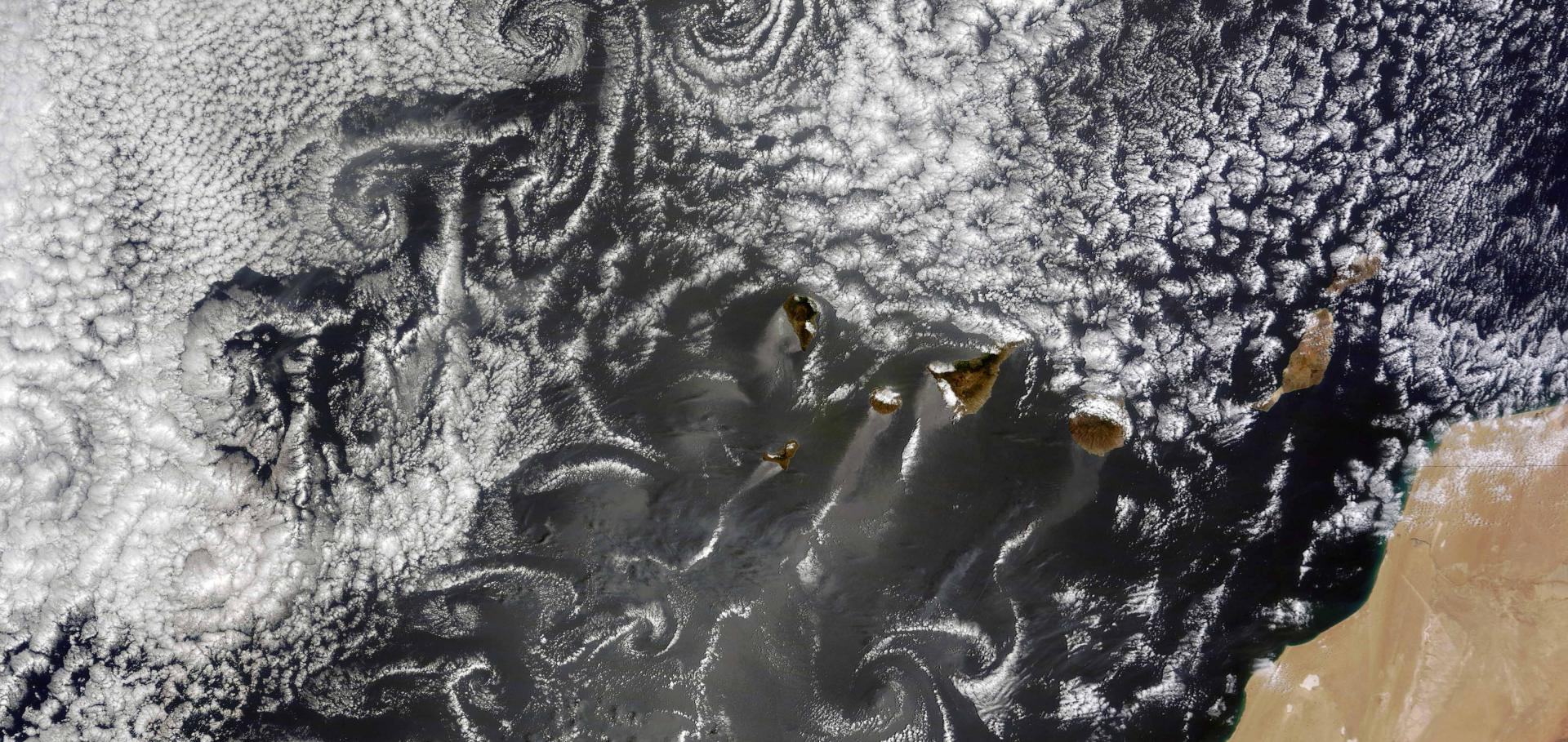
von Kármán vortex street over Canary Islands
Credit: NASA

Philip Stier

Professor of Atmospheric Physics

Research theme

  • Climate physics

Sub department

  • Atmospheric, Oceanic and Planetary Physics

Research groups

  • Climate processes
philip.stier@physics.ox.ac.uk
Telephone: 01865 (2)72887
Atmospheric Physics Clarendon Laboratory, room 103
  • About
  • Research
  • Teaching
  • CV
  • Publications

The impact of a land-sea contrast on convective aggregation in radiative-convective equilibrium

Journal of Advances in Modeling Earth Systems Wiley 15:4 (2023) e2022MS003249

Authors:

Beth Dingley, Guy Dagan, Philip Stier, Ross Herbert

Abstract:

Convective aggregation is an important atmospheric phenomenon which frequently occurs in idealized models in radiative-convective equilibrium (RCE), where the effects of land, rotation, sea surface temperature gradients, and the diurnal cycle are often removed. This aggregation is often triggered and maintained by self-generated radiatively driven circulations, for which longwave feedbacks are essential. Many questions remain over how important the driving processes of aggregation in idealized models are in the real atmosphere. We approach this question by adding a continentally sized, idealized tropical rainforest island into an RCE model to investigate how land-sea contrasts impact convective aggregation and its mechanisms. We show that convection preferentially forms over the island persistently in our simulation. This is forced by a large-scale, thermally driven circulation. First, a sea-breeze circulation is triggered by the land-sea thermal contrast, driven by surface sensible heating. This sea-breeze circulation triggers convection which then generates longwave heating anomalies. Through mechanism denial tests we find that removing the longwave feedbacks reduces the large-scale effects of aggregation but does not prevent aggregation from occurring, and thus we highlight there must be another process aiding the aggregation of convection. We also show, by varying the island size, that the aggregated convective cluster appears to have a maximum spatial extent of O(10,000 km). These results highlight that the mechanisms of idealized aggregation remain relevant when land is included in the model, and therefore these mechanisms could help us understand convective organization in the real world.

More details from the publisher
Details from ORA
More details
More details

Statistical constraints on climate model parameters using a scalable cloud-based inference framework

(2023)

Authors:

James Carzon, Bruno R de Abreu, Leighton Regayre, Kenneth Carslaw, Lucia Deaconu, Philip Stier, Hamish Gordon, Mikael Kuusela
More details from the publisher

AI for climate science

Chapter in Artificial Intelligence for Science, World Scientific Publishing (2023) 243-267
More details from the publisher
Details from ORA

AI for Climate Science

Chapter in Artificial Intelligence for Science, World Scientific Publishing (2023) 243-267
More details from the publisher

A semi-Lagrangian method for detecting and tracking deep convective clouds in geostationary satellite observations

Atmospheric Measurement Techniques Copernicus GmbH 16:4 (2023) 1043-1059

Authors:

William K Jones, Matthew W Christensen, Philip Stier

Abstract:

<jats:p>Abstract. Automated methods for the detection and tracking of deep convective clouds in geostationary satellite imagery have a vital role in both the forecasting of severe storms and research into their behaviour. Studying the interactions and feedbacks between multiple deep convective clouds (DCC), however, poses a challenge for existing algorithms due to the necessary compromise between false detection and missed detection errors. We utilise an optical flow method to determine the motion of deep convective clouds in GOES-16 ABI imagery in order to construct a semi-Lagrangian framework for the motion of the cloud field, independently of the detection and tracking of cloud objects. The semi-Lagrangian framework allows severe storms to be simultaneously detected and tracked in both spatial and temporal dimensions. For the purpose of this framework we have developed a novel Lagrangian convolution method and a number of novel implementations of morphological image operations that account for the motion of observed objects. These novel methods allow the accurate extension of computer vision techniques to the temporal domain for moving objects such as DCCs. By combining this framework with existing methods for detecting DCCs (including detection of growing cores through cloud top cooling and detection of anvil clouds using brightness temperature), we show that the novel framework enables reductions in errors due to both false and missed detections compared to any of the individual methods, reducing the need to compromise when compared with existing frameworks. The novel framework enables the continuous tracking of anvil clouds associated with detected deep convection after convective activity has stopped, enabling the study of the entire life cycle of DCCs and their associated anvils. Furthermore, we expect this framework to be applicable to a wide range of cases including the detection and tracking of low-level clouds and other atmospheric phenomena. In addition, this framework may be used to combine observations from multiple sources, including satellite observations, weather radar and reanalysis model data. </jats:p>
More details from the publisher

Pagination

  • First page First
  • Previous page Prev
  • …
  • Page 18
  • Page 19
  • Page 20
  • Page 21
  • Current page 22
  • Page 23
  • Page 24
  • Page 25
  • Page 26
  • …
  • Next page Next
  • Last page Last

Footer Menu

  • Contact us
  • Giving to the Dept of Physics
  • Work with us
  • Media

User account menu

  • Log in

Follow us

FIND US

Clarendon Laboratory,

Parks Road,

Oxford,

OX1 3PU

CONTACT US

Tel: +44(0)1865272200

University of Oxfrod logo Department Of Physics text logo
IOP Juno Champion logo Athena Swan Silver Award logo

© University of Oxford - Department of Physics

Cookies | Privacy policy | Accessibility statement

Built by: Versantus

  • Home
  • Research
  • Study
  • Engage
  • Our people
  • News & Comment
  • Events
  • Our facilities & services
  • About us
  • Giving to Physics
  • Current students
  • Staff intranet