Home
Department Of Physics text logo
  • Research
    • Our research
    • Our research groups
    • Our research in action
    • Research funding support
    • Summer internships for undergraduates
  • Study
    • Undergraduates
    • Postgraduates
  • Engage
    • For alumni
    • For business
    • For schools
    • For the public
  • Support
Menu
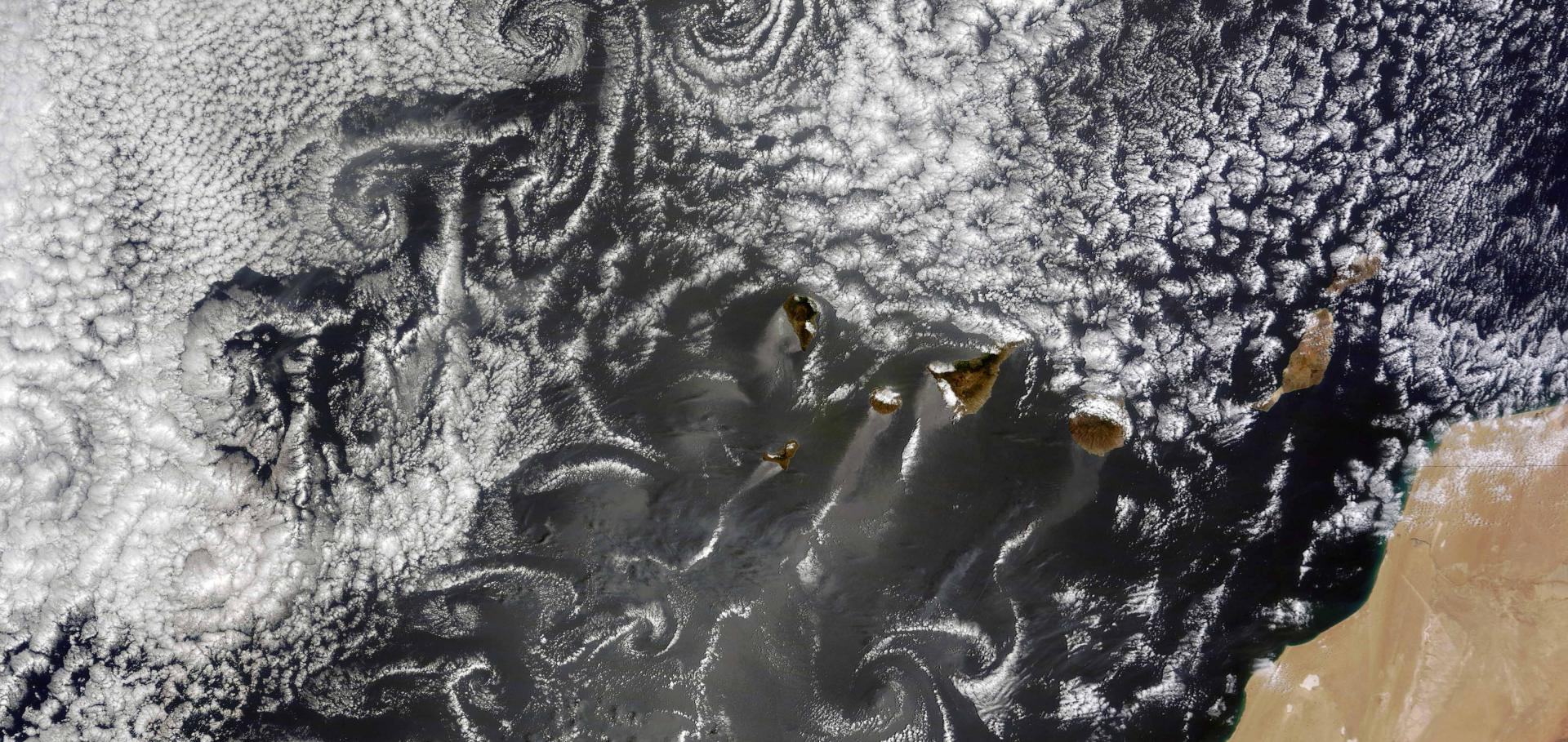
von Kármán vortex street over Canary Islands
Credit: NASA

Philip Stier

Professor of Atmospheric Physics

Research theme

  • Climate physics

Sub department

  • Atmospheric, Oceanic and Planetary Physics

Research groups

  • Climate processes
philip.stier@physics.ox.ac.uk
Telephone: 01865 (2)72887
Atmospheric Physics Clarendon Laboratory, room 103
  • About
  • Research
  • Teaching
  • CV
  • Publications

Physics-Informed Learning of Aerosol Microphysics

(2022)

Authors:

Paula Harder, Duncan Watson-Parris, Philip Stier, Dominik Strassel, Nicolas R Gauger, Janis Keuper
More details from the publisher

Strong control of effective radiative forcing by the spatial pattern of absorbing aerosol

Nature Climate Change Springer Nature 12:8 (2022) 735-742

Authors:

Andrew IL Williams, Philip Stier, Guy Dagan, Duncan Watson-Parris

Abstract:

Over the coming decades, it is expected that the spatial pattern of anthropogenic aerosol will change dramatically and the global aerosol composition will become relatively more absorbing. Yet, the climatic impact of this evolving spatial pattern of absorbing aerosol has received relatively little attention, in particular its impact on global-mean effective radiative forcing. Here, using model experiments, we show that the effective radiative forcing from absorbing aerosol varies strongly depending on their location, driven by rapid adjustments of clouds and circulation. Our experiments generate positive effective radiative forcing in response to aerosol absorption throughout the midlatitudes and most of the tropical regions, and a strong ‘hot spot’ of negative effective radiative forcing in response to aerosol absorption over the tropical Western Pacific. Further, these diverse responses can be robustly attributed to changes in atmospheric dynamics and highlight the importance of this ‘aerosol pattern effect’ for transient forcing from regional biomass-burning aerosol.
More details from the publisher
Details from ORA
More details

Examining the regional co-variability of the atmospheric water and energy imbalances in different model configurations – linking clouds and circulation

Journal of Advances in Modeling Earth Systems American Geophysical Union 14:6 (2022) e2021MS002951

Authors:

guy Dagan, Philip Stier, Elisabeth Dingley, Andrew Williams

Abstract:

Clouds are a key player in the global climate system, affecting the atmospheric water and energy budgets, and they are strongly coupled to the large-scale atmospheric circulation. Here, we examine the co-variability of the atmospheric energy and water budget imbalances in three different global model configurations–radiative-convective equilibrium, aqua-planet, and global simulations with land. The gradual increase in the level of complexity of the model configuration enables an investigation of the effects of rotation, meridional temperature gradient, land-sea contrast, and seasonal cycle on the co-variability of the water and energy imbalances. We demonstrate how this co-variability is linked to both the large-scale tropical atmospheric circulation and to cloud properties. Hence, we propose a co-variability-based framework that connects cloud properties to the large-scale tropical circulation and climate system and is directly linked to the top-down constrains on the system—the water and energy budgets. In addition, we examine how the water and energy budget imbalances co-variability depends on the temporal averaging scale, and explain its dependency on how stationary the circulation is in the different model configurations. Finally, we demonstrate the effect of an idealized global warming and convective aggregation on this co-variability.
More details from the publisher
Details from ORA
More details
More details

Scalable Sensitivity and Uncertainty Analysis for Causal-Effect Estimates of Continuous-Valued Interventions

(2022)

Authors:

Andrew Jesson, Alyson Douglas, Peter Manshausen, Maëlys Solal, Nicolai Meinshausen, Philip Stier, Yarin Gal, Uri Shalit
More details from the publisher

Scientific data from precipitation driver response model intercomparison project

Scientific Data Nature Research 9:1 (2022) 123

Authors:

Gunnar Myhre, Bjørn Samset, Piers M Forster, Øivind Hodnebrog, Marit Sandstad, Christian W Mohr, Jana Sillmann, Camilla W Stjern, Timothy Andrews, Olivier Boucher, Gregory Faluvegi, Trond Iversen, Jean-Francois Lamarque, Matthew Kasoar, Alf Kirkevåg, Ryan Kramer, Longbo Liu, Johannes Mülmenstädt, Dirk Olivié, Johannes Quaas, Thomas B Richardson, Dilshad Shawki, Drew Shindell, Chris Smith, Philip Stier, Duncan Watson-Parris

Abstract:

This data descriptor reports the main scientific values from General Circulation Models (GCMs) in the Precipitation Driver and Response Model Intercomparison Project (PDRMIP). The purpose of the GCM simulations has been to enhance the scientific understanding of how changes in greenhouse gases, aerosols, and incoming solar radiation perturb the Earth's radiation balance and its climate response in terms of changes in temperature and precipitation. Here we provide global and annual mean results for a large set of coupled atmospheric-ocean GCM simulations and a description of how to easily extract files from the dataset. The simulations consist of single idealized perturbations to the climate system and have been shown to achieve important insight in complex climate simulations. We therefore expect this data set to be valuable and highly used to understand simulations from complex GCMs and Earth System Models for various phases of the Coupled Model Intercomparison Project
More details from the publisher
Details from ORA
More details
More details

Pagination

  • First page First
  • Previous page Prev
  • …
  • Page 21
  • Page 22
  • Page 23
  • Page 24
  • Current page 25
  • Page 26
  • Page 27
  • Page 28
  • Page 29
  • …
  • Next page Next
  • Last page Last

Footer Menu

  • Contact us
  • Giving to the Dept of Physics
  • Work with us
  • Media

User account menu

  • Log in

Follow us

FIND US

Clarendon Laboratory,

Parks Road,

Oxford,

OX1 3PU

CONTACT US

Tel: +44(0)1865272200

University of Oxfrod logo Department Of Physics text logo
IOP Juno Champion logo Athena Swan Silver Award logo

© University of Oxford - Department of Physics

Cookies | Privacy policy | Accessibility statement

Built by: Versantus

  • Home
  • Research
  • Study
  • Engage
  • Our people
  • News & Comment
  • Events
  • Our facilities & services
  • About us
  • Giving to Physics
  • Current students
  • Staff intranet