

The PanCam Instrument for the ExoMars Rover
ASTROBIOLOGY 17:6-7 (2017) 511-541
Rayleigh scattering in the transmission spectrum of HAT-P-18b
MONTHLY NOTICES OF THE ROYAL ASTRONOMICAL SOCIETY 468:4 (2017) 3907-3916
Composite infrared spectrometer (CIRS) on Cassini
Applied Optics 56:18 (2017) 5274-5294
Abstract:
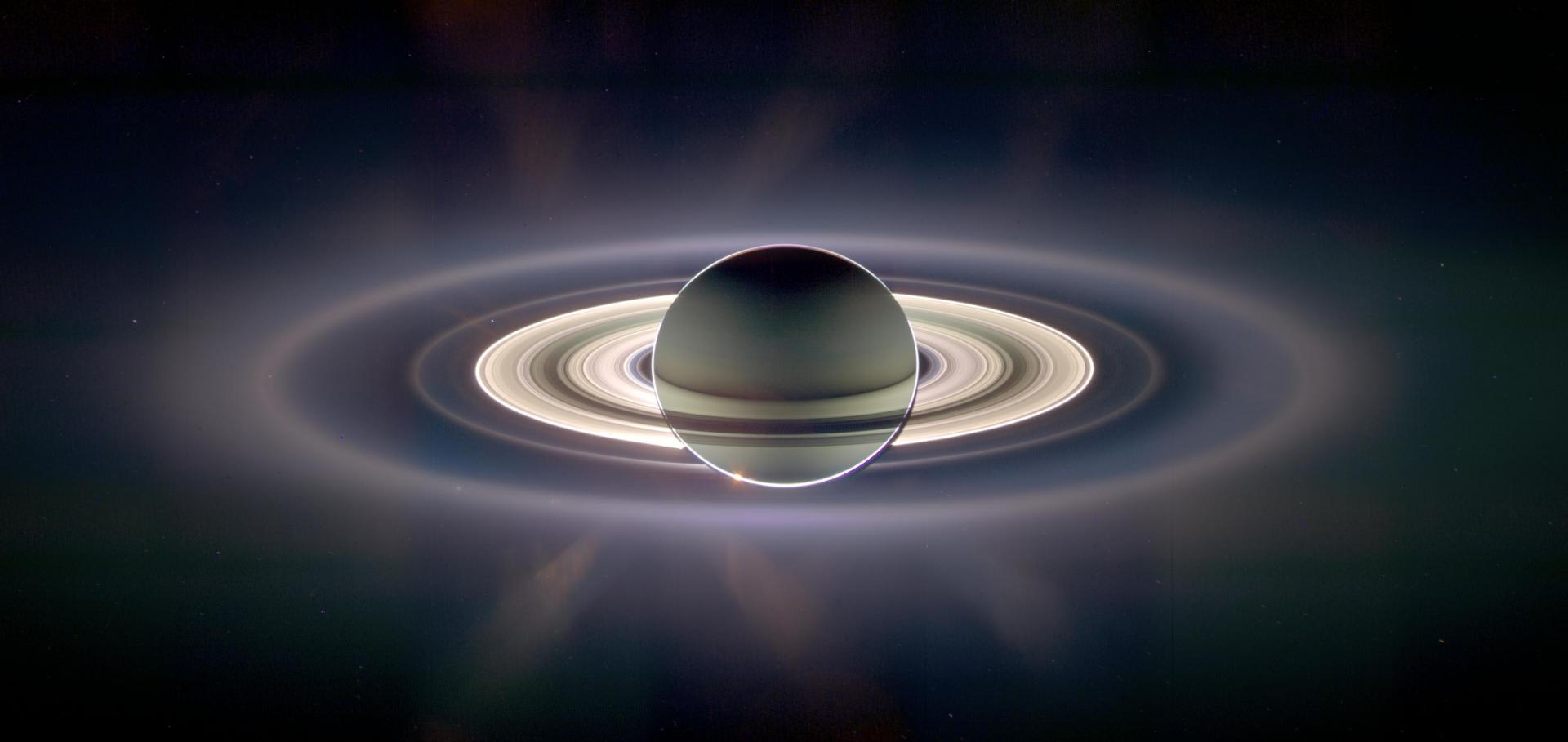
© 2017 Optical Society of America. The Cassini spacecraft orbiting Saturn carries the composite infrared spectrometer (CIRS) designed to study thermal emission from Saturn and its rings and moons. CIRS, a Fourier transform spectrometer, is an indispensable part of the payload providing unique measurements and important synergies with the other instruments. It takes full advantage of Cassini's 13-year-long mission and surpasses the capabilities of previous spectrometers on Voyager 1 and 2. The instrument, consisting of two interferometers sharing a telescope and a scan mechanism, covers over a factor of 100 in wavelength in the mid and far infrared. It is used to study temperature, composition, structure, and dynamics of the atmospheres of Jupiter, Saturn, and Titan, the rings of Saturn, and surfaces of the icy moons. CIRS has returned a large volume of scientific results, the culmination of over 30 years of instrument development, operation, data calibration, and analysis. As Cassini and CIRS reach the end of their mission in 2017, we expect that archived spectra will be used by scientists for many years to come.Independent evolution of stratospheric temperatures in Jupiter's northern and southern auroral regions from 2014 to 2016
GEOPHYSICAL RESEARCH LETTERS 44:11 (2017) 5345-5354
Jupiter's para-H-2 distribution from SOFIA/FORCAST and Voyager/IRIS 17-37 mu m spectroscopy
ICARUS 286 (2017) 223-240