Combined CDF and D0 Upper Limits on Standard Model Higgs Boson Production with up to 8.2 fb$^-1$ of Data

Authors:

T Aaltonen, others

Higgs self-coupling measurements using deep learning in the $b\bar{b}b\bar{b}$ final state

The Journal of High Energy Physics Springer Verlag (Germany)

Authors:

Jacob Amacker, William Balunas, Lydia Beresford, Daniela Bortoletto, James Frost, Cigdem Issever, Jesse Liu, James McKee, Alessandro Micheli, Santiago Paredes Saenz, Michael Spannowsky, Beojan Stanislaus

Abstract:

Measuring the Higgs trilinear self-coupling $\lambda_{hhh}$ is experimentally demanding but fundamental for understanding the shape of the Higgs potential. We present a comprehensive analysis strategy for the HL-LHC using di-Higgs events in the four $b$-quark channel ($hh \to 4b$), extending current methods in several directions. We perform deep learning to suppress the formidable multijet background with dedicated optimisation for BSM $\lambda_{hhh}$ scenarios. We compare the $\lambda_{hhh}$ constraining power of events using different multiplicities of large radius jets with a two-prong structure that reconstruct boosted $h \to bb$ decays. We show that current uncertainties in the SM top Yukawa coupling $y_t$ can modify $\lambda_{hhh}$ constraints by $\sim 20\%$. For SM $y_t$, we find prospects of $-0.8 < \lambda_{hhh} / \lambda_{hhh}^\text{SM} < 6.6$ at 68% CL under simplified assumptions for 3000~fb$^{-1}$ of HL-LHC data. Our results provide a careful assessment of di-Higgs identification and machine learning techniques for all-hadronic measurements of the Higgs self-coupling and sharpens the requirements for future improvement.

Sensor Compendium

Office of Scientific and Technical Information (OSTI)

Authors:

M Artuso, et al.

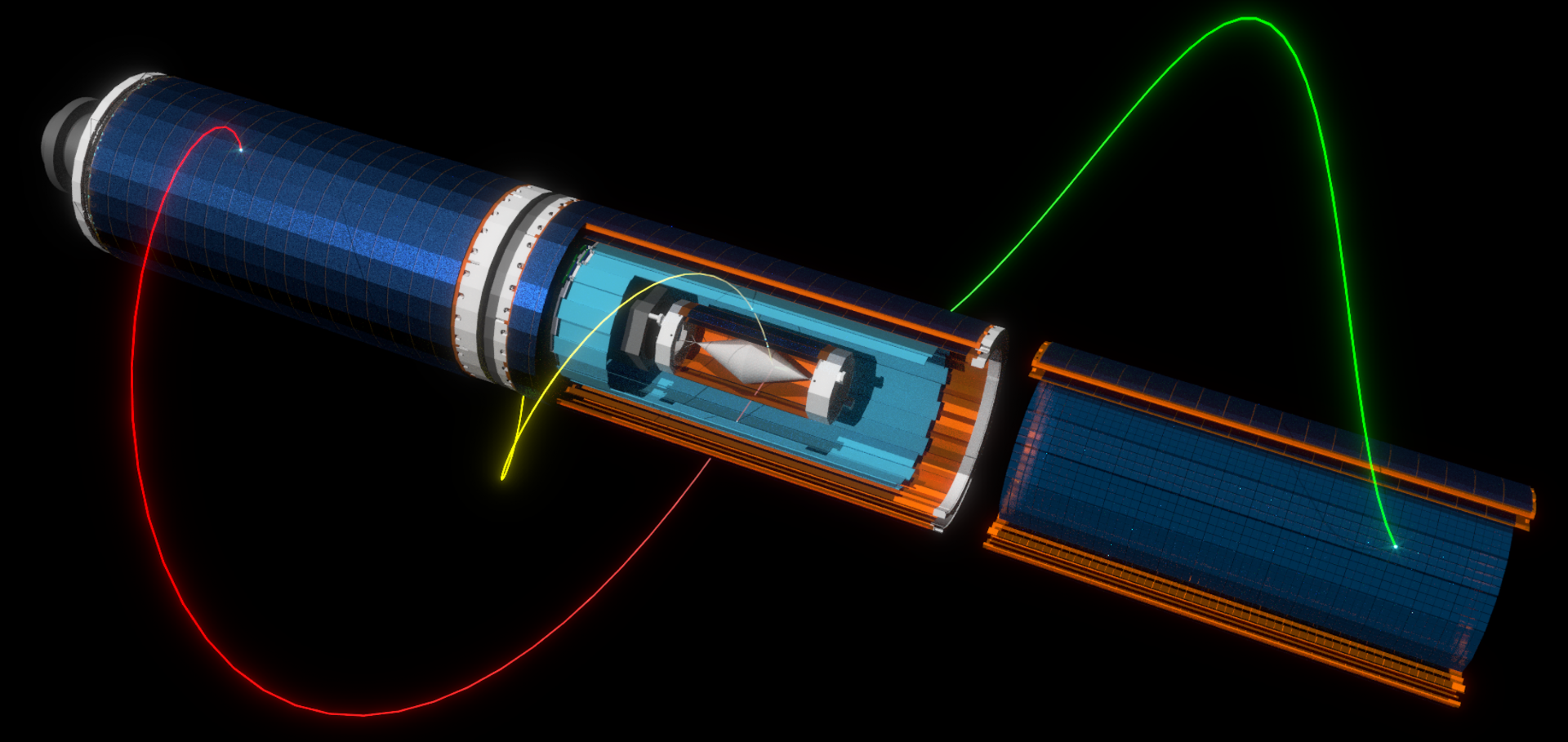
Technical design of the phase I Mu3e experiment

Authors:

K Arndt, H Augustin, P Baesso, N Berger, F Berg, C Betancourt, D Bortoletto, A Bravar, K Briggl, D vom Bruch, A Buonaura, F Cadoux, C Chavez Barajas, H Chen, K Clark, P Cooke, S Corrodi, A Damyanova, Y Demets, S Dittmeier, P Eckert, F Ehrler, D Fahrni, L Gerritzen, J Goldstein, D Gottschalk, C Grab, R Gredig, A Groves, J Hammerich, U Hartenstein, U Hartmann, H Hayward, A Herkert, G Hesketh, S Hetzel, M Hildebrandt, Z Hodge, A Hofer, Qh Huang, S Hughes, L Huth, Dm Immig, T Jones, M Jones, H-C Kästli, M Köppel, P-R Kettle, M Kiehn, S Kilani

Abstract:

The Mu3e experiment aims to find or exclude the lepton flavour violating decay $\mu \rightarrow eee$ at branching fractions above $10^{-16}$. A first phase of the experiment using an existing beamline at the Paul Scherrer Institute (PSI) is designed to reach a single event sensitivity of $2\cdot 10^{-15}$. We present an overview of all aspects of the technical design and expected performance of the phase~I Mu3e detector. The high rate of up to $10^{8}$ muon decays per second and the low momenta of the decay electrons and positrons pose a unique set of challenges, which we tackle using an ultra thin tracking detector based on high-voltage monolithic active pixel sensors combined with scintillating fibres and tiles for precise timing measurements.