Home
Department Of Physics text logo
  • Research
    • Our research
    • Our research groups
    • Our research in action
    • Research funding support
    • Summer internships for undergraduates
  • Study
    • Undergraduates
    • Postgraduates
  • Engage
    • For young people
    • For teachers
    • For the public
    • For alumni
    • For business
  • Support
Menu
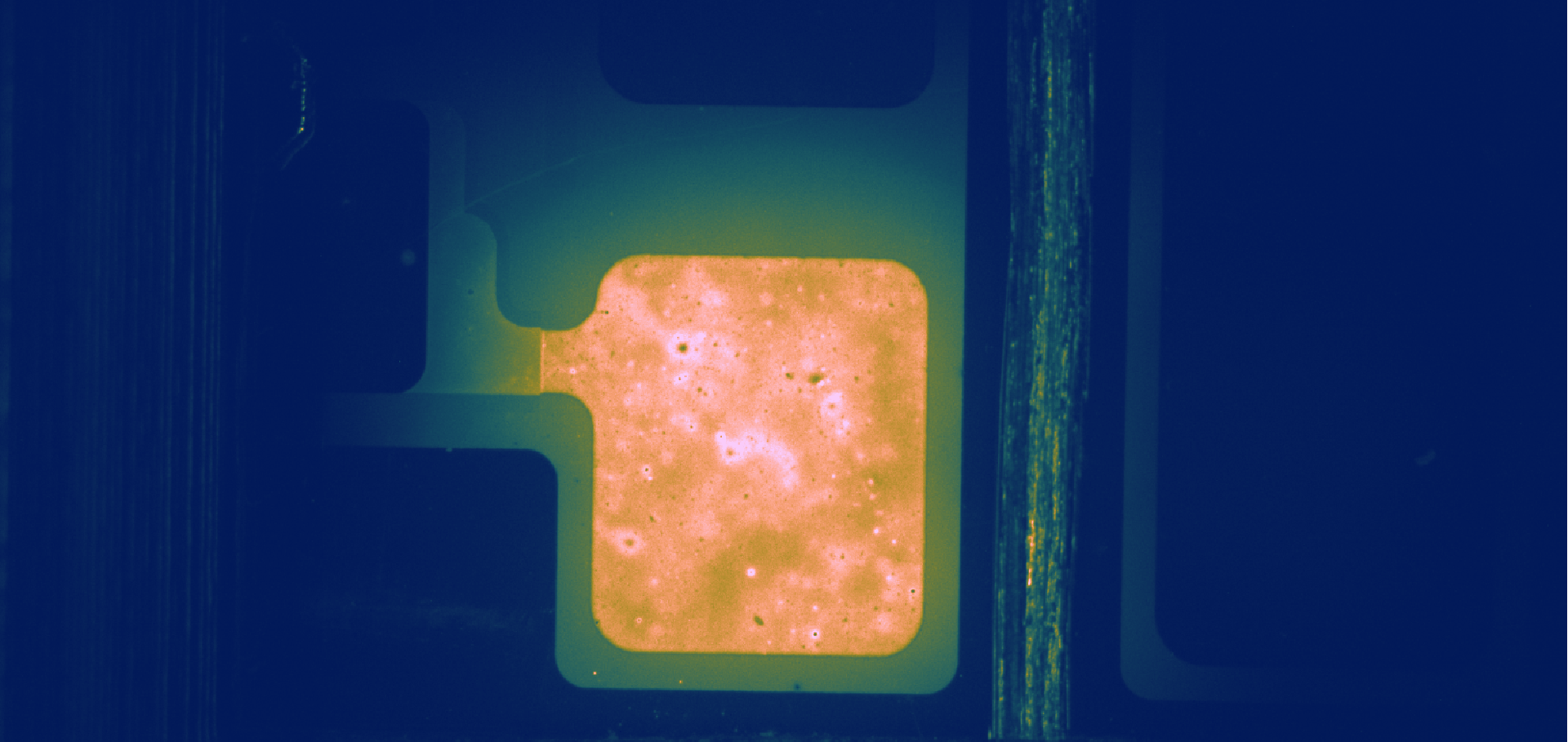
Sample_image

Akash Dasgupta

Visitor - Long Term

Research theme

  • Photovoltaics and nanoscience

Sub department

  • Condensed Matter Physics
akash.dasgupta@physics.ox.ac.uk
Personal Website
  • About
  • Publications

Chloride-based additive engineering for efficient and stable wide-bandgap perovskite solar cells

Advanced Materials Wiley 35:30 (2023) e2211742

Authors:

Xinyi Shen, Benjamin M Gallant, Philippe Holzhey, Joel A Smith, Karim A Elmestekawy, Zhongcheng Yuan, Pvgm Rathnayake, Stefano Bernardi, Akash Dasgupta, Ernestas Kasparavicius, Tadas Malinauskas, Pietro Caprioglio, Oleksandra Shargaieva, Yen-Hung Lin, Melissa M McCarthy, Eva Unger, Vytautas Getautis, Asaph Widmer-Cooper, Laura M Herz, Henry J Snaith

Abstract:

Metal halide perovskite based tandem solar cells are promising to achieve power conversion efficiency beyond the theoretical limit of their single-junction counterparts. However, overcoming the significant open-circuit voltage deficit present in wide-bandgap perovskite solar cells remains a major hurdle for realizing efficient and stable perovskite tandem cells. Here, a holistic approach to overcoming challenges in 1.8 eV perovskite solar cells is reported by engineering the perovskite crystallization pathway by means of chloride additives. In conjunction with employing a self-assembled monolayer as the hole-transport layer, an open-circuit voltage of 1.25 V and a power conversion efficiency of 17.0% are achieved. The key role of methylammonium chloride addition is elucidated in facilitating the growth of a chloride-rich intermediate phase that directs crystallization of the desired cubic perovskite phase and induces more effective halide homogenization. The as-formed 1.8 eV perovskite demonstrates suppressed halide segregation and improved optoelectronic properties.
More details from the publisher
Details from ORA
More details
More details

Open-circuit and short-circuit loss management in wide-gap perovskite p-i-n solar cells

Nature communications Springer Nature 14:1 (2023) 932

Authors:

Pietro Caprioglio, Joel A Smith, Robert DJ Oliver, Akash Dasgupta, Saqlain Choudhary, Michael D Farrar, Alexandra J Ramadan, Yen-Hung Lin, M Greyson Christoforo, James M Ball, Jonas Diekmann, Jarla Thiesbrummel, Karl-Augustin Zaininger, Xinyi Shen, Michael B Johnston, Dieter Neher, Martin Stolterfoht, Henry J Snaith

Abstract:

In this work, we couple theoretical and experimental approaches to understand and reduce the losses of wide bandgap Br-rich perovskite pin devices at open-circuit voltage (VOC) and short-circuit current (JSC) conditions. A mismatch between the internal quasi-Fermi level splitting (QFLS) and the external VOC is detrimental for these devices. We demonstrate that modifying the perovskite top-surface with guanidinium-Br and imidazolium-Br forms a low-dimensional perovskite phase at the n-interface, suppressing the QFLS-VOC mismatch, and boosting the VOC. Concurrently, the use of an ionic interlayer or a self-assembled monolayer at the p-interface reduces the inferred field screening induced by mobile ions at JSC, promoting charge extraction and raising the JSC. The combination of the n- and p-type optimizations allows us to approach the thermodynamic potential of the perovskite absorber layer, resulting in 1 cm2 devices with performance parameters of VOCs up to 1.29 V, fill factors above 80% and JSCs up to 17 mA/cm2, in addition to a thermal stability T80 lifetime of more than 3500 h at 85 °C.

More details from the publisher
Details from ORA
More details
More details

Visualizing macroscopic inhomogeneities in perovskite solar cells

ACS Energy Letters American Chemical Society 7:7 (2022) 2311-2322

Authors:

Akash Dasgupta, Suhas Mahesh, Pietro Caprioglio, Yen-Hung Lin, Karl-Augustin Zaininger, Robert DJ Oliver, Philippe Holzhey, Suer Zhou, Melissa M McCarthy, Joel A Smith, Maximilian Frenzel, M Greyson Christoforo, James M Ball, Bernard Wenger, Henry J Snaith

Abstract:

Despite the incredible progress made, the highest efficiency perovskite solar cells are still restricted to small areas (<1 cm2). In large part, this stems from a poor understanding of the widespread spatial heterogeneity in devices. Conventional techniques to assess heterogeneities can be time consuming, operate only at microscopic length scales, and demand specialized equipment. We overcome these limitations by using luminescence imaging to reveal large, millimeter-scale heterogeneities in the inferred electronic properties. We determine spatially resolved maps of “charge collection quality”, measured using the ratio of photoluminescence intensity at open and short circuit. We apply these methods to quantify the inhomogeneities introduced by a wide range of transport layers, thereby ranking them by suitability for upscaling. We reveal that top-contacting transport layers are the dominant source of heterogeneity in the multilayer material stack. We suggest that this methodology can be used to accelerate the development of highly efficient, large-area modules, especially through high-throughput experimentation.
More details from the publisher
Details from ORA
More details

Alumina nanoparticle interfacial buffer layer for low-bandgap lead-tin perovskite solar cells

Advanced Functional Materials Wiley

Authors:

Heon Jin, Michael Farrar, James Ball, Akash Dasgupta, Pietro Caprioglio, Sudarshan Narayanan, Robert Oliver, Florine Rombach, Benjamin Putland, Michael Johnston, Henry Snaith
More details from the publisher
Details from ORA
More details

Disentangling Degradation Pathways of Narrow Bandgap Lead-Tin Perovskite Material and Photovoltaic Devices

Authors:

Florine Rombach, Akash Dasgupta, Manuel Kober-Czerny, James Ball, Joel Smith, Heon Jin, Michael Farrar, Henry Snaith
More details from the publisher

Pagination

  • First page First
  • Previous page Prev
  • Page 1
  • Page 2
  • Page 3
  • Page 4
  • Current page 5
  • Page 6
  • Next page Next
  • Last page Last

Footer Menu

  • Contact us
  • Giving to the Dept of Physics
  • Work with us
  • Media

User account menu

  • Log in

Follow us

FIND US

Clarendon Laboratory,

Parks Road,

Oxford,

OX1 3PU

CONTACT US

Tel: +44(0)1865272200

University of Oxfrod logo Department Of Physics text logo
IOP Juno Champion logo Athena Swan Silver Award logo

© University of Oxford - Department of Physics

Cookies | Privacy policy | Accessibility statement

Built by: Versantus

  • Home
  • Research
  • Study
  • Engage
  • Our people
  • News & Comment
  • Events
  • Our facilities & services
  • About us
  • Giving to Physics
  • Current students
  • Staff intranet