


Homogenised Optoelectronic Properties in Perovskites: Achieving High-Efficiency Solar Cells with Common Chloride Additives
Abstract:
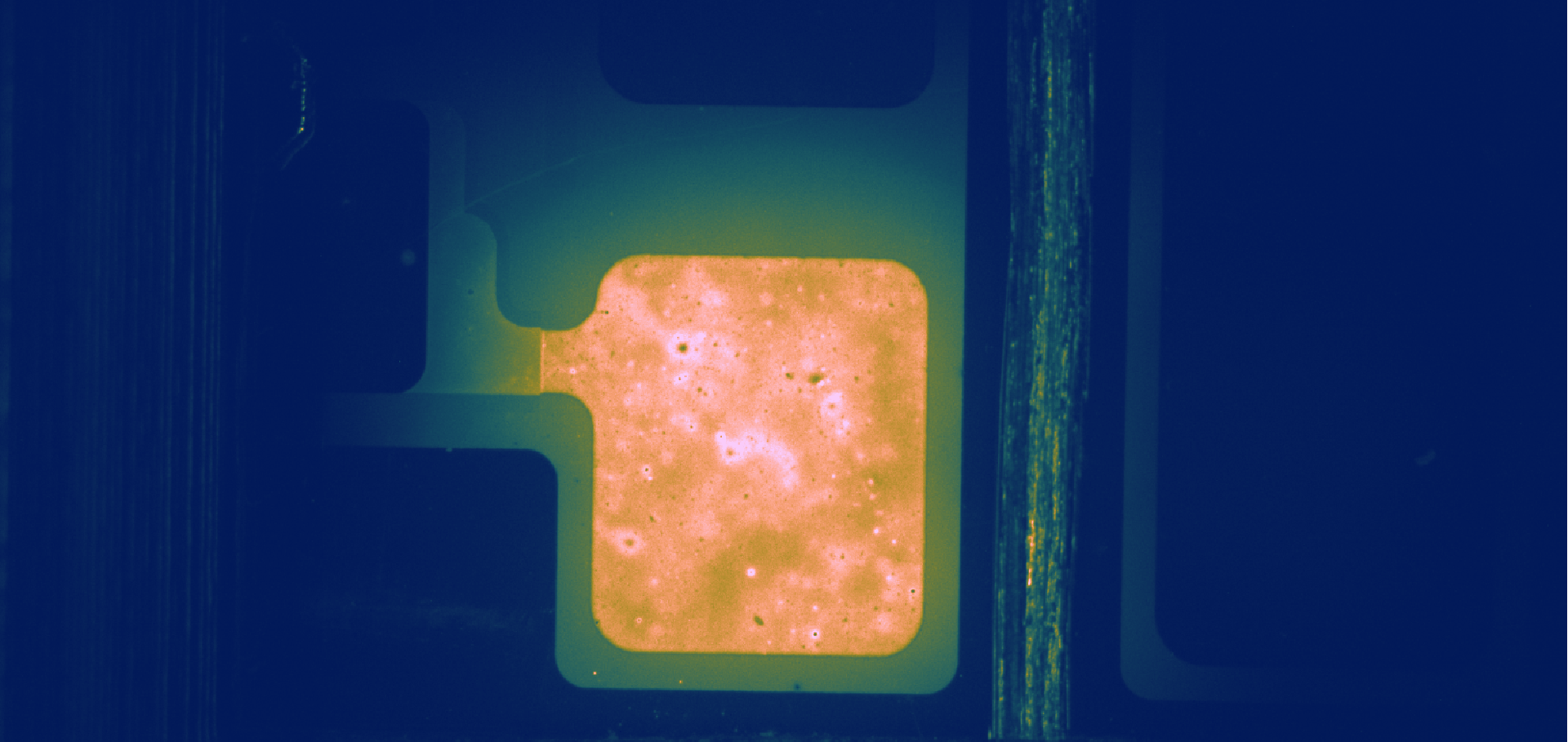
Improving the bulk quality of perovskite films is critical for achieving higher-performance photovoltaic devices. Chloride-containing additives, including lead chloride (PbCl₂) and methylammonium chloride (MACl)—standard additives widely adopted in perovskite photovoltaics—are effective for controlling crystallisation kinetics and grain morphology. However, the distinct impacts of different forms of chloride additives on nanoscale phase uniformity and luminescence homogeneity remains underexplored. Here, we provide new insights into how the choice and combination of chloride additives influence phase transitions and spatially uniform carrier dynamics within perovskite films. We demonstrate that strategically combining MACl and PbCl2 improves crystallinity and optoelectronic uniformity across dimensions spanning micrometres to millimetres. Leveraging these findings, we fabricated inverted (p-i-n) perovskite solar cells achieving certified quasi-steady-state efficiencies of 26.4% and 24.5% at device areas of 0.05 and 1 cm², respectively. Furthermore, these devices exhibit robust operational stability, retaining 88% of their initial performance after 1200 hours of continuous maximum power point tracking at elevated temperatures (65 °C) under simulated AM1.5G illumination. Our results elucidate the mechanistic differences between chloride additive forms, providing a viable strategy for advancing large-area, high-efficiency, and thermally stable perovskite photovoltaics.Impact of precursor dosing on the surface passivation of AZO/AlOx stacks formed using atomic layer deposition
Optoelectronic characterisation and advanced modelling of metal halide perovskite solar cells
Abstract:
Scaling perovskite photovoltaics to module dimensions ( 2 m²) while maintaining a high efficiency over longer periods of time is critical for commercialisation and terawatt-scale deployment. In this thesis we cover 3 different projects which work towards furthering our understanding, in service of this goal.
In the first work, we introduce a rapid luminescence imaging technique that enables spatial mapping of key device parameters across large areas. Our approach uncovers significant heterogeneities in open-circuit voltage (VOC ) and charge collection efficiency at millimeter length scales. By correlating the photoluminescence ratio under short- and open-circuit conditions with current losses, we provide a new tool for visualising JSC losses, offering a valuable complement to traditional VOC mapping techniques. A detailed evaluation of transport layers reveals that top-contacting layers, such as Spiro-OMeTAD, are major sources of processing-induced hetrogenity, while bottom-contacting layers contribute minimal heterogeneity. This distinction between top and bottom layers underscores key architectural differences between n-i-p and p-i-n devices.
Using a combination of luminescence imaging, drift-diffusion simulations, and Bayesian inference, we extend our analysis to the study of degradation mechanisms in perovskite solar cells. This integrated method allows us to differentiate between bulk- and surface-driven degradation under light and heat stress. Our spatially resolved analysis shows that degradation is highly heterogeneous, with bulk degradation manifesting in more stable regions, and surface degradation occurring at defect points and spreading with aging.
Finally, we explore the potential of Si-perovskite tandem solar cells, achieving power conversion efficiencies (PCEs) approaching 36% with moderate radiative efficiencies ( 10%) and up to 38% as ηrad approaches the radiative limit. Our findings suggest that improvements in radiative efficiency and ideality factor could soon push tandem devices beyond the 36% efficiency threshold.