Home
Department Of Physics text logo
  • Research
    • Our research
    • Our research groups
    • Our research in action
    • Research funding support
    • Summer internships for undergraduates
  • Study
    • Undergraduates
    • Postgraduates
  • Engage
    • For young people
    • For teachers
    • For the public
    • For alumni
    • For business
  • Support
Menu
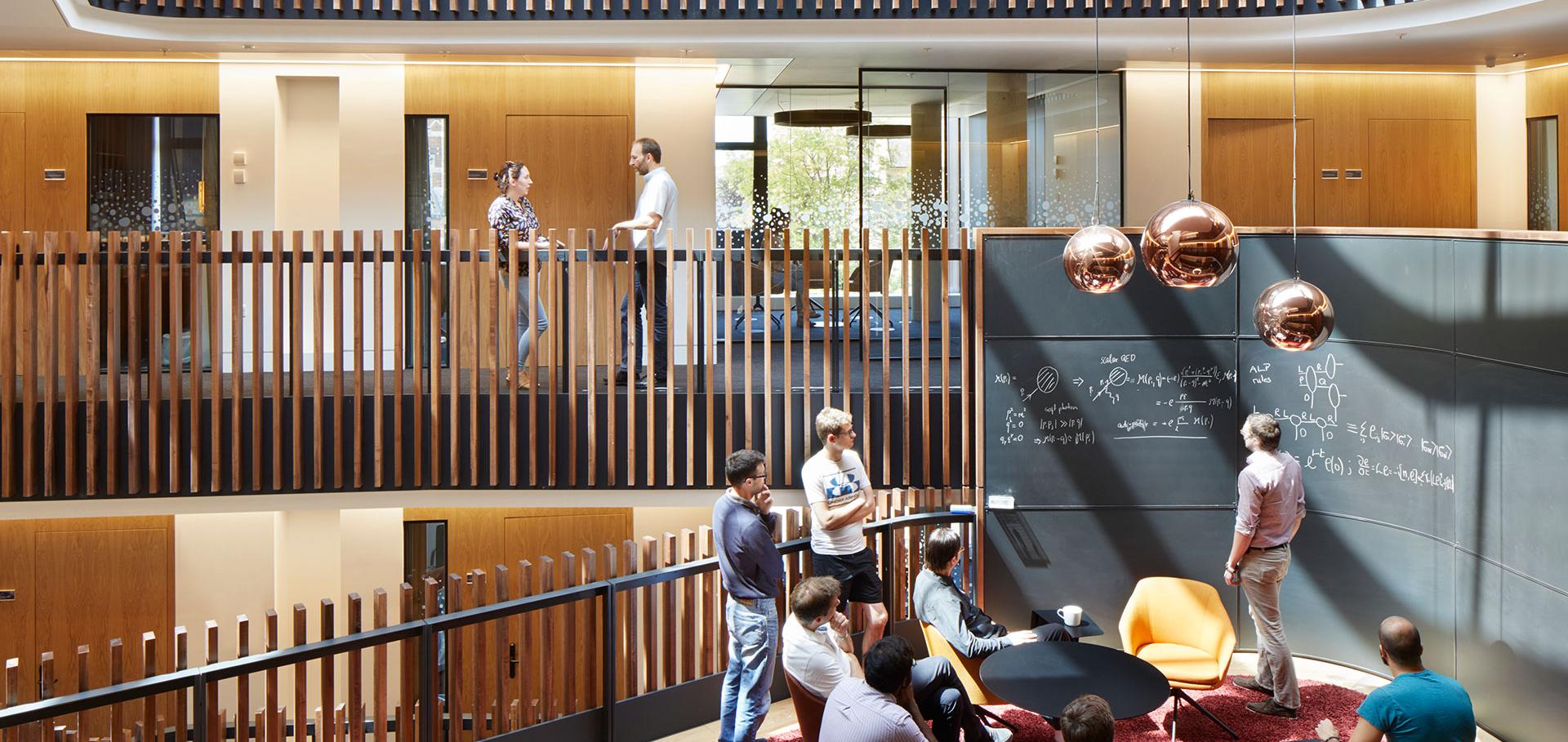
Theoretical physicists working at a blackboard collaboration pod in the Beecroft building.
Credit: Jack Hobhouse

Anders Sandberg

Visitor

Sub department

  • Rudolf Peierls Centre for Theoretical Physics
anders.sandberg@physics.ox.ac.uk
  • About
  • Publications

Morphological freedom: what are the limits to transforming the body?

Chapter in L'humain et ses prothèses: Savoirs et pratiques du corps transformé, CNRS Editions (2017)
Details from ORA

Modelling the social dynamics of moral enhancement: social strategies sold over-the-counter and the stability of society

Cambridge Quarterly of Healthcare Ethics Cambridge University Press 26:3 (2017) 431-445

Authors:

Joao Fabiano, Anders Sandberg

Abstract:

How individuals tend to evaluate the combination of their own and other’s payoffs – Social Value Orientations – is likely to be a potential target of future moral enhancers. However, the stability of cooperation in human societies has been buttressed by evolved mildly prosocial orientations. If they could be changed, would this destabilize the cooperative structure of society?
We simulate a model of moral enhancement where agents play games with each other and can enhance their orientations based on maximizing personal satisfaction. We find that given the assumption that very low payoffs lead agents to be removed from the population, there is a broadly stable prosocial attractor state. However, the balance between prosociality and individual payoff-maximization is affected by different factors. Agents maximizing their own satisfaction can produce emergent shifts in society that reduce everybody’s satisfaction. Moral enhancement considerations should take the issues of social emergence into account.
More details from the publisher
Details from ORA
More details
More details

Should We Campaign Against Sex Robots?

Chapter in ROBOT SEX: SOCIAL AND ETHICAL IMPLICATIONS, (2017) 47-71

Authors:

John Danaher, Brian Earp, Anders Sandberg
More details

The Wisdom of Nature: An Evolutionary Heuristic for Human Enhancement

Chapter in Philosophical Issues in Pharmaceutics, Springer Nature 122 (2017) 189-219

Authors:

Nick Bostrom, Anders Sandberg
More details from the publisher

That is not dead which can eternal lie: The aestivation hypothesis for resolving Fermi's paradox

JBIS - Journal of the British Interplanetary Society British Interplanetary Society 69:11 (2016) 406-415

Authors:

Anders Sandberg, M Stuart Armstrong, M Cirkovic

Abstract:

If a civilization wants to maximize computation it appears rational to aestivate until the far future in order to exploit the low temperature environment: This can produce a 10∗° multiplier of achievable computation. We hence suggest the "aestivation hypothesis": The reason we are not observing manifestations of alien civilizations is that they are currently (mostly) inactive, patiently waiting for future cosmic eras. This paper analyses the assumptions going into the hypothesis and how physical law and observational evidence constrain the motivations of aliens compatible with the hypothesis.
Details from ORA
Details from ArXiV

Pagination

  • First page First
  • Previous page Prev
  • …
  • Page 4
  • Page 5
  • Page 6
  • Page 7
  • Current page 8
  • Page 9
  • Page 10
  • Page 11
  • Page 12
  • …
  • Next page Next
  • Last page Last

Footer Menu

  • Contact us
  • Giving to the Dept of Physics
  • Work with us
  • Media

User account menu

  • Log in

Follow us

FIND US

Clarendon Laboratory,

Parks Road,

Oxford,

OX1 3PU

CONTACT US

Tel: +44(0)1865272200

University of Oxfrod logo Department Of Physics text logo
IOP Juno Champion logo Athena Swan Silver Award logo

© University of Oxford - Department of Physics

Cookies | Privacy policy | Accessibility statement

Built by: Versantus

  • Home
  • Research
  • Study
  • Engage
  • Our people
  • News & Comment
  • Events
  • Our facilities & services
  • About us
  • Giving to Physics
  • Current students
  • Staff intranet