Home
Department Of Physics text logo
  • Research
    • Our research
    • Our research groups
    • Our research in action
    • Research funding support
    • Summer internships for undergraduates
  • Study
    • Undergraduates
    • Postgraduates
  • Engage
    • For young people
    • For teachers
    • For the public
    • For alumni
    • For business
  • Support
Menu
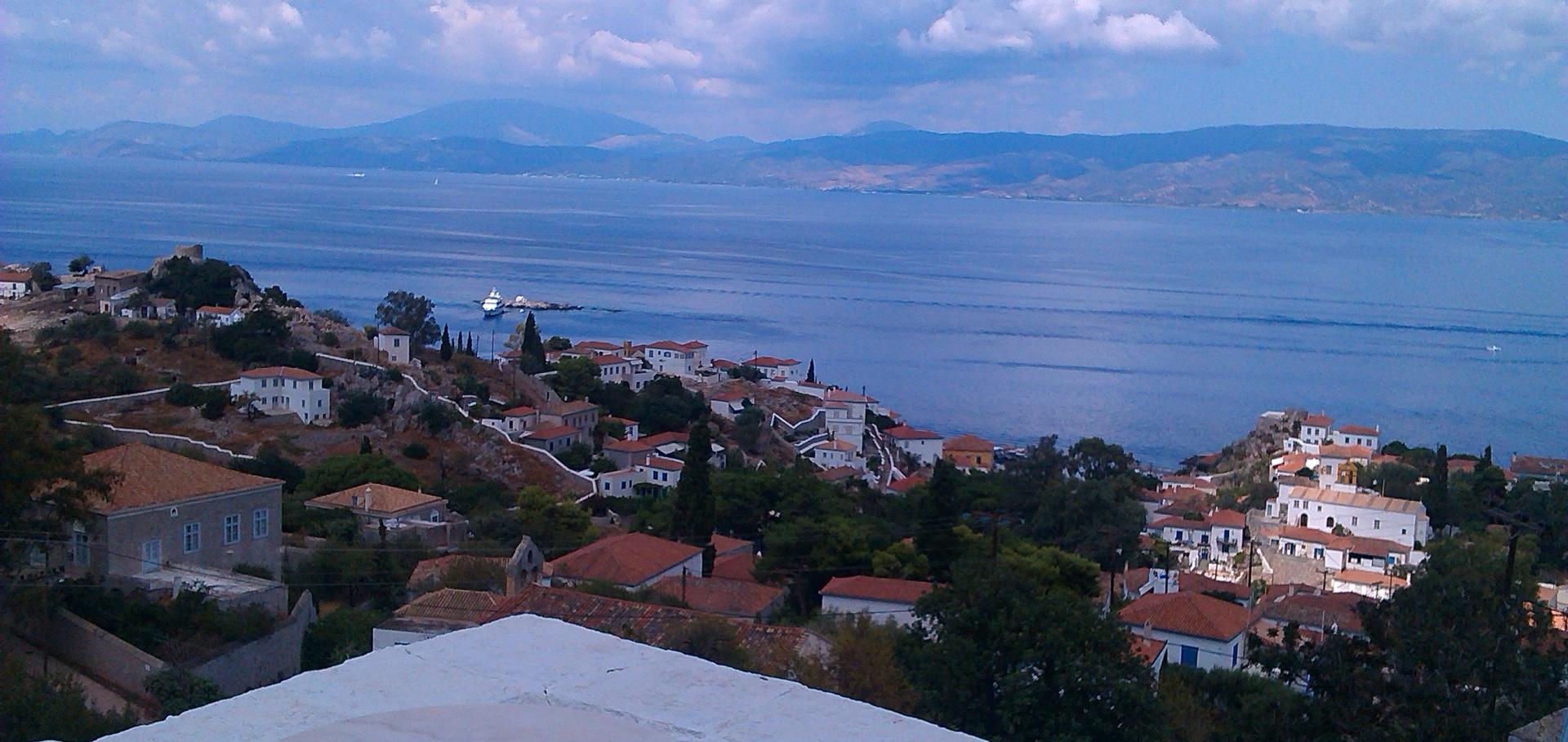
where I'd like to be ...

Prof Subir Sarkar

Professor Emeritus

Research theme

  • Particle astrophysics & cosmology
  • Fundamental particles and interactions

Sub department

  • Rudolf Peierls Centre for Theoretical Physics

Research groups

  • Particle theory
Subir.Sarkar@physics.ox.ac.uk
Telephone: 01865 (2)73962
Rudolf Peierls Centre for Theoretical Physics, room 60.12
Old homepage
Brief CV
  • About
  • Research
  • Teaching
  • Service
  • Outreach
  • Awards/News
  • IceCube@Oxford
  • Publications

IceCube

Physics World 2013 Breakthrough of the Year
IceCube at Oxford

I am a member since 2004 of the IceCube collaboration which discovered cosmic high energy neutrinos and identified some of their astrophysical sources.

IceCube @ Oxford

Light asymmetric dark matter from new strong dynamics

ArXiv 1103.435 (2011)

Authors:

Mads T Frandsen, Subir Sarkar, Kai Schmidt-Hoberg

Abstract:

A ~5 GeV `dark baryon' with a cosmic asymmetry similar to that of baryons is a natural candidate for the dark matter. We study the possibility of generating such a state through dynamical electroweak symmetry breaking, and show that it can share the relic baryon asymmetry via sphaleron interactions, even though it has no electroweak interactions. The scattering cross-section on nucleons, estimated in analogy to QCD, is within reach of underground direct detection experiments.
Details from ArXiV
More details from the publisher

Light asymmetric dark matter from new strong dynamics

(2011)

Authors:

Mads T Frandsen, Subir Sarkar, Kai Schmidt-Hoberg
More details from the publisher

Background studies for acoustic neutrino detection at the South Pole

ArXiv 1103.1216 (2011)

Authors:

The IceCube Collaboration, R Abbasi, Y Abdou, T Abu-Zayyad, J Adams, JA Aguilar, M Ahlers, K Andeen, J Auffenberg, X Bai, M Baker, SW Barwick, R Bay, JL Bazo Alba, K Beattie, JJ Beatty, S Bechet, JK Becker, K-H Becker, ML Benabderrahmane, S BenZvi, J Berdermann, P Berghaus, D Berley, E Bernardini, D Bertrand, DZ Besson, D Bindig, M Bissok, E Blaufuss, J Blumenthal, DJ Boersma, C Bohm, D Bose, S Böser, O Botner, J Braun, AM Brown, S Buitink, M Carson, D Chirkin, B Christy, J Clem, F Clevermann, S Cohen, C Colnard, DF Cowen, MV D'Agostino, M Danninger, J Daughhetee, JC Davis, C De Clercq, L Demirörs, T Denger, O Depaepe, F Descamps, P Desiati, G de Vries-Uiterweerd, T DeYoung, JC Diaz-Vélez, M Dierckxsens, J Dreyer, JP Dumm, R Ehrlich, J Eisch, RW Ellsworth, O Engdegård, S Euler, PA Evenson, O Fadiran, AR Fazely, A Fedynitch, T Feusels, K Filimonov, C Finley, T Fischer-Wasels, MM Foerster, BD Fox, A Franckowiak, R Franke, TK Gaisser, J Gallagher, M Geisler, L Gerhardt, L Gladstone, T Glüsenkamp, A Goldschmidt, JA Goodman, D Grant, T Griesel, A Groß, S Grullon, M Gurtner, C Ha, A Hallgren, F Halzen, K Han, K Hanson, D Heinen, K Helbing, P Herquet, S Hickford, GC Hill, KD Hoffman, A Homeier, K Hoshina, D Hubert, W Huelsnitz, J-P Hülß, PO Hulth, K Hultqvist, S Hussain, A Ishihara, J Jacobsen, GS Japaridze, H Johansson, JM Joseph, K-H Kampert, A Kappes, T Karg, A Karle, JL Kelley, P Kenny, J Kiryluk, F Kislat, SR Klein, J-H Köhne, G Kohnen, H Kolanoski, L Köpke, S Kopper, DJ Koskinen, M Kowalski, T Kowarik, M Krasberg, T Krings, G Kroll, K Kuehn, T Kuwabara, M Labare, S Lafebre, K Laihem, H Landsman, MJ Larson, R Lauer, J Lünemann, J Madsen, P Majumdar, A Marotta, R Maruyama, K Mase, HS Matis, K Meagher, M Merck, P Mészáros, T Meures, E Middell, N Milke, J Miller, T Montaruli, R Morse, SM Movit, R Nahnhauer, JW Nam, U Naumann, P Nießen, DR Nygren, S Odrowski, A Olivas, M Olivo, A O'Murchadha, M Ono, S Panknin, L Paul, C Pérez de los Heros, J Petrovic, A Piegsa, D Pieloth, R Porrata, J Posselt, PB Price, M Prikockis, GT Przybylski, K Rawlins, P Redl, E Resconi, W Rhode, M Ribordy, A Rizzo, JP Rodrigues, P Roth, F Rothmaier, C Rott, T Ruhe, D Rutledge, B Ruzybayev, D Ryckbosch, H-G Sander, M Santander, S Sarkar, K Schatto, T Schmidt, A Schönwald, A Schukraft, A Schultes, O Schulz, M Schunck, D Seckel, B Semburg, SH Seo, Y Sestayo, S Seunarine, A Silvestri, A Slipak, GM Spiczak, C Spiering, M Stamatikos, T Stanev, G Stephens, T Stezelberger, RG Stokstad, A Stössl, S Stoyanov, EA Strahler, T Straszheim, M Stür, GW Sullivan, Q Swillens, H Taavola, I Taboada, A Tamburro, A Tepe, S Ter-Antonyan, S Tilav, PA Toale, S Toscano, D Tosi, D Turčan, N van Eijndhoven, J Vandenbroucke, A Van Overloop, J van Santen, M Vehring, M Voge, C Walck, T Waldenmaier, M Wallraff, M Walter, Ch Weaver, C Wendt, S Westerhoff, N Whitehorn, K Wiebe, CH Wiebusch, DR Williams, R Wischnewski, H Wissing, M Wolf, K Woschnagg, C Xu, XW Xu, JP Yanez, G Yodh, S Yoshida, P Zarzhitsky

Abstract:

The detection of acoustic signals from ultra-high energy neutrino interactions is a promising method to measure the tiny flux of cosmogenic neutrinos expected on Earth. The energy threshold for this process depends strongly on the absolute noise level in the target material. The South Pole Acoustic Test Setup (SPATS), deployed in the upper part of four boreholes of the IceCube Neutrino Observatory, has monitored the noise in Antarctic ice at the geographic South Pole for more than two years down to 500 m depth. The noise is very stable and Gaussian distributed. Lacking an in-situ calibration up to now, laboratory measurements have been used to estimate the absolute noise level in the 10 to 50 kHz frequency range to be smaller than 20 mPa. Using a threshold trigger, sensors of the South Pole Acoustic Test Setup registered acoustic pulse-like events in the IceCube detector volume and its vicinity. Acoustic signals from refreezing IceCube holes and from anthropogenic sources have been used to localize acoustic events. Monte Carlo simulations of sound propagating from the established sources to the SPATS sensors have allowed to check corresponding model expectations. An upper limit on the neutrino flux at energies $E_ν> 10^{11}$ GeV is derived from acoustic data taken over eight months.
Details from ArXiV
More details from the publisher

Reconciling the local void with the CMB

Physical Review D - Particles, Fields, Gravitation and Cosmology 83:6 (2011)

Authors:

S Nadathur, S Sarkar

Abstract:

In the standard cosmological model, the dimming of distant Type Ia supernovae is explained by invoking the existence of repulsive "dark energy" which is causing the Hubble expansion to accelerate. However, this may be an artifact of interpreting the data in an (oversimplified) homogeneous model universe. In the simplest inhomogeneous model which fits the SNe Ia Hubble diagram without dark energy, we are located close to the center of a void modeled by a Lemaítre-Tolman-Bondi metric. It has been claimed that such models cannot fit the cosmic microwave background (CMB) and other cosmological data. This is, however, based on the assumption of a scale-free spectrum for the primordial density perturbation. An alternative physically motivated form for the spectrum enables a good fit to both SNe Ia (Constitution/Union2) and CMB (WMAP 7-yr) data, and to the locally measured Hubble parameter. Constraints from baryon acoustic oscillations and primordial nucleosynthesis are also satisfied. © 2011 American Physical Society.
Details from ArXiV
More details from the publisher

Mixed dark matter from technicolor

Physical Review D - Particles, Fields, Gravitation and Cosmology 83:1 (2011)

Authors:

A Belyaev, MT Frandsen, S Sarkar, F Sannino

Abstract:

We study natural composite cold dark matter candidates which are pseudo-Nambu-Goldstone bosons (pNGB) in models of dynamical electroweak symmetry breaking. Some of these can have a significant thermal relic abundance, while others must be mainly asymmetric dark matter. By considering the thermal abundance alone we find a lower bound of mW on the pNGB mass when the (composite) Higgs is heavier than 115 GeV. Being pNGBs, the dark matter candidates are in general light enough to be produced at the LHC. © 2011 American Physical Society.
Details from ArXiV
More details from the publisher

Pagination

  • First page First
  • Previous page Prev
  • …
  • Page 218
  • Page 219
  • Page 220
  • Page 221
  • Current page 222
  • Page 223
  • Page 224
  • Page 225
  • Page 226
  • …
  • Next page Next
  • Last page Last

Footer Menu

  • Contact us
  • Giving to the Dept of Physics
  • Work with us
  • Media

User account menu

  • Log in

Follow us

FIND US

Clarendon Laboratory,

Parks Road,

Oxford,

OX1 3PU

CONTACT US

Tel: +44(0)1865272200

University of Oxfrod logo Department Of Physics text logo
IOP Juno Champion logo Athena Swan Silver Award logo

© University of Oxford - Department of Physics

Cookies | Privacy policy | Accessibility statement

Built by: Versantus

  • Home
  • Research
  • Study
  • Engage
  • Our people
  • News & Comment
  • Events
  • Our facilities & services
  • About us
  • Giving to Physics
  • Current students
  • Staff intranet