Home
Department Of Physics text logo
  • Research
    • Our research
    • Our research groups
    • Our research in action
    • Research funding support
    • Summer internships for undergraduates
  • Study
    • Undergraduates
    • Postgraduates
  • Engage
    • For young people
    • For teachers
    • For the public
    • For alumni
    • For business
  • Support
Menu
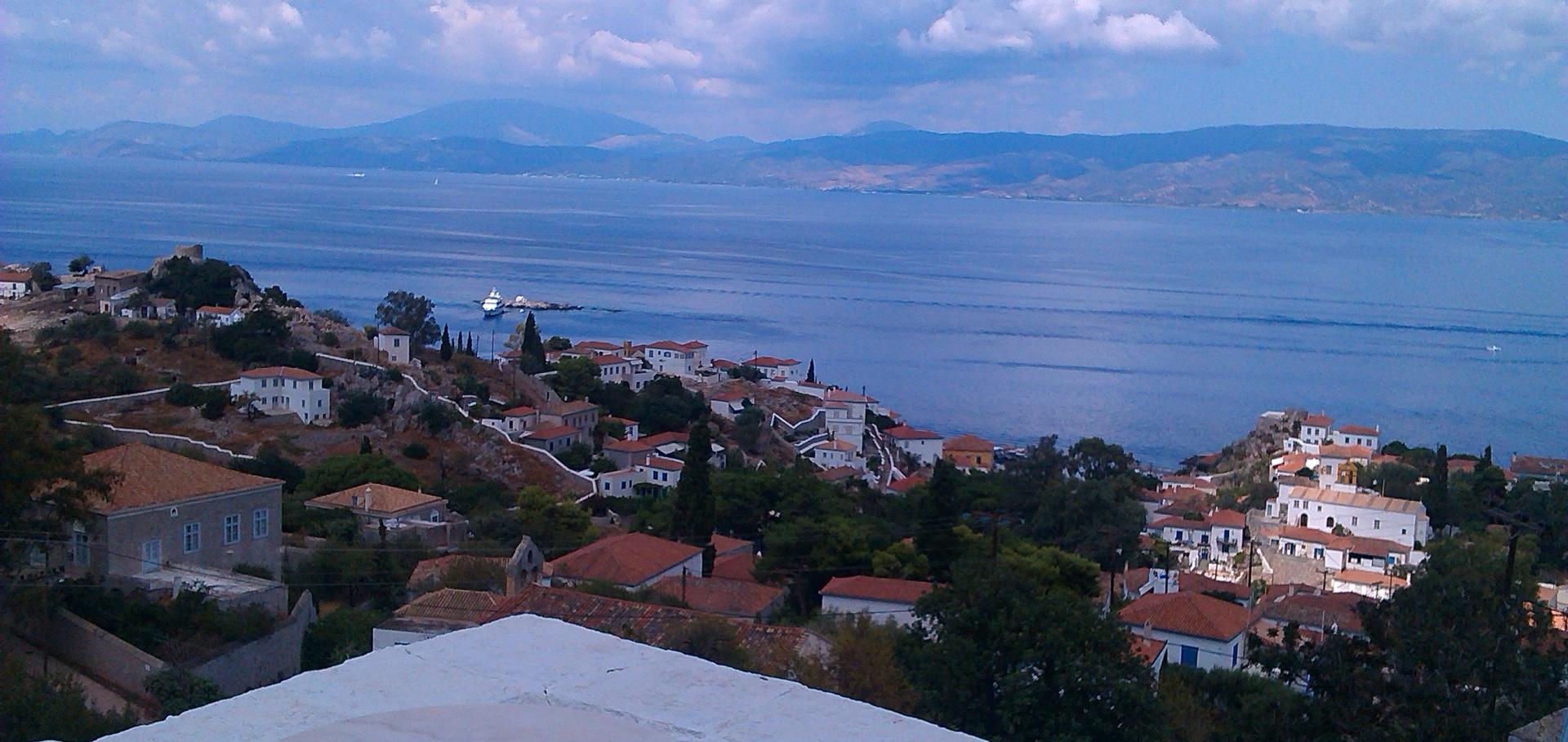
where I'd like to be ...

Prof Subir Sarkar

Professor Emeritus

Research theme

  • Particle astrophysics & cosmology
  • Fundamental particles and interactions

Sub department

  • Rudolf Peierls Centre for Theoretical Physics

Research groups

  • Particle theory
Subir.Sarkar@physics.ox.ac.uk
Telephone: 01865 (2)73962
Rudolf Peierls Centre for Theoretical Physics, room 60.12
Old homepage
Brief CV
  • About
  • Research
  • Teaching
  • Service
  • Outreach
  • Awards/News
  • IceCube@Oxford
  • Publications

IceCube

Physics World 2013 Breakthrough of the Year
IceCube at Oxford

I am a member since 2004 of the IceCube collaboration which discovered cosmic high energy neutrinos and identified some of their astrophysical sources.

IceCube @ Oxford

Neutrino diagnostics of ultra-high energy cosmic ray protons

(2009)

Authors:

Markus Ahlers, Luis A Anchordoqui, Subir Sarkar
More details from the publisher

Atmospheric effects on extensive air showers observed with the surface detector of the Pierre Auger observatory

Astroparticle Physics 32:2 (2009) 89-99

Authors:

J Abraham, P Abreu, M Aglietta, C Aguirre, EJ Ahn, D Allard, I Allekotte, J Allen, P Allison, J Alvarez-Muñiz, M Ambrosio, L Anchordoqui, S Andringa, A Anzalone, C Aramo, E Arganda, S Argirò, K Arisaka, F Arneodo, F Arqueros, T Asch, H Asorey, P Assis, J Aublin, M Ave, G Avila, T Bäcker, D Badagnani, KB Barber, AF Barbosa, SLC Barroso, B Baughman, P Bauleo, JJ Beatty, T Beau, BR Becker, KH Becker, A Bellétoile, JA Bellido, S BenZvi, C Berat, P Bernardini, X Bertou, PL Biermann, P Billoir, O Blanch-Bigas, F Blanco, C Bleve, H Blümer, M Boháčová, C Bonifazi, R Bonino, N Borodai, J Brack, P Brogueira, WC Brown, R Bruijn, P Buchholz, A Bueno, RE Burton, NG Busca, KS Caballero-Mora, L Caramete, R Caruso, W Carvalho, A Castellina, O Catalano, L Cazon, R Cester, J Chauvin, A Chiavassa, JA Chinellato, A Chou, J Chudoba, J Chye, RW Clay, E Colombo, R Conceição, B Connolly, F Contreras, J Coppens, A Cordier, U Cotti, S Coutu, CE Covault, A Creusot, A Criss, J Cronin, A Curutiu, S Dagoret-Campagne, R Dallier, K Daumiller, BR Dawson, RM de Almeida, M De Domenico, C De Donato, SJ de Jong, G De La Vega, WJM de Mello, JRT de Mello Neto

Abstract:

Atmospheric parameters, such as pressure (P), temperature (T) and density (ρ ∝ P / T), affect the development of extensive air showers initiated by energetic cosmic rays. We have studied the impact of atmospheric variations on extensive air showers by means of the surface detector of the Pierre Auger Observatory. The rate of events shows a ∼ 10 % seasonal modulation and ∼ 2 % diurnal one. We find that the observed behaviour is explained by a model including the effects associated with the variations of P and ρ. The former affects the longitudinal development of air showers while the latter influences the Molière radius and hence the lateral distribution of the shower particles. The model is validated with full simulations of extensive air showers using atmospheric profiles measured at the site of the Pierre Auger Observatory. © 2009 Elsevier B.V. All rights reserved.
More details from the publisher
More details
Details from ArXiV

First neutrino point-source results from the 22 string IceCube detector

Astrophysical Journal 701:1 PART 2 (2009) L47-L51

Authors:

R Abbasi, Y Abdou, M Ackermann, J Adams, J Aguilar, M Ahlers, K Andeen, J Auffenberg, X Bai, M Baker, SW Barwick, R Bay, JL Bazo Alba, K Beattie, JJ Beatty, S Bechet, JK Becker, KH Becker, ML Benabderrahmane, J Berdermann, P Berghaus, D Berley, E Bernardini, D Bertrand, DZ Besson, M Bissok, E Blaufuss, DJ Boersma, C Bohm, J Bolmont, S Böser, O Botner, L Bradley, J Braun, D Breder, T Castermans, D Chirkin, B Christy, J Clem, S Cohen, DF Cowen, MV D'Agostino, M Danninger, CT Day, C De Clercq, L Demirörs, O Depaepe, F Descamps, P Desiati, G De Vries-Uiterweerd, T Deyoung, JC Diaz-Velez, J Dreyer, JP Dumm, MR Duvoort, WR Edwards, R Ehrlich, J Eisch, RW Ellsworth, O Engdegård, S Euler, PA Evenson, O Fadiran, AR Fazely, T Feusels, K Filimonov, C Finley, MM Foerster, BD Fox, A Franckowiak, R Franke, TK Gaisser, J Gallagher, R Ganugapati, L Gerhardt, L Gladstone, A Goldschmidt, JA Goodman, R Gozzini, D Grant, T Griesel, A Gro, S Grullon, RM Gunasingha, M Gurtner, C Ha, A Hallgren, F Halzen, K Han, K Hanson, Y Hasegawa, J Heise, K Helbing, P Herquet, S Hickford, GC Hill, KD Hoffman, K Hoshina, D Hubert, W Huelsnitz

Abstract:

We present new results of searches for neutrino point sources in the northern sky, using data recorded in 2007-2008 with 22 strings of the IceCube detector (approximately one-fourth of the planned total) and 275.7 days of live time. The final sample of 5114 neutrino candidate events agrees well with the expected background of atmospheric muon neutrinos and a small component of atmospheric muons. No evidence of a point source is found, with the most significant excess of events in the sky at 2.2σ after accounting for all trials. The average upper limit over the northern sky for point sources of muon-neutrinos with E -2 spectrum is E -2 φv le; 1.4 × 10⁻¹¹ TeV cm?2 ≤ s?1, in the energy range from 3TeV to 3PeV, improving the previous best average upper limit by the AMANDA-II detector by a factor of 2. © 2009. The American Astronomical Society.
More details from the publisher
More details
Details from ArXiV

Search for high-energy muon neutrinos from the "naked-eye" grb080319b with the icecube neutrino telescope

Astrophysical Journal 701:2 (2009) 1721-1731

Authors:

R Abbasi, Y Abdou, T Abu-Zayyad, J Adams, JA Aguilar, M Ahlers, K Andeen, J Auffenberg, X Bai, M Baker, SW Barwick, R Bay, JLB Alba, K Beattie, JJ Beatty, S Bechet, JK Becker, KH Becker, ML Benabderrahmane, J Berdermann, P Berghaus, D Berley, E Bernardini, D Bertrand, DZ Besson, M Bissok, E Blaufuss, DJ Boersma, C Bohm, J Bolmont, O Botner, L Bradley, J Braun, D Breder, T Castermans, D Chirkin, B Christy, J Clem, S Cohen, DF Cowen, MV D'Agostino, M Danninger, CT Day, C De Clercq, L Demirörs, O Depaepe, F Descamps, P Desiati, G De Vries-Uiterweerd, T Deyoung, JC Diaz-Velez, J Dreyer, JP Dumm, MR Duvoort, WR Edwards, R Ehrlich, J Eisch, RW Ellsworth, O Engdegrd, S Euler, PA Evenson, O Fadiran, AR Fazely, T Feusels, K Filimonov, C Finley, MM Foerster, BD Fox, A Franckowiak, R Franke, TK Gaisser, J Gallagher, R Ganugapati, L Gerhardt, L Gladstone, A Goldschmidt, JA Goodman, R Gozzini, D Grant, T Griesel, A Gro, S Grullon, RM Gunasingha, M Gurtner, C Ha, A Hallgren, F Halzen, K Han, K Hanson, Y Hasegawa, J Heise, K Helbing, P Herquet, S Hickford, GC Hill, KD Hoffman, K Hoshina, D Hubert, W Huelsnitz, JP Hül

Abstract:

We report on a search with the IceCube detector for high-energy muon neutrinos from GRB080319B, one of the brightest gamma-ray bursts (GRBs) ever observed. The fireball model predicts that a mean of 0.1 events should be detected by IceCube for a bulk Lorentz boost of the jet of 300. In both the direct on-time window of 66s and an extended window of about 300s around the GRB, no excess was found above background. The 90% CL upper limit on the number of track-like events from the GRB is 2.7, corresponding to a muon neutrino fluence limit of 9.5 × 10⁻³ erg cm-2 in the energy range between 120 TeV and 2.2 PeV, which contains 90% of the expected events. © 2009 The American Astronomical Society. All rights reserved.
More details from the publisher
More details
Details from ArXiV

Upper limit on the cosmic-ray photon fraction at EeV energies from the Pierre Auger Observatory

Astroparticle Physics 31:6 (2009) 399-406

Authors:

J Abraham, P Abreu, M Aglietta, C Aguirre, EJ Ahn, D Allard, I Allekotte, J Allen, P Allison, J Alvarez-Muñiz, M Ambrosio, L Anchordoqui, S Andringa, A Anzalone, C Aramo, S Argiró, K Arisaka, F Arneodo, F Arqueros, T Asch, H Asorey, P Assis, J Aublin, M Ave, G Avila, T Bäcker, D Badagnani, KB Barber, AF Barbosa, SLC Barroso, B Baughman, P Bauleo, JJ Beatty, T Beau, BR Becker, KH Becker, A Bellétoile, JA Bellido, S BenZvi, C Berat, P Bernardini, X Bertou, PL Biermann, P Billoir, O Blanch-Bigas, F Blanco, C Bleve, H Blümer, M Boháčová, C Bonifazi, R Bonino, J Brack, P Brogueira, WC Brown, R Bruijn, P Buchholz, A Bueno, RE Burton, NG Busca, KS Caballero-Mora, L Caramete, R Caruso, W Carvalho, A Castellina, O Catalano, L Cazon, R Cester, J Chauvin, A Chiavassa, JA Chinellato, A Chou, J Chudoba, J Chye, RW Clay, E Colombo, R Conceição, B Connolly, F Contreras, J Coppens, A Cordier, U Cotti, S Coutu, CE Covault, A Creusot, A Criss, J Cronin, A Curutiu, S Dagoret-Campagne, K Daumiller, BR Dawson, RM de Almeida, M De Domenico, C De Donato, SJ de Jong, G De La Vega, WJM de Mello, JRT de Mello Neto, I De Mitri, V de Souza, G Decerprit

Abstract:

From direct observations of the longitudinal development of ultra-high energy air showers performed with the Pierre Auger Observatory, upper limits of 3.8%, 2.4%, 3.5% and 11.7% (at 95% c.l.) are obtained on the fraction of cosmic-ray photons above 2, 3, 5 and 10 EeV (1 EeV ≡ 1018 eV), respectively. These are the first experimental limits on ultra-high energy photons at energies below 10 EeV. The results complement previous constraints on top-down models from array data and they reduce systematic uncertainties in the interpretation of shower data in terms of primary flux, nuclear composition and proton-air cross-section. © 2009 Elsevier B.V. All rights reserved.
More details from the publisher
More details
Details from ArXiV

Pagination

  • First page First
  • Previous page Prev
  • …
  • Page 234
  • Page 235
  • Page 236
  • Page 237
  • Current page 238
  • Page 239
  • Page 240
  • Page 241
  • Page 242
  • …
  • Next page Next
  • Last page Last

Footer Menu

  • Contact us
  • Giving to the Dept of Physics
  • Work with us
  • Media

User account menu

  • Log in

Follow us

FIND US

Clarendon Laboratory,

Parks Road,

Oxford,

OX1 3PU

CONTACT US

Tel: +44(0)1865272200

University of Oxfrod logo Department Of Physics text logo
IOP Juno Champion logo Athena Swan Silver Award logo

© University of Oxford - Department of Physics

Cookies | Privacy policy | Accessibility statement

Built by: Versantus

  • Home
  • Research
  • Study
  • Engage
  • Our people
  • News & Comment
  • Events
  • Our facilities & services
  • About us
  • Giving to Physics
  • Current students
  • Staff intranet