Home
Department Of Physics text logo
  • Research
    • Our research
    • Our research groups
    • Our research in action
    • Research funding support
    • Summer internships for undergraduates
  • Study
    • Undergraduates
    • Postgraduates
  • Engage
    • For young people
    • For teachers
    • For the public
    • For alumni
    • For business
  • Support
Menu
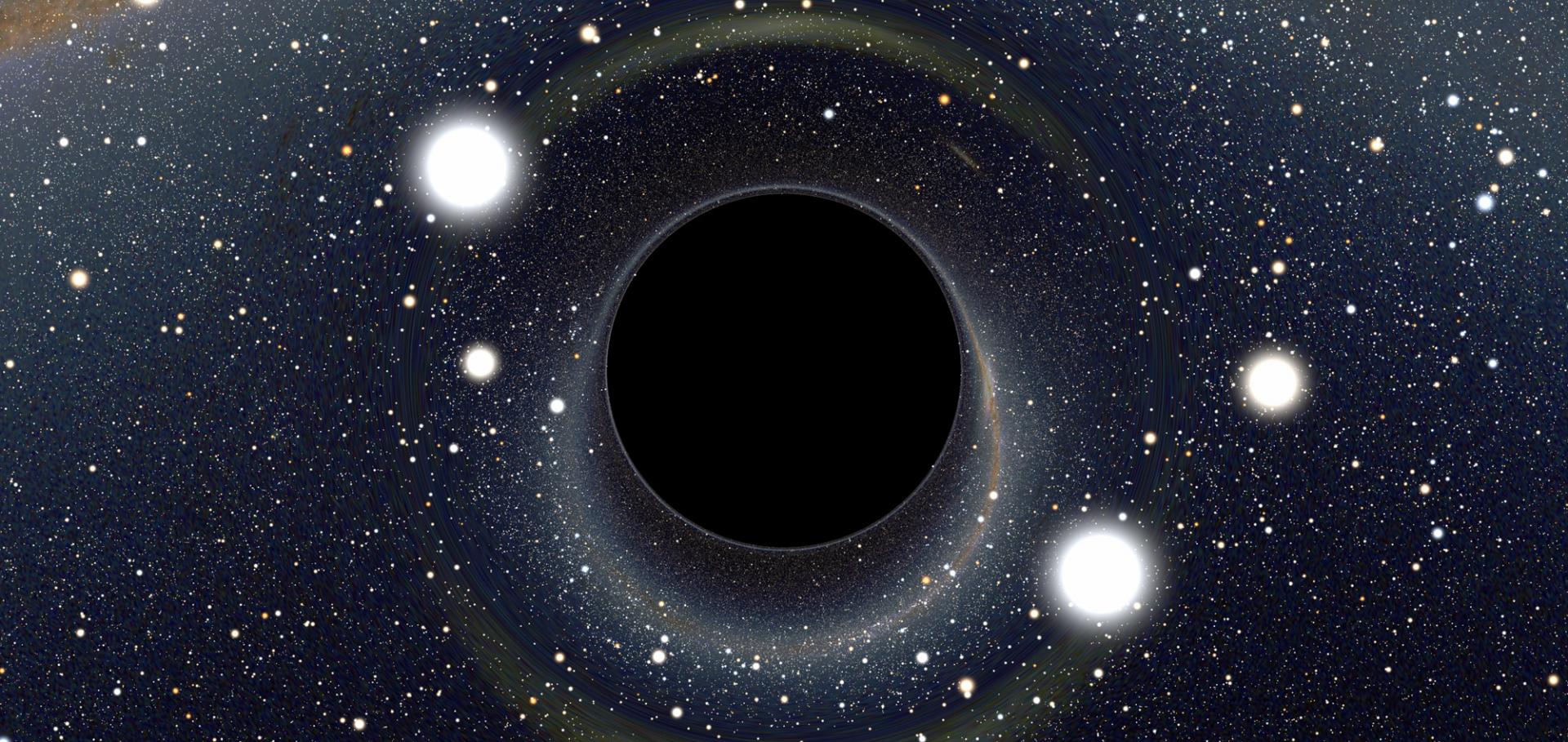
Black Hole

Lensing of space time around a black hole. At Oxford we study black holes observationally and theoretically on all size and time scales - it is some of our core work.

Credit: ALAIN RIAZUELO, IAP/UPMC/CNRS. CLICK HERE TO VIEW MORE IMAGES.

Angela Taylor

Professor of Experimental Astrophysics

Research theme

  • Astronomy and astrophysics
  • Particle astrophysics & cosmology
  • Instrumentation

Sub department

  • Astrophysics

Research groups

  • Experimental radio cosmology
  • C-BASS
  • The Square Kilometre Array (SKA)
Angela.Taylor@physics.ox.ac.uk
Telephone: 01865 (2)73297
Denys Wilkinson Building, room 753
  • About
  • Publications

Very Small Array observations of the Sunyaev-Zel’dovich effect in nearby galaxy clusters

\mnras 359 (2005) 16-30-16-30

Authors:

K Lancaster, R Genova-Santos, N Falcòn, K Grainge, C Gutièrrez, R Kneissl, P Marshall, G Pooley, R Rebolo, J-A Rubi no-Martin, RDE Saunders, E Waldram, RA Watson
More details from the publisher

CMB observations from the CBI and VSA: A comparison of coincident maps and parameter estimation methods

ArXiv astro-ph/0502330 (2005)

Authors:

N Rajguru, ST Myers, RA Battye, J Richard Bond, K Cleary, CR Contaldi, RD Davies, RJ Davis, C Dickinson, R Genova-Santos, K Grainge, YA Hafez, MP Hobson, ME Jones, R Kneissl, K Lancaster, A Lasenby, BS Mason, TJ Pearson, GG Pooley, ACS Readhead, R Rebolo, G Rocha, JA Rubino-Martin, RDE Saunders, RS Savage, A Scaife, PF Scott, JL Sievers, A Slosar, AC Taylor, D Titterington, E Waldram, RA Watson, A Wilkinson

Abstract:

We present coincident observations of the Cosmic Microwave Background (CMB) from the Very Small Array (VSA) and Cosmic Background Imager (CBI) telescopes. The consistency of the full datasets is tested in the map plane and the Fourier plane, prior to the usual compression of CMB data into flat bandpowers. Of the three mosaics observed by each group, two are found to be in excellent agreement. In the third mosaic, there is a 2 sigma discrepancy between the correlation of the data and the level expected from Monte Carlo simulations. This is shown to be consistent with increased phase calibration errors on VSA data during summer observations. We also consider the parameter estimation method of each group. The key difference is the use of the variance window function in place of the bandpower window function, an approximation used by the VSA group. A re-evaluation of the VSA parameter estimates, using bandpower windows, shows that the two methods yield consistent results.
Details from ArXiV
More details from the publisher
More details

VizieR Online Data Catalog: Very Small Array. II. CMB at 34GHz (Taylor+, 2003)

VizieR Online Data Catalog 734 (2005) 11066-11066

Authors:

AC Taylor, P Carreira, K Cleary, RD Davies, RJ Davis, C Dickinson, K Grainge, CM Gutierrez, MP Hobson, ME Jones, R Kneissl, A Lasenby, JP Leahy, K Maisinger, GG Pooley, R Rebolo, JA Rubino-Martin, B Rusholme, RDE Saunders, R Savage, PF Scott, A Slosar, PJ Sosa Molina, D Titterington, E Waldram, RA Watson, A Wilkinson

Clover experiment: The receiver block

EAS PUBLICATIONS 14 (2005) 245-250

Authors:

G Pisano, PAR Ade, C Calderon, AD Challinor, P De Bernardis, L Dunlop, WK Gear, Y Giraud-Heraud, DJ Goldie, KJB Grainge, KG Isaak, B Johnson, ME Jones, AN Lasenby, B Maffei, PD Mauskopf, SJ Melhuish, A Orlando, L Piccirillo, AC Taylor, S Withington, G Yassin

Abstract:

The ClOVER instrument (described elsewhere in this volume) is being built to measure the B-mode polarisation of the Cosmic Microwave Background. Each of the 256 pixels is made up a pseudo-correlation receiver that can be realised using either waveguide or microstrip technology. In this work we present a design study for a possible waveguide-based solution. Each of the individual components has been optimised using electromagnetic finite-element modelling software (HFSS).
More details from the publisher
More details

Clover: The CMB polarization observer

EAS PUBLICATIONS 14 (2005) 251-256

Authors:

B Maffei, PAR Ade, C Calderon, AD Challinor, P De Bernardis, L Dunlop, WK Gear, Y Giraud-Heraud, DJ Goldie, KJB Grainge, KG Isaak, B Johnson, ME Jones, AN Lasenby, PD Mauskopf, SJ Melhuish, A Orlando, L Piccirillo, G Pisano, AC Taylor, S Withington, G Yassin

Abstract:

We present a new, fully-funded ground-based instrument designed to measure the B-mode polarization of the Cosmic Microwave Background (CMB). The concept is based on three independent subsystems operating at 90, 150 and 220 GHz, each comprising a telescope and a focal plane of horn-coupled background-limited bolometers. This highly-sensitive experiment, planned to be based at Dome C station in Antarctica, is optimised to produce very low systematic effects. It will allow the detection of the CMB polarization over angular multipoles 20 < l < 1000 accurately enough to measure the B-mode signature from gravitational waves to a lensing-confusion-limited tensor-to-scalar ratio r similar to 0.005.
More details from the publisher
More details

Pagination

  • First page First
  • Previous page Prev
  • …
  • Page 15
  • Page 16
  • Page 17
  • Page 18
  • Current page 19
  • Page 20
  • Page 21
  • Page 22
  • Page 23
  • …
  • Next page Next
  • Last page Last

Footer Menu

  • Contact us
  • Giving to the Dept of Physics
  • Work with us
  • Media

User account menu

  • Log in

Follow us

FIND US

Clarendon Laboratory,

Parks Road,

Oxford,

OX1 3PU

CONTACT US

Tel: +44(0)1865272200

University of Oxfrod logo Department Of Physics text logo
IOP Juno Champion logo Athena Swan Silver Award logo

© University of Oxford - Department of Physics

Cookies | Privacy policy | Accessibility statement

Built by: Versantus

  • Home
  • Research
  • Study
  • Engage
  • Our people
  • News & Comment
  • Events
  • Our facilities & services
  • About us
  • Giving to Physics
  • Current students
  • Staff intranet