

WISDOM Project–XXVI. Cross-checking supermassive black hole mass estimates from ALMA CO gas kinematics and SINFONI stellar kinematics in the galaxy NGC 4751
Monthly Notices of the Royal Astronomical Society Oxford University Press 542:3 (2025) 2039-2059
Abstract:
We present high angular resolution (0.19 arcsec or pc) Atacama Large Millimeter/submillimeter Array observations of the CO(3–2) line emission of the galaxy NGC 4751. The data provide evidence for the presence of a central supermassive black hole (SMBH). Assuming a constant mass-to-light ratio (), we infer a SMBH mass M and a F160W filter stellar M/L, where the first uncertainties are statistical and the second systematic. Assuming a linearly spatially varying , we infer M and , where R is the galactocentric radius. We also present SMBH mass estimates using the Jeans Anisotropic Modelling (JAM) method and Very Large Telescope Spectrograph for INtegral Field Observations in the Near Infrared (SINFONI) stellar kinematics. Assuming a cylindrically aligned velocity ellipsoid (JAM), we infer M, and while assuming a spherically aligned velocity ellipsoid (JAM), we infer M. The SMBH mass assuming a constant is statistically consistent with that of JAM, whereas the mass assuming a linearly varying is consistent with both JAM and JAM (within the uncertainties). Our derived masses are larger than (and inconsistent with) one previous stellar dynamical measurement using the Schwarzschild orbit-superposition method and the same SINFONI kinematics.The revolution in strong lensing discoveries from Euclid
Nature Astronomy 9:8 (2025) 1116-1122
Abstract:
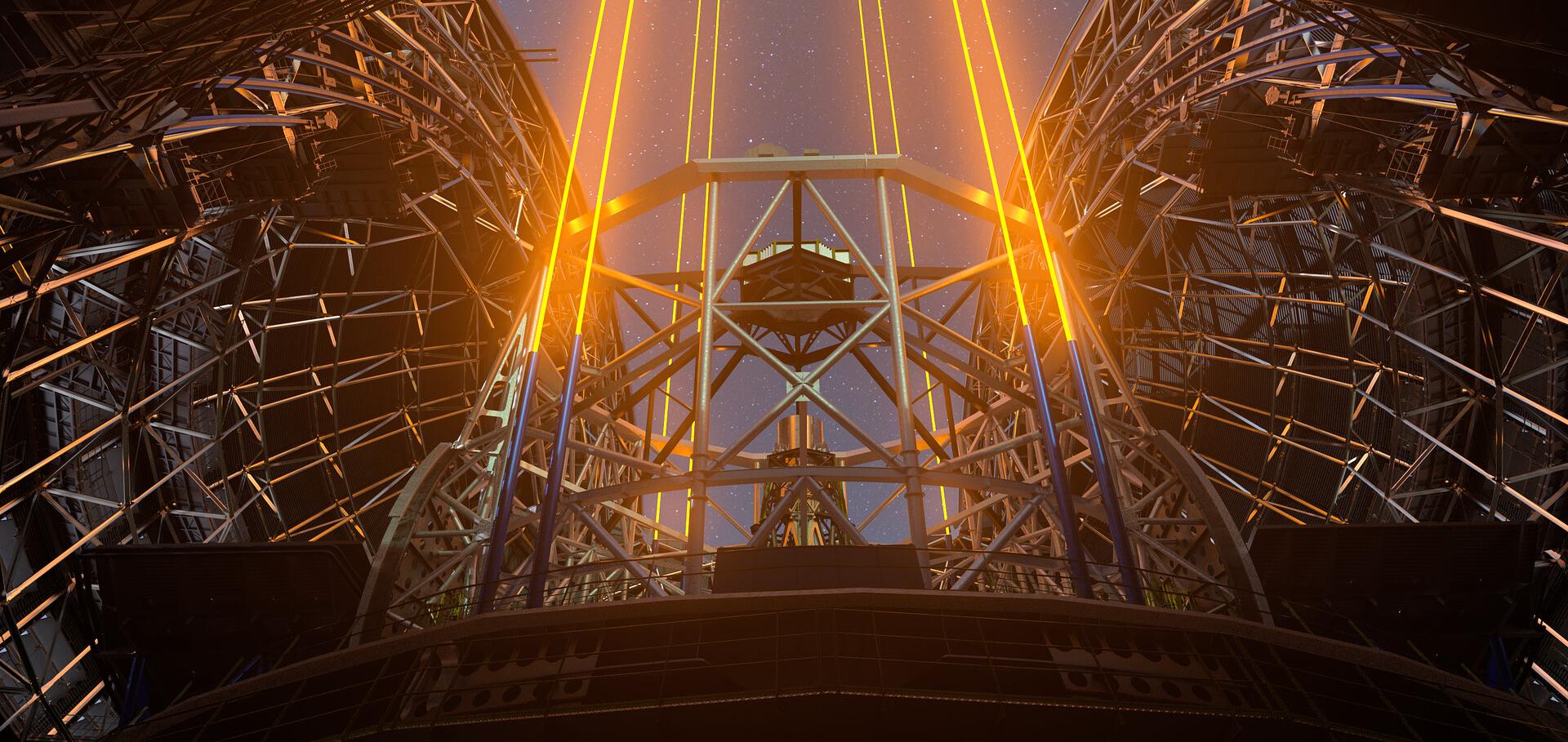
Strong gravitational lensing offers a powerful and direct probe of dark matter, galaxy evolution and cosmology, yet strong lenses are rare: only 1 in roughly 10,000 massive galaxies can lens a background source into multiple images. The European Space Agency’s Euclid telescope, with its unique combination of high-resolution imaging and wide-area sky coverage, is set to transform this field. In its first quick data release, covering just 0.45% of the full survey area, around 500 high-quality strong lens candidates have been identified using a synergy of machine learning, citizen science and expert visual inspection. This dataset includes exotic systems such as compound lenses and edge-on disk lenses, demonstrating Euclid’s capacity to probe the lens parameter space. The machine learning models developed to discover strong lenses in Euclid data are able to find lenses with high purity rates, confirming that the mission’s forecast of discovering over 100,000 strong lenses is achievable during its 6-year mission. This will increase the number of known strong lenses by two orders of magnitude, transforming the science that can be done with strong lensing.Simulating Intermediate Black Hole Mass Measurements for a Sample of Galaxies with Nuclear Star Clusters Using ELT/HARMONI High Spatial Resolution Integral-field Stellar Kinematics
Astronomical Journal American Astronomical Society 170:2 (2025) 124
Abstract:
Understanding the demographics of intermediate-mass black holes (IMBHs, MBH ≈ 102–105 M⊙) in low-mass galaxies is key to constraining black hole seed formation models, but detecting them is challenging due to their small gravitational sphere of influence (SOI). The upcoming Extremely Large Telescope (ELT) High Angular Resolution Monolithic Optical and Near-infrared Integral Field Spectrograph (HARMONI) instrument, with its high angular resolution, offers a promising solution. We present simulations assessing HARMONI’s ability to measure IMBH masses in nuclear star clusters (NSCs) of nearby dwarf galaxies. We selected a sample of 44 candidates within 10 Mpc. For two representative targets, NGC 300 and NGC 3115 dw01, we generated mock HARMONI integral-field data cubes using realistic inputs derived from Hubble Space Telescope imaging, stellar population models, and Jeans anisotropic models (JAM), assuming IMBH masses up to 1% of the NSC mass. We simulated observations across six near-infrared gratings at 10 mas resolution. Analyzing the mock data with standard kinematic extraction and JAM models in a Bayesian framework, we demonstrate that HARMONI can resolve the IMBH SOI and accurately recover masses down to ≈0.5% of the NSC mass within feasible exposure times. These results highlight HARMONI’s potential to revolutionize IMBH studies.Assessing robustness and bias in 1D retrievals of 3D Global Circulation Models at high spectral resolution: a WASP-76 b simulation case study in emission
(2025)
JWST reveals cosmic ray dominated chemistry in the local ULIRG IRAS 07251−0248
Monthly Notices of the Royal Astronomical Society: Letters Oxford University Press 542:1 (2025) L117-L125