Home
Department Of Physics text logo
  • Research
    • Our research
    • Our research groups
    • Our research in action
    • Research funding support
    • Summer internships for undergraduates
  • Study
    • Undergraduates
    • Postgraduates
  • Engage
    • For young people
    • For teachers
    • For the public
    • For alumni
    • For business
  • Support
Menu
CMP
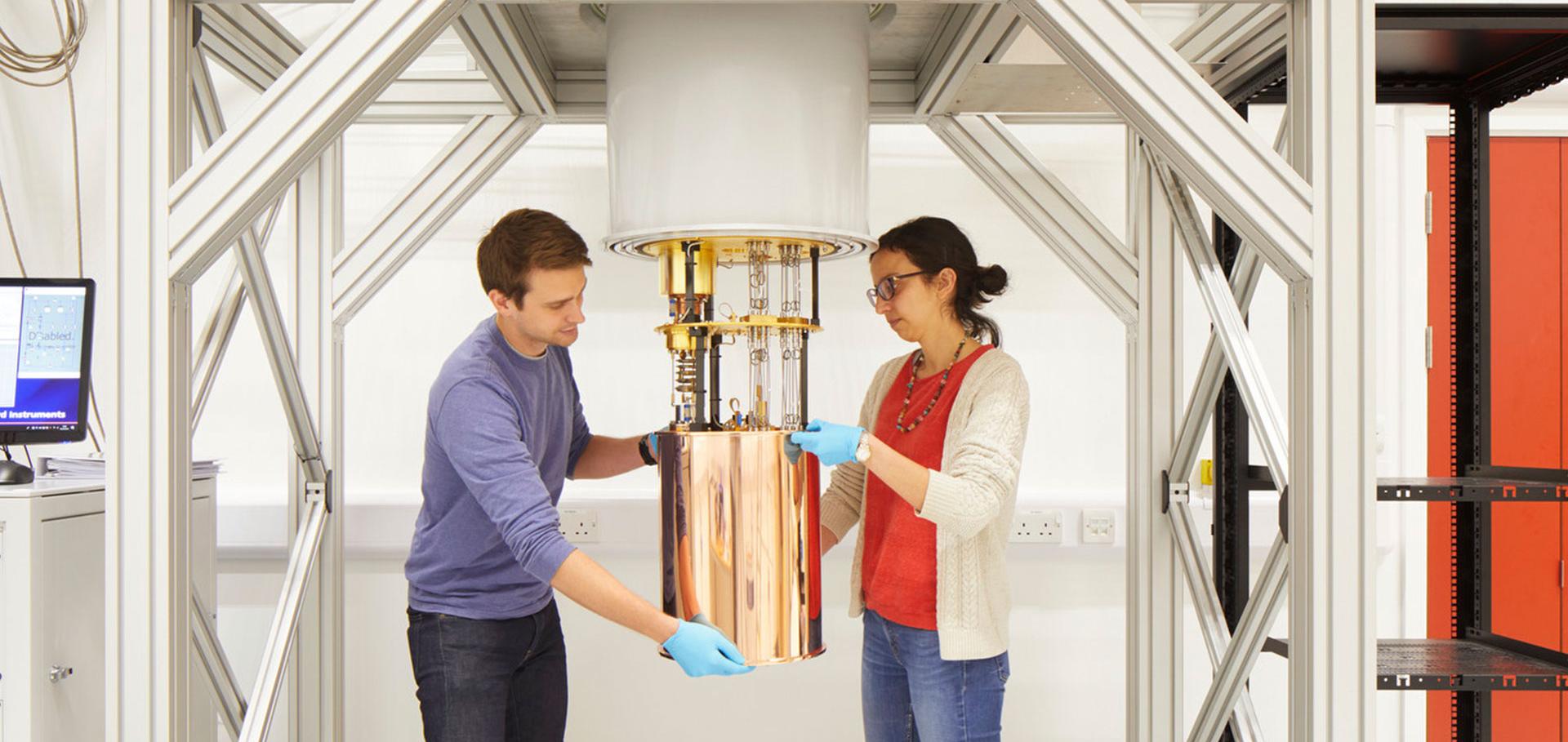
Credit: Jack Hobhouse

David Keen

Visiting Professor

Sub department

  • Condensed Matter Physics

Research groups

  • X-ray and neutron scattering
david.keen@physics.ox.ac.uk
Telephone: 01865 (2)72310
Clarendon Laboratory, room 106
  • About
  • Publications

Nanoporous structure and medium-range order in synthetic amorphous calcium carbonate

Chemistry of Materials 22:10 (2010) 3197-3205

Authors:

AL Goodwin, FM Michel, BL Phillips, DA Keen, MT Dove, RJ Reeder

Abstract:

We adopt a reverse Monte Carlo refinement approach, using experimental X-ray total scattering data, to develop a structure model for synthetic, hydrated amorphous calcium carbonate (ACC). The ACC is revealed to consist of a porous calcium-rich framework that supports interconnected channels containing water and carbonate molecules. The existence of a previously unrecognized nanometer-scale channel network suggests mechanisms of how additives can be accommodated within the structure and provide temporary stabilization, as well as influence the crystallization process. Moreover, while lacking long-range order, the calcium-rich framework in the ACC contains similar Ca packing density to that present in calcite, aragonite, and vaterite, yielding clues of how the amorphous material converts into the different crystalline forms. Our results provide a new starting point for advancing our understanding of biomineralization as well as the development of biomimetic approaches to next-generation materials synthesis. © 2010 American Chemical Society.
More details from the publisher
More details

Occupational and environmental risk factors for falls among workers in the healthcare sector

Ergonomics Taylor & Francis 53:4 (2010) 525-536

Authors:

Sharla Drebit, Salomeh Shajari, Hasanat Alamgir, Shicheng Yu, Dave Keen
More details from the publisher
More details

Structure and Properties of an Amorphous Metal-Organic Framework

PHYSICAL REVIEW LETTERS 104:11 (2010) ARTN 115503

Authors:

Thomas D Bennett, Andrew L Goodwin, Martin T Dove, David A Keen, Matthew G Tucker, Emma R Barney, Alan K Soper, Erica G Bithell, Jin-Chong Tan, Anthony K Cheetham
More details from the publisher
More details
More details

Preface: Symposium HH

Materials Research Society Symposium Proceedings 1184 (2009)

Authors:

F Bridges, DA Keen, I Levin, T Proffen

Magnetic order and dynamics of the charge-ordered antiferromagnet La1.5Sr0.5CoO4

Phys Rev B AIP 80:13 (2009) 134414

Authors:

LM Helme, AT Boothroyd, R Coldea, D Prabhakaran, CD Frost, DA Keen, LP Regnault, PG Freeman, M Enderle, J Kulda

Abstract:

We describe neutron-scattering experiments performed to investigate the magnetic order and dynamics of half-doped La1.5Sr0.5CoO4. This layered perovskite exhibits a near-ideal checkerboard pattern of Co2+/Co3+ charge order at temperatures below ~800 K. Magnetic correlations are observed at temperatures below ~60 K but the magnetic order only becomes established at 31 K, a temperature at which a kink is observed in the susceptibility. On warming above 31 K we observed a change in the magnetic correlations which we attribute either to a spin canting or to a change in the proportion of inequivalent magnetic domains. The magnetic excitation spectrum is dominated by an intense band extending above a gap of approximately 3 meV up to a maximum energy of 16 meV. A weaker band exists in the energy range of 20–30 meV. We show that the excitation spectrum is in excellent quantitative agreement with the predictions of a spin-wave theory generalized to include the full magnetic degrees of freedom of high-spin Co2+ ions in an axially distorted crystal field, coupled by Heisenberg exchange interactions. The magnetic order is found to be stabilized by dominant antiferromagnetic Co2+–Co2+ interactions acting in a straight line through Co3+. No evidence is found for magnetic scattering from the Co3+ ions, supporting the view that Co3+ is in the S=0 state in this material.
More details from the publisher
More details
Details from ArXiV

Pagination

  • First page First
  • Previous page Prev
  • …
  • Page 29
  • Page 30
  • Page 31
  • Page 32
  • Current page 33
  • Page 34
  • Page 35
  • Page 36
  • Page 37
  • …
  • Next page Next
  • Last page Last

Footer Menu

  • Contact us
  • Giving to the Dept of Physics
  • Work with us
  • Media

User account menu

  • Log in

Follow us

FIND US

Clarendon Laboratory,

Parks Road,

Oxford,

OX1 3PU

CONTACT US

Tel: +44(0)1865272200

University of Oxfrod logo Department Of Physics text logo
IOP Juno Champion logo Athena Swan Silver Award logo

© University of Oxford - Department of Physics

Cookies | Privacy policy | Accessibility statement

Built by: Versantus

  • Home
  • Research
  • Study
  • Engage
  • Our people
  • News & Comment
  • Events
  • Our facilities & services
  • About us
  • Giving to Physics
  • Current students
  • Staff intranet