Home
Department Of Physics text logo
  • Research
    • Our research
    • Our research groups
    • Our research in action
    • Research funding support
    • Summer internships for undergraduates
  • Study
    • Undergraduates
    • Postgraduates
  • Engage
    • For young people
    • For teachers
    • For the public
    • For alumni
    • For business
  • Support
Menu
CMP
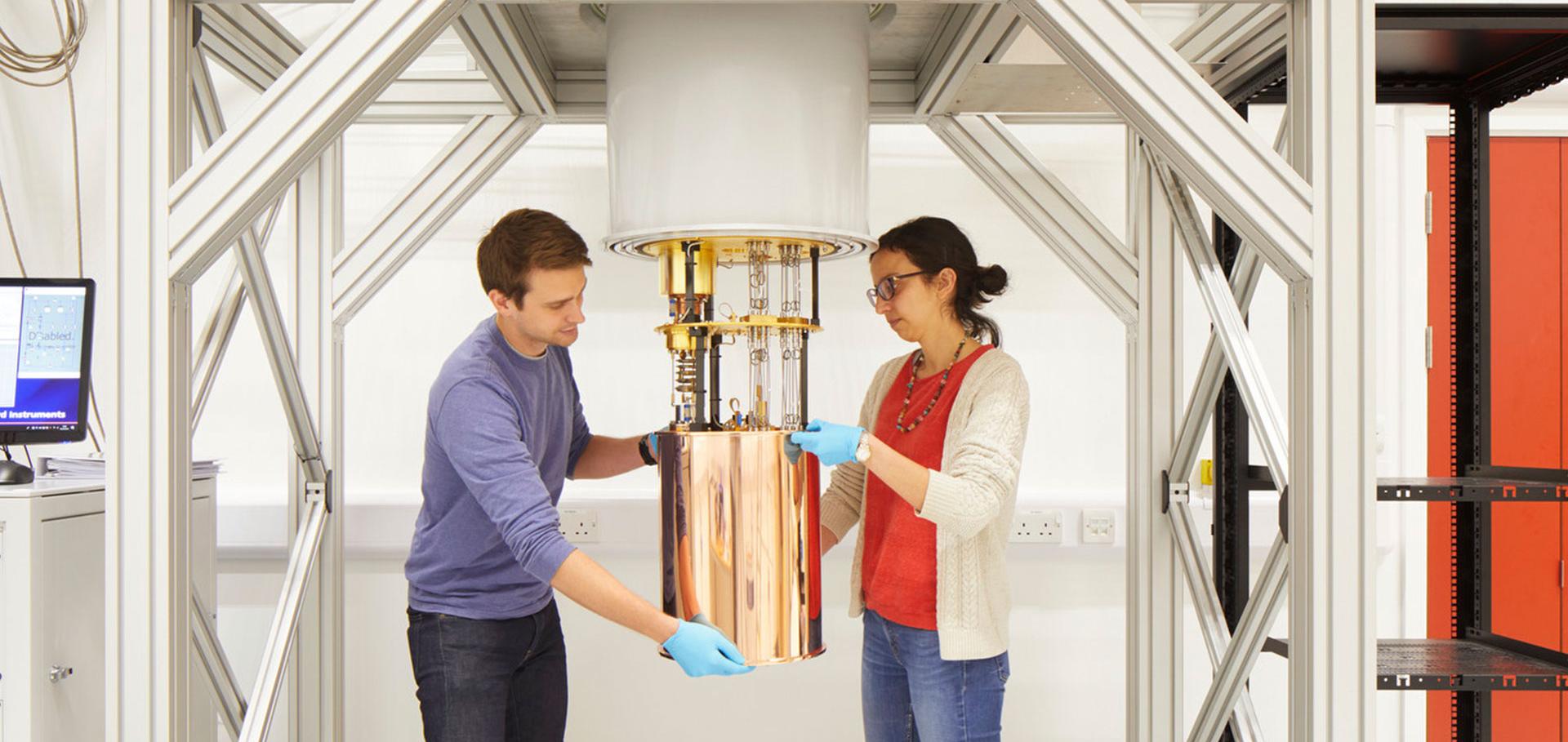
Credit: Jack Hobhouse

David Keen

Visiting Professor

Sub department

  • Condensed Matter Physics

Research groups

  • X-ray and neutron scattering
david.keen@physics.ox.ac.uk
Telephone: 01865 (2)72310
Clarendon Laboratory, room 106
  • About
  • Publications

Topologically Ordered Amorphous Silica Obtained from the Collapsed Siliceous Zeolite, Silicalite-1-F: A Step toward “Perfect” Glasses

Journal of the American Chemical Society American Chemical Society (ACS) 131:34 (2009) 12333-12338

Authors:

Julien Haines, Claire Levelut, Aude Isambert, Philippe Hébert, Shinji Kohara, David A Keen, Tahar Hammouda, Denis Andrault
More details from the publisher
More details
More details

Effect of Ga Content on the Instantaneous Structure of Al(1−x)Ga x PO4 Solid Solutions at High Temperature

Chemistry of Materials American Chemical Society (ACS) 21:2 (2009) 237-246

Authors:

Olivier Cambon, Julien Haines, Martine Cambon, David A Keen, Matthew G Tucker, Laurent Chapon, Niels K Hansen, Mohamed Souhassou, Florence Porcher
More details from the publisher

Large negative linear compressibility of Ag3[Co(CN)6].

Proc Natl Acad Sci U S A 105:48 (2008) 18708-18713

Authors:

Andrew L Goodwin, David A Keen, Matthew G Tucker

Abstract:

Silver(I) hexacyanocobaltate(III), Ag(3)[Co(CN)(6)], shows a large negative linear compressibility (NLC, linear expansion under hydrostatic pressure) at ambient temperature at all pressures up to our experimental limit of 7.65(2) GPa. This behavior is qualitatively unaffected by a transition at 0.19 GPa to a new phase Ag(3)[Co(CN)(6)]-II, whose structure is reported here. The high-pressure phase also shows anisotropic thermal expansion with large uniaxial negative thermal expansion (NTE, expansion on cooling). In both phases, the NLC/NTE effect arises as the rapid compression/contraction of layers of silver atoms--weakly bound via argentophilic interactions--is translated via flexing of the covalent network lattice into an expansion along a perpendicular direction. It is proposed that framework materials that contract along a specific direction on heating while expanding macroscopically will, in general, also expand along the same direction under hydrostatic pressure while contracting macroscopically.
More details from the publisher
More details

Argentophilicity-dependent colossal thermal expansion in extended prussian blue analogues.

J Am Chem Soc 130:30 (2008) 9660-9661

Authors:

Andrew L Goodwin, David A Keen, Matthew G Tucker, Martin T Dove, Lars Peters, John SO Evans

Abstract:

The thermal expansion behavior of isostructural variants of the colossal thermal expansion material Ag3[CoIII(CN)6] has been investigated using variable temperature X-ray and neutron powder diffraction. It was found that substitution at the octahedral transition metal site did not strongly affect the thermal expansion behavior, giving Ag3[FeIII(CN)6] as a new colossal thermal expansion material. Substitution at the Ag site (by D) was shown to reduce the thermal expansion coefficients by an order of magnitude. It was proposed that this correlation between the presence of argentophilic interactions and extreme thermal expansion behavior may explain a variety of thermal effects in flexible framework materials containing metallophilic interactions.
More details from the publisher
More details

Local structure in Ag3[Co(CN)6]: Colossal thermal expansion, rigid unit modes and argentophilic interactions

Journal of Physics Condensed Matter 20:25 (2008)

Authors:

MJ Conterio, AL Goodwin, MG Tucker, DA Keen, MT Dove, L Peters, JSO Evans

Abstract:

Local structure in the colossal thermal expansion material Ag 3[Co(CN)6] is studied here using a combination of neutron total scattering and reverse Monte Carlo (RMC) analysis. We show that the large thermal variations in cell dimensions occur with minimal distortion of the [Co(CN)6 ] coordination polyhedra, but involve significant flexing of the Co-CN-Ag-NC-Co linkages. We find real-space evidence in our RMC configurations for the importance of low-energy rigid unit modes (RUMs), particularly at temperatures below 150K. Using a reciprocal-space analysis we present the phonon density of states at 300K and show that the lowest-frequency region is dominated by RUMs and related modes. We also show that thermal variation in the energies of Ag...Ag interactions is evident in both the Ag partial pair distribution function and in the Ag partial phonon density of states. These findings are discussed in relation to the thermodynamic properties of the material. © 2008 IOP Publishing Ltd.
More details from the publisher
More details

Pagination

  • First page First
  • Previous page Prev
  • …
  • Page 30
  • Page 31
  • Page 32
  • Page 33
  • Current page 34
  • Page 35
  • Page 36
  • Page 37
  • Page 38
  • …
  • Next page Next
  • Last page Last

Footer Menu

  • Contact us
  • Giving to the Dept of Physics
  • Work with us
  • Media

User account menu

  • Log in

Follow us

FIND US

Clarendon Laboratory,

Parks Road,

Oxford,

OX1 3PU

CONTACT US

Tel: +44(0)1865272200

University of Oxfrod logo Department Of Physics text logo
IOP Juno Champion logo Athena Swan Silver Award logo

© University of Oxford - Department of Physics

Cookies | Privacy policy | Accessibility statement

Built by: Versantus

  • Home
  • Research
  • Study
  • Engage
  • Our people
  • News & Comment
  • Events
  • Our facilities & services
  • About us
  • Giving to Physics
  • Current students
  • Staff intranet