

Observing exoplanets in the near-infrared from a high altitude balloon platform
Journal of Astronomical Instrumentation World Scientific Publishing 8:3 (2019) 1950011
Abstract:
Although there exists a large sample of known exoplanets, little data exists that can be used to study their global atmospheric properties. This deficiency can be addressed by performing phase-resolved spectroscopy — continuous spectroscopic observations of a planet’s entire orbit about its host star — of transiting exoplanets. Planets with characteristics suitable for atmospheric characterization have orbits of several days, thus phase curve observations are highly resource intensive, especially for shared use facilities. In this work, we show that an infrared spectrograph operating from a high altitude balloon platform can perform phase-resolved spectroscopy of hot Jupiter-type exoplanets with performance comparable to a space-based telescope. Using the EXoplanet Climate Infrared TElescope (EXCITE) experiment as an example, we quantify the impact of the most important systematic effects that we expect to encounter from a balloon platform. We show an instrument like EXCITE will have the stability and sensitivity to significantly advance our understanding of exoplanet atmospheres. Such an instrument will both complement and serve as a critical bridge between current and future space-based near-infrared spectroscopic instruments.The effect of 3D transport-induced disequilibrium carbon chemistry on the atmospheric structure, phase curves, and emission spectra of hot Jupiter HD 189733b
Astrophysical Journal IOP Publishing 880:1 (2019) 14
Abstract:
On hot Jupiter exoplanets, strong horizontal and vertical winds should homogenize the abundances of the important absorbers CH4 and CO much faster than chemical reactions restore chemical equilibrium. This effect, typically neglected in general circulation models (GCMs), has been suggested to explain discrepancies between observed infrared light curves and those predicted by GCMs. On the nightsides of several hot Jupiters, GCMs predict outgoing fluxes that are too large, especially in the Spitzer 4.5 μm band. We modified the SPARC/MITgcm to include disequilibrium abundances of CH4, CO, and H2O by assuming that the CH4/CO ratio is constant throughout the simulation domain. We ran simulations of hot Jupiter HD 189733b with eight CH4/CO ratios. In the more likely CO-dominated regime, we find temperature changes ≥50–100 K compared to the simulation for equilibrium chemistry across large regions. This effect is large enough to affect predicted emission spectra and should thus be included in GCMs of hot Jupiters with equilibrium temperatures between 600 and 1300 K. We find that spectra in regions with strong methane absorption, including the Spitzer 3.6 and 8 μm bands, are strongly impacted by disequilibrium abundances. We expect chemical quenching to result in much larger nightside fluxes in the 3.6 μm band, in stark contrast to observations. Meanwhile, we find almost no effect on predicted observations in the 4.5 μm band, because the changes in opacity due to CO and H2O offset each other. We thus conclude that disequilibrium carbon chemistry cannot explain the observed low nightside fluxes in the 4.5 μm band.Constraining Exoplanet Metallicities and Aerosols with ARIEL: An Independent Study by the Contribution to ARIEL Spectroscopy of Exoplanets (CASE) Team
(2019)
Measurement of CH3D on Titan at Submillimeter Wavelengths
ASTRONOMICAL JOURNAL 157:6 (2019) ARTN 219
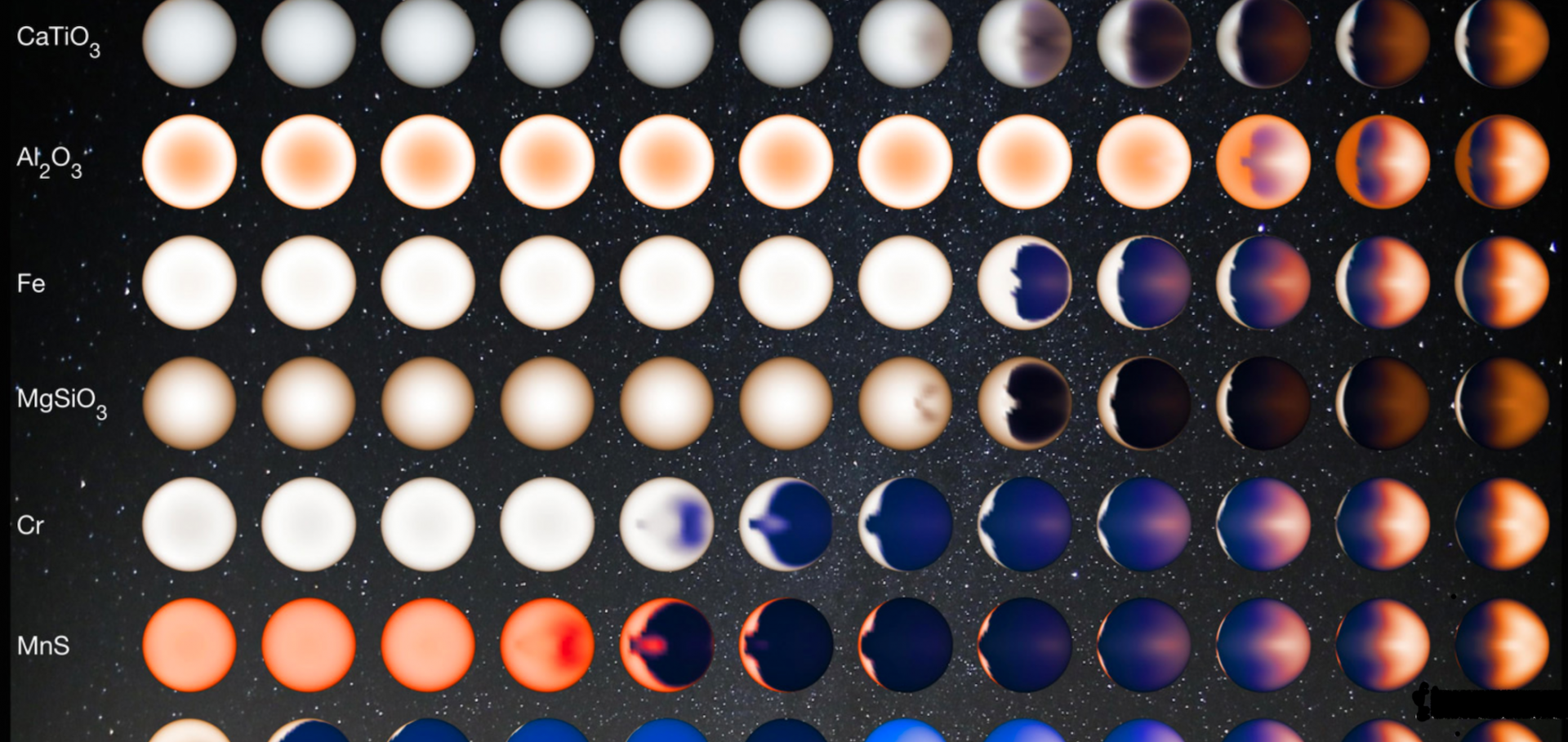
Sparkling nights and very hot days on WASP-18b: the formation of clouds and the emergence of an ionosphere
Astronomy & Astrophysics EDP Sciences 626 (2019) A133-A133