

Parameter estimation with cluster states
Physical Review A - Atomic, Molecular, and Optical Physics 79:2 (2009)
Abstract:
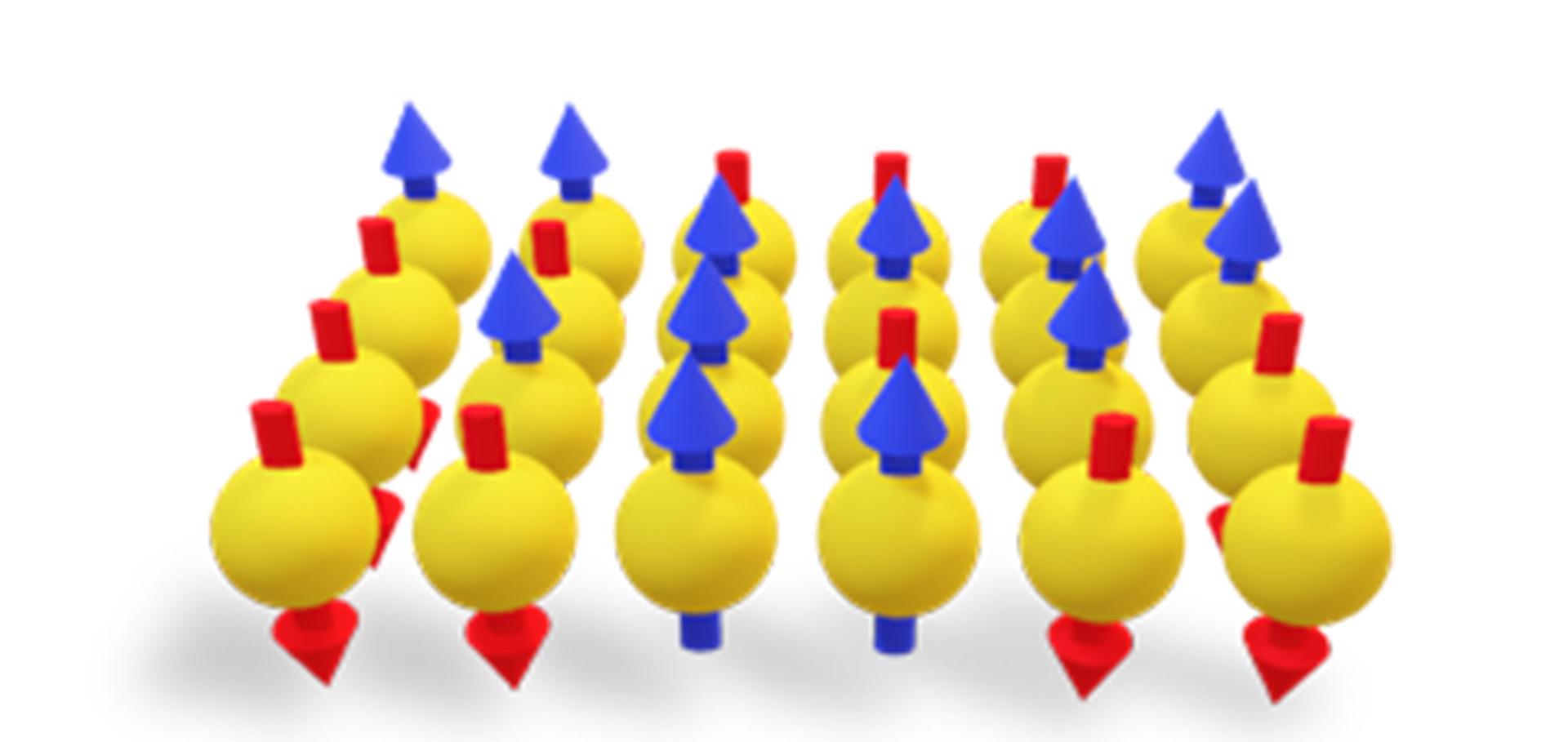
We propose a scheme for parameter estimation with cluster states. We find that phase estimation with cluster states under a many-body Hamiltonian and separable measurements leads to a precision at the Heisenberg limit. As noise models we study the dephasing, depolarizing, and pure damping channels. Decoherence reduces the sensitivity but our scheme remains superior over several reference schemes with states such as maximally entangled states and product states. For small cluster states and fixed evolution times it remains at the Heisenberg limit for approximately 2 times as many qubits than alternative schemes. © 2009 The American Physical Society.Parameter estimation with cluster states
PHYS REV A 79:2 (2009) 022103
Abstract:
We propose a scheme for parameter estimation with cluster states. We find that phase estimation with cluster states under a many-body Hamiltonian and separable measurements leads to a precision at the Heisenberg limit. As noise models we study the dephasing, depolarizing, and pure damping channels. Decoherence reduces the sensitivity but our scheme remains superior over several reference schemes with states such as maximally entangled states and product states. For small cluster states and fixed evolution times it remains at the Heisenberg limit for approximately 2 times as many qubits than alternative schemes.Multimode memories in atomic ensembles.
Phys Rev Lett 101:26 (2008) 260502
Abstract:
The ability to store multiple optical modes in a quantum memory allows for increased efficiency of quantum communication and computation. Here we compute the multimode capacity of a variety of quantum memory protocols based on light storage in ensembles of atoms. We find that adding a controlled inhomogeneous broadening improves this capacity significantly.Ultralarge Rydberg dimers in optical lattices
Physical Review A - Atomic, Molecular, and Optical Physics 78:4 (2008)
Abstract:
We investigate the dynamics of Rydberg electrons excited from the ground state of ultracold atoms trapped in an optical lattice. We first consider a lattice comprising an array of double-well potentials, where each double well is occupied by two ultracold atoms. We demonstrate the existence of molecular states with equilibrium distances of the order of experimentally attainable interwell spacings and binding energies of the order of 103 GHz. We also consider the situation whereby ground-state atoms trapped in an optical lattice are collectively excited to Rydberg levels, such that the charge-density distributions of neighboring atoms overlap. We compute the hopping rate and interaction matrix elements between highly excited electrons separated by distances comparable to typical lattice spacings. Such systems have tunable interaction parameters and a temperature ∼ 104 times smaller than the Fermi temperature, making them potentially attractive for the study and simulation of strongly correlated electronic systems. © 2008 The American Physical Society.Measuring phonon dephasing with ultrafast pulses using Raman spectral interference
Physical Review B Condensed Matter and Materials Physics 78:15 (2008)