

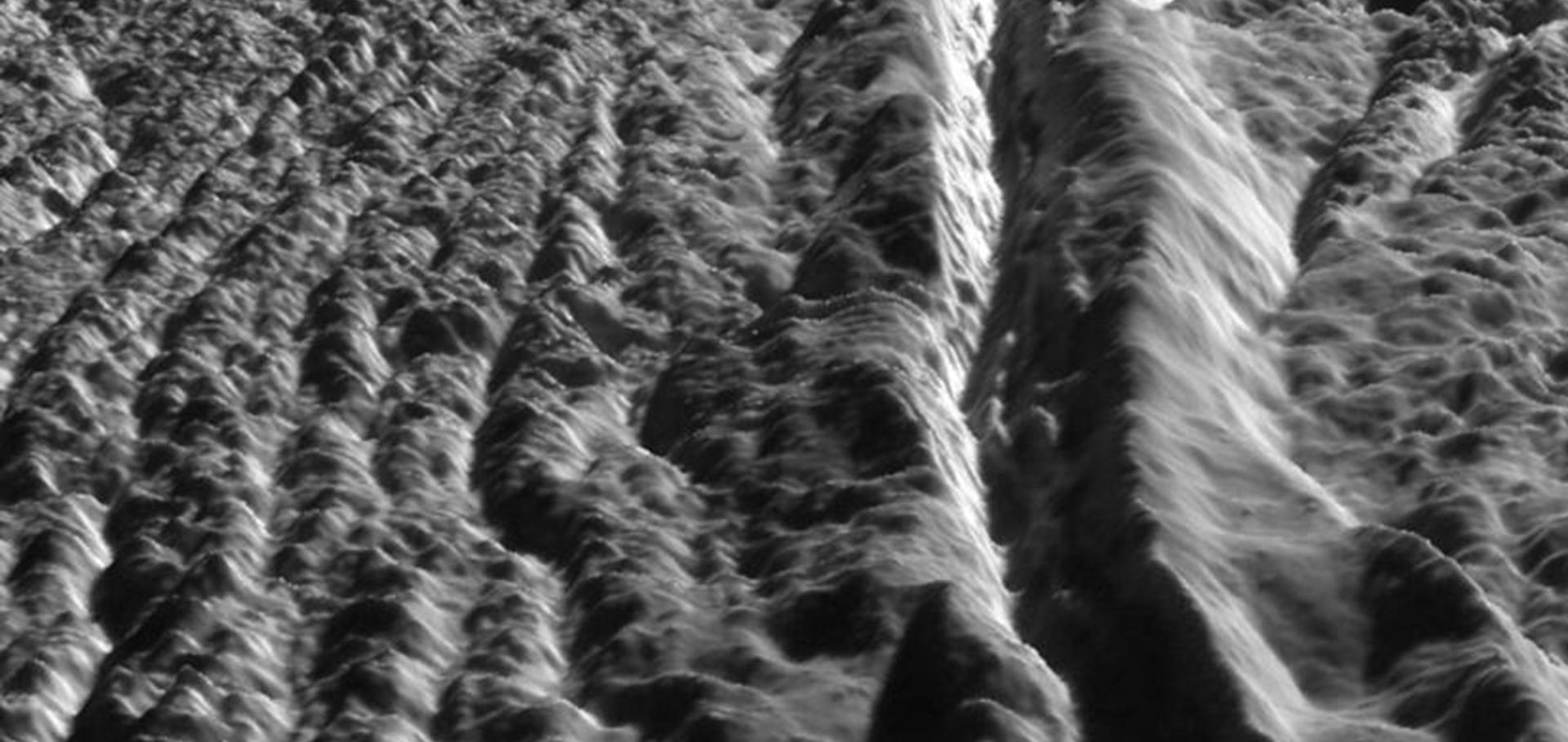

Thermophysical Properties of Europa’s Surface Constrained by Galileo Photopolarimeter-Radiometer Temperature Measurements
Copernicus Publications (2026)
Abstract:
Thermal measurements provide key constraints on the physical properties of icy satellite surfaces, including grain size, porosity, and regolith structure. On the icy moon of Jupiter Europa, previous analyses [e.g., 1,2] of the Galileo Photopolarimeter–Radiometer (PPR) dataset revealed heterogeneities in thermal inertia, but the limited spatial resolution and coverage prevented a detailed characterization of the thermophysical properties of the surface. Yet, the determination of these thermophysical properties is crucial to predict the surface temperatures of Europa that can be used to search for endogenic activity as hot spots, one of the main scientific targets of the upcoming NASA’s Europa Clipper mission [3].We derived high-resolution maps of Europa’s surface albedo and thermal inertia, and inferred the microphysical properties of its icy regolith, through a reanalysis of the Galileo PPR dataset. We specifically investigated the spatial variability of these properties to discuss the processes controlling the thermophysical evolution of Europa’s surface. To do so, we used the KRC thermal model [4] to analyze the PPR brightness temperatures and retrieve the albedo and thermal inertia that best fit the observations. These values were then interpreted using theoretical conductivity models of porous ice [5] to constrain grain size and porosity and to investigate possible sintering processes affecting the surface.We will present at the conference our main results: we derived a mean Bond albedo of 0.64 ± 0.06 (standard deviation of 1σ) and a mean thermal inertia of 56 ± 17 J m−2 K−1 s−1/2 (1σ). The thermal inertia shows significant spatial variations, including a band of low thermal inertia at the equator (39 ± 7 J m−2 K−1 s−1/2, 1σ) and higher values (56 ± 11 J m−2 K−1 s−1/2, 1σ) at mid-latitudes on the leading hemisphere (0°–180° W). The equatorial region of the trailing hemisphere (180° W–360° W) also exhibits higher thermal inertia (63 ± 17 J m−2 K−1 s−1/2, 1σ) than the leading hemisphere, likely related to compositional differences. Interpreting the thermal inertia with conductivity models indicates a porous icy regolith with grain sizes ranging from a few micrometers to a few centimeters and an average porosity of 0.61 ± 0.1 (1σ).Interestingly, the thermal inertia distribution shows little correlation with geological units, the Pwyll ejecta being a notable exception, with markedly higher values than the surrounding terrain. In contrast, the good agreement between the thermal inertia distribution and modeled sputtering rates suggests that sputtering-driven sintering may play a fundamental role in controlling the thermophysical properties of Europa’s surface. The absence of a high thermal inertia equatorial band analogous to the PacMan anomaly observed on Saturn’s icy moons [e.g., 6] indicates that electron-driven sintering is inefficient on Europa, while temperature-gradient metamorphism may instead enhance grain growth at depth, potentially explaining the absence of large grains at the surface. In addition, modeled surface temperatures range from ~67 to 148 K at mid to low latitudes, with peak daytime temperatures counteracting radiolytic amorphization, while limiting the stability of volatile species. During the Europa Clipper mission (2031–2034), temperatures are expected to be slightly lower, ranging between 67.6–141.2 K. Our predictions provide a framework for interpreting future observations by the Europa Thermal Emission Imaging System (E-THEMIS) onboard Europa Clipper and the Submillimetre Wave Instrument (SWI) on JUICE. These future thermal measurements will provide key constraints to test these hypotheses and refine our understanding of the evolution of Europa’s icy regolith as well as search for active hot spots.AcknowledgementsLL’s research was supported by an appointment to the NASA Postdoctoral Program administered by Oak Ridge Associated Universities at the Jet Propulsion Laboratory, California Institute of Technology, under a contract with the National Aeronautics and Space Administration (80NM0018D0004). Part of this work was performed at the Jet Propulsion Laboratory, California Institute of Technology, under a contract with the National Aeronautics and Space Administration (80NM0018D0004). Some of the computational analyses were run on Northern Arizona University’s Monsoon computing cluster, funded by Arizona’s Technology and Research Initiative Fund. © 2026. All rights reserved.References[1] Rathbun et al., 2010, Icarus, 210, 763–769[2] Rathbun & Spencer, 2020, Icarus, 338, 11350[3] Pappalardo, R. T., Buratti, B. J., Korth, H., et al. 2024, SSR, 220[4] Kieffer, H. H. 2013, JGR: Planets, 118, 451–470[5] Ferrari & Lucas, 2016, A&A, 588, A133[6] Howett et al., 2011, Icarus, 216, 221–22The Lucy flyby of (52246) Donaldjohanson: a bilobed asteroid with tumbling rotation
Science American Association for the Advancement of Science 392:6804 (2026) 1287-1291
Abstract:
The main belt asteroid (52246) Donaldjohanson (DJ) is a likely member of the Erigone asteroid family. This implies that DJ is a fragment of a larger parent body that was destroyed in a collision about 155 million years ago. We report observations taken during a flyby of DJ by the Lucy spacecraft. We found that DJ is composed of two heavily cratered lobes, connected by a smoother neck, with overall dimensions 8.8 kilometers (km) by 4.4 km by 3.1 km. The crater density is consistent with the Erigone family’s age, except for craters <0.4 km, which have been preferentially erased. DJ rotates slowly in a tumbling state, likely owing to spin-down by radiative forces. Surface spectra show iron-bearing phyllosilicates, indicating moderate aqueous evolution on the parent body.New vision of the Saturnian system in the context of a highly dissipative Saturn – editorial
Space Science Reviews Springer Nature 222:4 (2026) 38
Thermophysical Properties of Europa's Surface Constrained by Galileo Photopolarimeter-Radiometer Temperature Measurements
(2026)
Paving the Way for Future Space Missions in the Context of High Tidal Dissipation in the Saturnian System
Space Science Reviews Springer Nature 222:1 (2026) 20