

Algebraically contractible topological tensor network states
ArXiv 1108.0888 (2011)
Abstract:
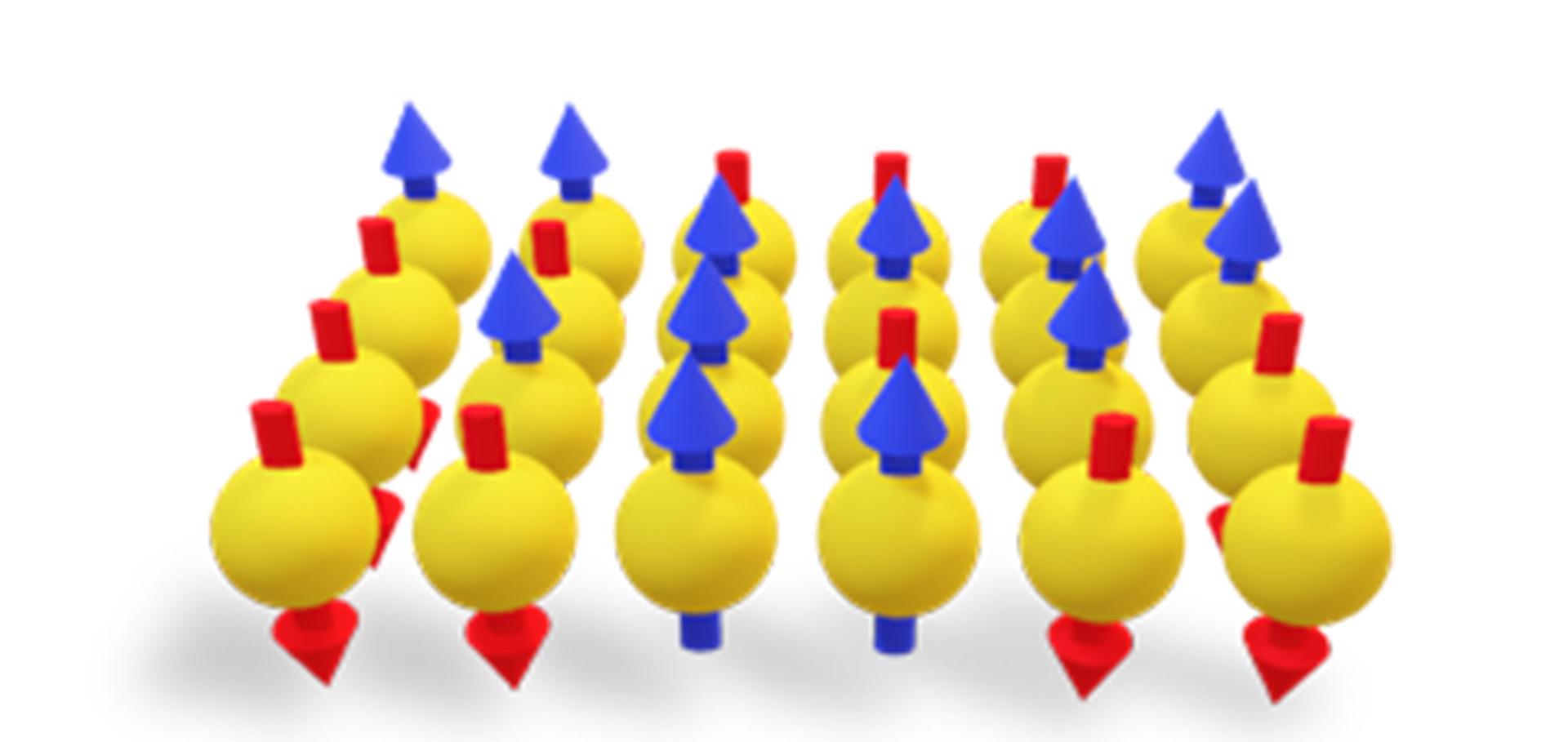
We adapt the bialgebra and Hopf relations to expose internal structure in the ground state of a Hamiltonian with $Z_2$ topological order. Its tensor network description allows for exact contraction through simple diagrammatic rewrite rules. The contraction property does not depend on specifics such as geometry, but rather originates from the non-trivial algebraic properties of the constituent tensors. We then generalise the resulting tensor network from a spin-1/2 lattice to a class of exactly contractible states on spin-S degrees of freedom, yielding the most efficient tensor network description of finite Abelian lattice gauge theories. We gain a new perspective on these states as examples of two-dimensional quantum states with algebraically contractible tensor network representations. The introduction of local perturbations to the network is shown to reduce the von Neumann entropy of string-like regions, creating an unentangled sub-system within the bulk in a certain limit. We also show how perturbations induce finite-range correlations in this system. This class of tensor networks is readily translated onto any lattice, and we differentiate between the physical consequences of bipartite and non-bipartite lattices on the properties of the corresponding quantum states. We explicitly show this on the hexagonal, square, kagome and triangular lattices.Impurity transport through a strongly interacting bosonic quantum gas
ArXiv 1106.365 (2011)
Abstract:
Using near-exact numerical simulations we study the propagation of an impurity through a one-dimensional Bose lattice gas for varying bosonic interaction strengths and filling factors at zero temperature. The impurity is coupled to the Bose gas and confined to a separate tilted lattice. The precise nature of the transport of the impurity is specific to the excitation spectrum of the Bose gas which allows one to measure properties of the Bose gas non-destructively, in principle, by observing the impurity; here we focus on the spatial and momentum distributions of the impurity as well as its reduced density matrix. For instance we show it is possible to determine whether the Bose gas is commensurately filled as well as the bandwidth and gap in its excitation spectrum. Moreover, we show that the impurity acts as a witness to the cross-over of its environment from the weakly to the strongly interacting regime, i.e., from a superfluid to a Mott insulator or Tonks-Girardeau lattice gas and the effects on the impurity in both of these strongly-interacting regimes are clearly distinguishable. Finally, we find that the spatial coherence of the impurity is related to its propagation through the Bose gas, giving an experimentally controllable example of noise-enhanced quantum transport.Quantum interference between charge excitation paths in a solid-state Mott insulator
Nature Physics 7:2 (2011) 114-118
Abstract:
Competition between electron localization and delocalization in Mott insulators underpins the physics of strongly correlated electron systems. Photoexcitation, which redistributes charge, can control this many-body process on the ultrafast 1,2 timescale. So far, time-resolved studies have been carried out in solids in which other degrees of freedom, such as lattice, spin or orbital excitations 3-5 , dominate. However, the underlying quantum dynamics of bareg electronic excitations has remained out of reach. Quantum many-body dynamics are observed only in the controlled environment of optical lattices 6,7 where the dynamics are slower and lattice excitations are absent. By using nearly single-cycle near-infrared pulses, we have measured coherent electronic excitations in the organic salt ET-F 2 TCNQ, a prototypical one-dimensional Mott insulator. After photoexcitation, a new resonance appears, which oscillates at 25THz. Time-dependent simulations of the Mottg Hubbard Hamiltonian reproduce the oscillations, showing that electronic delocalization occurs through quantum interference between bound and ionized holong doublon pairs. © 2011 Macmillan Publishers Limited. All rights reserved.Applications of Raman scattering in quantum technologies
Aip Conference Proceedings 1267 (2010) 37-38
Coherent optical memory with GHz bandwidth
Optics InfoBase Conference Papers (2010)