Home
Department Of Physics text logo
  • Research
    • Our research
    • Our research groups
    • Our research in action
    • Research funding support
    • Summer internships for undergraduates
  • Study
    • Undergraduates
    • Postgraduates
  • Engage
    • For young people
    • For teachers
    • For the public
    • For alumni
    • For business
  • Support
Menu
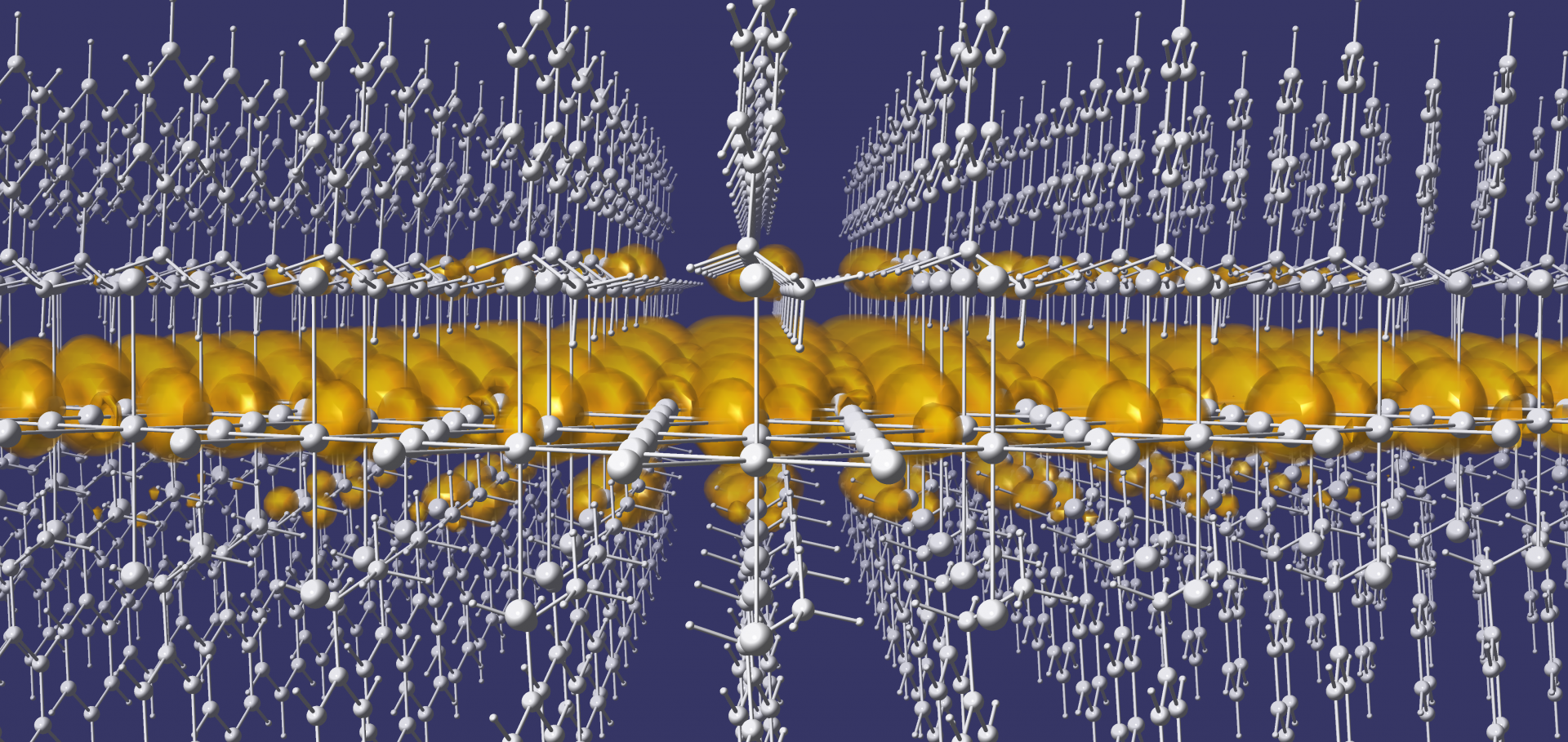
Calculated exciton wave function in a hybrid organic-inorganic layered halide perovskite
Credit: Figure created with VESTA; calculations performed with the BerkeleyGW code

Marina Filip

Professor of Physics

Research theme

  • Photovoltaics and nanoscience

Sub department

  • Condensed Matter Physics

Research groups

  • Computational Condensed Matter Physics Group
marina.filip@physics.ox.ac.uk
Clarendon Laboratory, room 109
  • About
  • Publications

Understanding the Degradation of Methylenediammonium and Its Role in Phase-Stabilizing Formamidinium Lead Triiodide.

Journal of the American Chemical Society (2023)

Authors:

Elisabeth A Duijnstee, Benjamin M Gallant, Philippe Holzhey, Dominik J Kubicki, Silvia Collavini, Bernd K Sturdza, Harry C Sansom, Joel Smith, Matthias J Gutmann, Santanu Saha, Murali Gedda, Mohamad I Nugraha, Manuel Kober-Czerny, Chelsea Xia, Adam D Wright, Yen-Hung Lin, Alexandra J Ramadan, Andrew Matzen, Esther Y-H Hung, Seongrok Seo, Suer Zhou, Jongchul Lim, Thomas D Anthopoulos, Marina R Filip, Michael B Johnston, Robin J Nicholas, Juan Luis Delgado, Henry J Snaith

Abstract:

Formamidinium lead triiodide (FAPbI3) is the leading candidate for single-junction metal-halide perovskite photovoltaics, despite the metastability of this phase. To enhance its ambient-phase stability and produce world-record photovoltaic efficiencies, methylenediammonium dichloride (MDACl2) has been used as an additive in FAPbI3. MDA2+ has been reported as incorporated into the perovskite lattice alongside Cl-. However, the precise function and role of MDA2+ remain uncertain. Here, we grow FAPbI3 single crystals from a solution containing MDACl2 (FAPbI3-M). We demonstrate that FAPbI3-M crystals are stable against transformation to the photoinactive δ-phase for more than one year under ambient conditions. Critically, we reveal that MDA2+ is not the direct cause of the enhanced material stability. Instead, MDA2+ degrades rapidly to produce ammonium and methaniminium, which subsequently oligomerizes to yield hexamethylenetetramine (HMTA). FAPbI3 crystals grown from a solution containing HMTA (FAPbI3-H) replicate the enhanced α-phase stability of FAPbI3-M. However, we further determine that HMTA is unstable in the perovskite precursor solution, where reaction with FA+ is possible, leading instead to the formation of tetrahydrotriazinium (THTZ-H+). By a combination of liquid- and solid-state NMR techniques, we show that THTZ-H+ is selectively incorporated into the bulk of both FAPbI3-M and FAPbI3-H at ∼0.5 mol % and infer that this addition is responsible for the improved α-phase stability.
More details from the publisher
Details from ORA
More details
More details
More details

Zwitterions in 3D Perovskites: Organosulfide-Halide Perovskites.

Journal of the American Chemical Society (2022)

Authors:

Jiayi Li, Zhihengyu Chen, Santanu Saha, James K Utterback, Michael L Aubrey, Rongfeng Yuan, Hannah L Weaver, Naomi S Ginsberg, Karena W Chapman, Marina R Filip, Hemamala I Karunadasa

Abstract:

Although sulfide perovskites usually require high-temperature syntheses, we demonstrate that organosulfides can be used in the milder syntheses of halide perovskites. The zwitterionic organosulfide, cysteamine (CYS; +NH3(CH2)2S-), serves as both the X- site and A+ site in the ABX3 halide perovskites, yielding the first examples of 3D organosulfide-halide perovskites: (CYS)PbX2 (X- = Cl- or Br-). Notably, the band structures of (CYS)PbX2 capture the direct bandgaps and dispersive bands of APbX3 perovskites. The sulfur orbitals compose the top of the valence band in (CYS)PbX2, affording unusually small direct bandgaps of 2.31 and 2.16 eV for X- = Cl- and Br-, respectively, falling in the ideal range for the top absorber in a perovskite-based tandem solar cell. Measurements of the carrier dynamics in (CYS)PbCl2 suggest carrier trapping due to defects or lattice distortions. The highly desirable bandgaps, band dispersion, and improved stability of the organosulfide perovskites demonstrated here motivate the continued expansion and exploration of this new family of materials, particularly with respect to extracting photocurrent. Our strategy of combining the A+ and X- sites with zwitterions may offer more members in this family of mixed-anion 3D hybrid perovskites.
More details from the publisher
Details from ORA
More details
More details

Band gaps of halide perovskites from a Wannier-localized optimally tuned screened range-separated hybrid functional

PHYSICAL REVIEW MATERIALS 6:10 (2022) ARTN 104606

Authors:

Guy Ohad, Dahvyd Wing, Stephen E Gant, Ayala V. Cohen, Jonah B Haber, Francisca Sagredo, Marina R Filip, Jeffrey B Neaton, Leeor Kronik
More details from the publisher
Details from ORA
More details
More details

Understanding the Impact of Dimensional Reduction on the Optoelectronic Properties of Ag/Bi-based Double Perovskites from First Principles

Fundacio Scito (2022)

Authors:

Raisa-Ioana Biega, Marina R Filip, Linn Lepper
More details from the publisher

Screening of Excitons by Organic Cations in Quasi-Two-Dimensional Organic-Inorganic Lead-Halide Perovskites.

Nano letters (2022)

Authors:

Marina R Filip, Diana Y Qiu, Mauro Del Ben, Jeffrey B Neaton

Abstract:

Interlayer organic cations in quasi-two-dimensional halide perovskites are a versatile tuning vehicle for the optoelectronic properties of these complex systems, but chemical intuition for this design route is yet to be established. Here, we use density functional theory, the GW approximation, and the Bethe-Salpeter equation approach to understand the contribution of the organic cation to the quasiparticle band gap and exciton binding energy of layered perovskites. We show that organic cations in quasi-two-dimensional perovskites contribute significantly to the dielectric screening in these systems, countering quantum confinement effects on the quasiparticle band gap and the exciton binding energy. Using a simple electrostatics model inspired by parallel-plate capacitors, we decouple the organic cation and inorganic layer contributions to the effective dielectric constants and show that dielectric properties of layered perovskites are broadly tunable via the interlayer cation, providing a direct means of tuning photophysical properties for a variety of applications.
More details from the publisher
Details from ORA
More details
More details

Pagination

  • First page First
  • Previous page Prev
  • …
  • Page 4
  • Page 5
  • Page 6
  • Page 7
  • Current page 8
  • Page 9
  • Page 10
  • Page 11
  • Page 12
  • …
  • Next page Next
  • Last page Last

Footer Menu

  • Contact us
  • Giving to the Dept of Physics
  • Work with us
  • Media

User account menu

  • Log in

Follow us

FIND US

Clarendon Laboratory,

Parks Road,

Oxford,

OX1 3PU

CONTACT US

Tel: +44(0)1865272200

University of Oxfrod logo Department Of Physics text logo
IOP Juno Champion logo Athena Swan Silver Award logo

© University of Oxford - Department of Physics

Cookies | Privacy policy | Accessibility statement

Built by: Versantus

  • Home
  • Research
  • Study
  • Engage
  • Our people
  • News & Comment
  • Events
  • Our facilities & services
  • About us
  • Giving to Physics
  • Current students
  • Staff intranet