

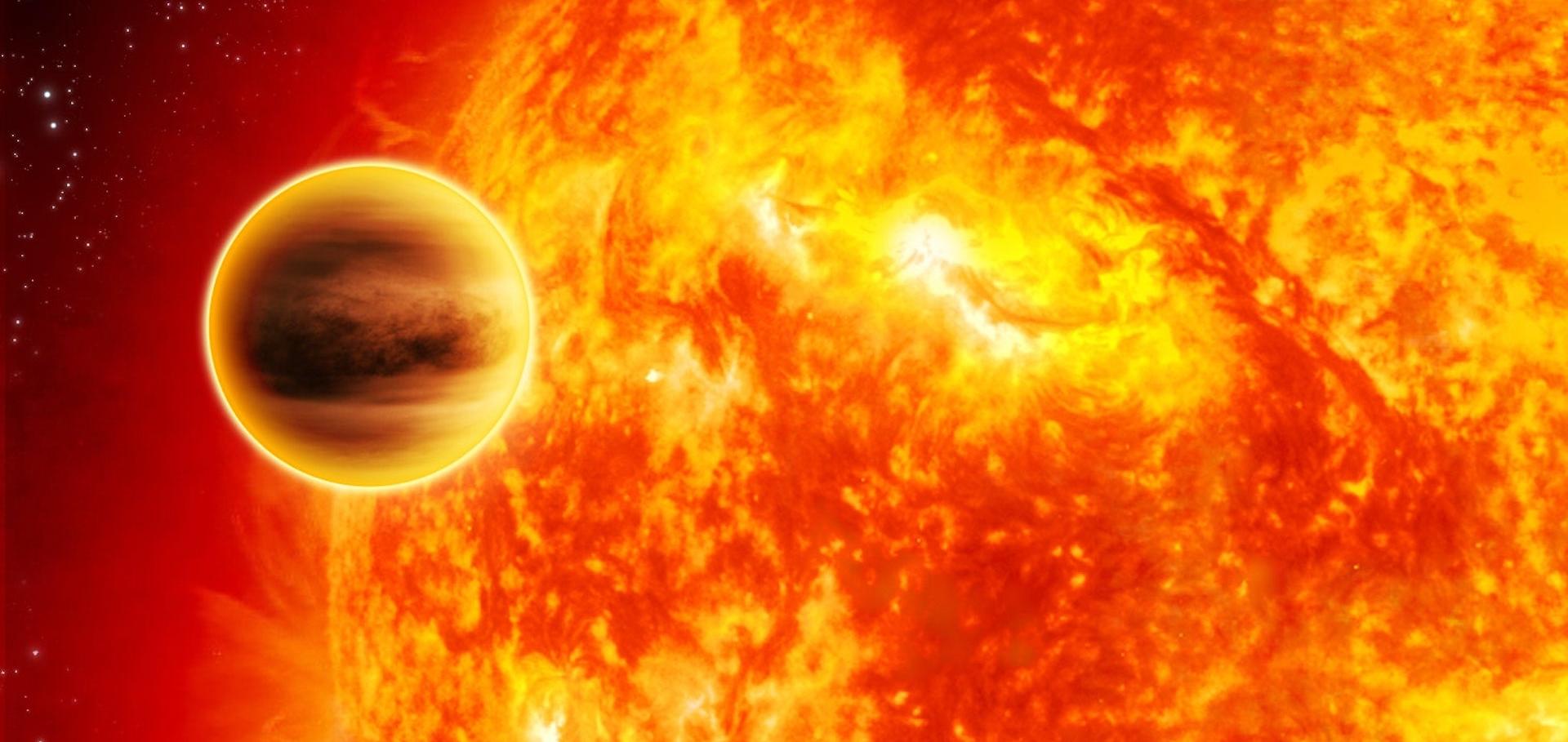
Decomposing the iron cross-correlation signal of the ultra-hot Jupiter WASP-76b in transmission using 3D Monte Carlo radiative transfer
Monthly Notices of the Royal Astronomical Society Oxford University Press (OUP) 506:1 (2021) 1258-1283
Simulating gas giant exoplanet atmospheres with Exo-FMS: comparing semigrey, picket fence, and correlated-k radiative-transfer schemes
Monthly Notices of the Royal Astronomical Society Royal Astronomical Society 506:2 (2021) 2695-2711
Abstract:
Radiative-transfer (RT) is a fundamental part of modelling exoplanet atmospheres with general circulation models (GCMs). An accurate RT scheme is required for estimates of the atmospheric energy transport and for gaining physical insight from model spectra. We implement three RT schemes for Exo-FMS: semigrey, non-grey ‘picket fence’, and real gas with correlated-k. We benchmark the Exo-FMS GCM, using these RT schemes to hot Jupiter simulation results from the literature. We perform a HD 209458b-like simulation with the three schemes and compare their results. These simulations are then post-processed to compare their observable differences. The semigrey scheme results show qualitative agreement with previous studies in line with variations seen between GCM models. The real gas model reproduces well the temperature and dynamical structures from other studies. After post-processing our non-grey picket fence scheme compares very favourably with the real gas model, producing similar transmission spectra, emission spectra, and phase curve behaviours. Exo-FMS is able to reliably reproduce the essential features of contemporary GCM models in the hot gas giant regime. Our results suggest the picket fence approach offers a simple way to improve upon RT realism beyond semigrey schemes.Vector-apodizing phase plate coronagraph: design, current performance, and future development [Invited].
Applied Optics Optica Publishing Group 60:19 (2021) d52-d72
A self-lensing binary massive black hole interpretation of quasi-periodic eruptions (vol 503, pg 1703, 2021)
MONTHLY NOTICES OF THE ROYAL ASTRONOMICAL SOCIETY 504:4 (2021) 5512-5512
Comments on Barker and Astoul (2021)
(2021)