Home
Department Of Physics text logo
  • Research
    • Our research
    • Our research groups
    • Our research in action
    • Research funding support
    • Summer internships for undergraduates
  • Study
    • Undergraduates
    • Postgraduates
  • Engage
    • For alumni
    • For business
    • For schools
    • For the public
  • Support
Menu
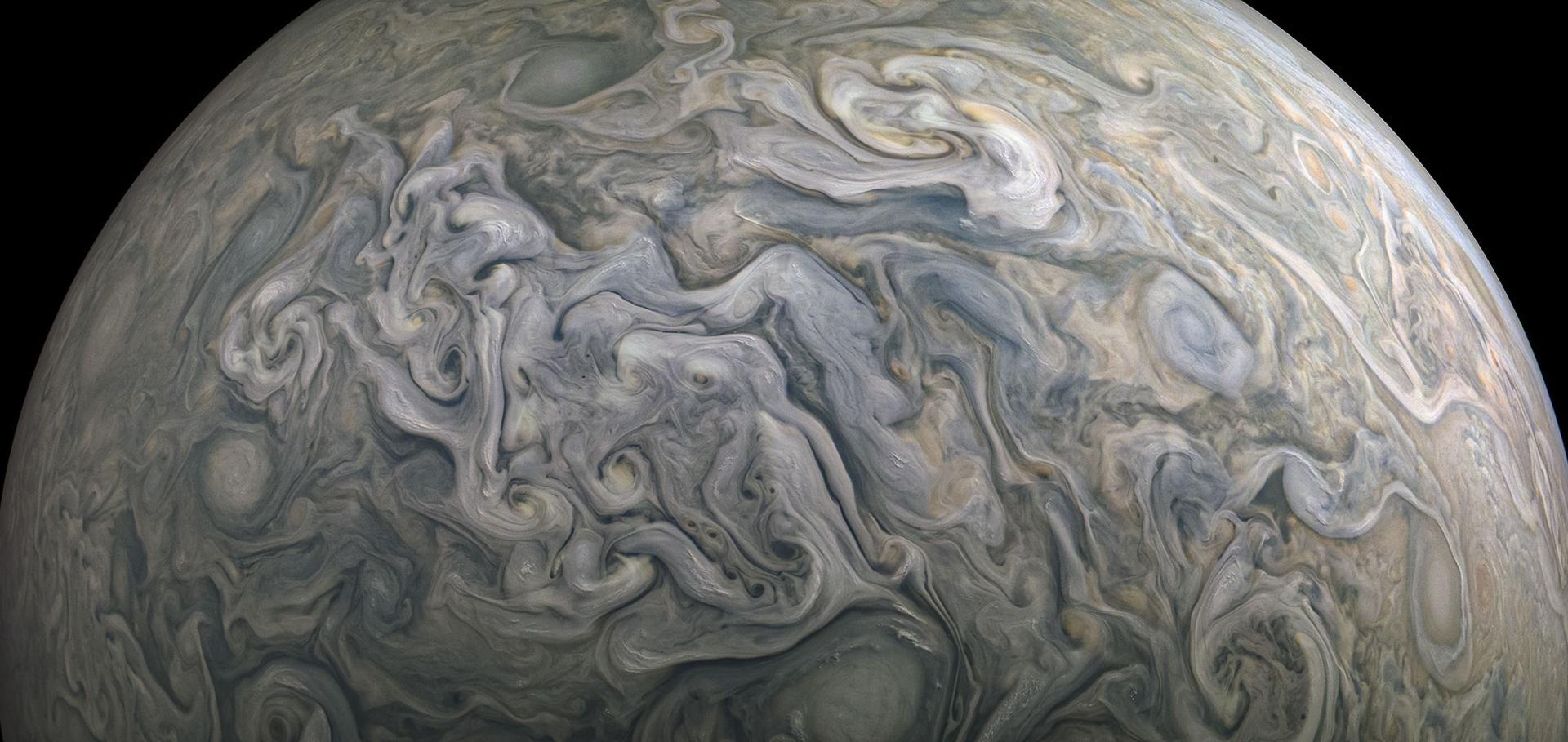
Juno Jupiter image

Prof. Patrick Irwin

Professor of Planetary Physics

Research theme

  • Exoplanets and planetary physics

Sub department

  • Atmospheric, Oceanic and Planetary Physics

Research groups

  • Exoplanet atmospheres
  • Planetary atmosphere observation analysis
  • Solar system
patrick.irwin@physics.ox.ac.uk
Telephone: 01865 (2)72083
Atmospheric Physics Clarendon Laboratory, room 306
Personal research page
NEMESIS
Github data sharing website
  • About
  • Publications

A Search for the Near‐Surface Particulate Layer Using Venera 13 In Situ Spectroscopic Observations

Journal of Geophysical Research: Planets American Geophysical Union 130:4 (2025) e2024JE008728

Authors:

Shubham V Kulkarni, Patrick GJ Irwin, Colin F Wilson, Nikolai I Ignatiev

Abstract:

Whether or not there is a particulate layer in the lowest 10 km of the Venusian atmosphere is still an open question. Some of the past in situ experiments showed the presence of a detached particulate layer, and a few suggested the existence of finely dispersed aerosols, while other instruments supported the idea of no particulate matter in the deep atmosphere. In this work, we investigate the presence of a near‐surface particulate layer (NSPL) using in situ data from the Venera 13 mission. While the original spectrophotometric data from Venera 13 were lost, we have reconstructed a part of this data by digitizing the old graphic material and selected the eight most reliable Venera 13 downward radiance profiles from 0.48 to 0.8 μ ${\upmu }$ m for our retrievals. The retrievals suggest the existence of the particulate layer with a peak in the altitude range of 3.5–5 km. They further indicate a log‐normal particle size distribution with a mean radius between 0.6 and 0.85 μ ${\upmu }$ m. The retrievals constrain the real refractive index of the particles to lie around the range of 1.4–1.6, with the imaginary refractive index of a magnitude of 10 − 3 ${10}^{-3}$ . Based on refractive index retrievals, uplifted basalt particles or volcanic ash could be responsible for near‐surface particulates. In comparison, volatile condensates appear less likely to be behind the formation of NSPL.
More details from the publisher
Details from ORA
More details

Constraining Exoplanetary Clouds with Jupiter Observations: Insights from Juno & JWST

Copernicus Publications (2025)

Authors:

Francesco Biagiotti, Davide Grassi, Tristan Guillot, Sushil K Atreya, Leigh N Fletcher, Patrick Irwin, Giuseppe Piccioni, Alessandro Mura, Imke de Pater, Thierry Fouchet, Oliver RT King, Michael T Roman, Jake Harkett, Henrik Melin, Simon Toogood, Glenn Orton, Federico Tosi, Christina Plainaki, Giuseppe Sindoni, Scott Bolton
More details from the publisher

Power System for a Venus Aerobot

Institute of Electrical and Electronics Engineers (IEEE) 00 (2025) 1-14

Authors:

Joel Schwartz, James Cutts, Stephen Dawson, Kazi Islam, John-Paul Jones, Clara MacFarland, Hui Li Seong, James Sinclair, Christopher Stell, Will West, Zachary Bittner, Tobias Burger, Nate Miller, Patrick Irwin, Shubham Kulkarni

Abstract:

A range of concepts for long duration aerial missions, using high altitude balloons operating in the clouds of Venus, have been studied by NASA and JPL for the Planetary Science and Astrobiology Decadal Survey and for NASA's competitive New Frontiers and Discovery programs. These concepts offer a rich set of scientific opportunities in atmospheric chemistry, astrobiology, atmospheric dynamics, seismology and sub-cloud surface imaging. The Venus aerobot would be sustained in flight by a variable-altitude balloon and carry a payload of instruments at altitudes between 52 and 62 km. The aerobot would fly in the cloud layer containing sulfuric acid aerosols and be subject to large temperature extremes as it traverses a range of altitudes and latitudes at different times of day. To achieve the desired lifetime on the order of one Venus day we have defined a solar power system that would supply power over the full altitude range while the aerobot is circumnavigating the planet. We have initiated development of the requisite technology, including rechargeable batteries, solar arrays, and a peak power tracker for this challenging mission. Specifically, we have fabricated triple-junction inverted metamorphic (IMM) solar cells optimized for power generation in the unique spectrum of light expected at 51.5 km altitude and measured 34.0 mW/cm2 power output at room temperature in initial testing. We developed a coating to protect aerobot solar panels from corrosion in sulfuric acid and demonstrated survival without performance degradation after 96 hours in 96% aqueous sulfuric acid at room temperature. Initial performance data were obtained on a peak power tracker showing 96% power conversion efficiency. In addition, we have developed specialized lithium-ion cells intended to operate between -30 and 100°C and demonstrated 80% capacity retention after 90 cycles at 100% depth of discharge at 100 deg C. These cells were incorporated into a 4s1p battery module and successfully tested under expected flight-like random vibration and thermal vacuum conditions. These results represent key steps in the process of developing the power system technology needed to bring the Venus aerobot mission to fruition.
More details from the publisher

The bolometric Bond albedo and energy balance of Uranus

ArXiv 2502.18971 (2025)

Authors:

Patrick GJ Irwin, Daniel D Wenkert, Amy A Simon, Emma Dahl, Heidi B Hammel
Details from ArXiV

Improved Constraints on the Vertical Profile of CH4 at Jupiter’s Mid- to High Latitudes, Using IRTF-TEXES and SOFIA-EXES Spectroscopy

The Planetary Science Journal American Astronomical Society 6:1 (2025) 15-15

Authors:

James A Sinclair, Thomas K Greathouse, Rohini S Giles, Matthew Richter, Maisie Rashman, Curtis de Witt, Julianne Moses, Vincent Hue, Pablo Rodríguez-Ovalle, Thierry Fouchet, Ananyo Bhattacharya, Bilal Benmahi, Glenn S Orton, Leigh N Fletcher, Patrick GJ Irwin

Abstract:

<jats:title>Abstract</jats:title> <jats:p>We present radiative transfer analyses of IRTF-TEXES and SOFIA-EXES mid-infrared spectra of Jupiter's mid- to high latitudes recorded between 2019 April 16 and 2023 July 20. The spectra were inverted across a photochemical model grid of varying eddy diffusion coefficient profiles, and the quality of fit of the synthetic spectra to the observed was used to constrain the CH<jats:sub>4</jats:sub> homopause level. For a subset of latitudes/dates, we find that the CH<jats:sub>4</jats:sub> homopause level is elevated in the region enclosed inside of, or magnetospherically poleward of, the northern ultraviolet main auroral emissions (MAEs) in comparison to the region outside or equatorward of the MAE. For example, using SOFIA-EXES results on 2021 June 10, we derived a CH<jats:sub>4</jats:sub> homopause level of log(<jats:italic>p</jats:italic> <jats:sub>H</jats:sub>(nbar)) = 1.54<jats:inline-formula> <jats:tex-math> </jats:tex-math> <mml:math xmlns:mml="http://www.w3.org/1998/Math/MathML" overflow="scroll"> <mml:msubsup> <mml:mrow/> <mml:mrow> <mml:mo>−</mml:mo> <mml:mn>0.69</mml:mn> </mml:mrow> <mml:mrow> <mml:mo>+</mml:mo> <mml:mn>0.51</mml:mn> </mml:mrow> </mml:msubsup> </mml:math> </jats:inline-formula> or <jats:italic>z</jats:italic> <jats:sub>H</jats:sub> = 453<jats:inline-formula> <jats:tex-math> </jats:tex-math> <mml:math xmlns:mml="http://www.w3.org/1998/Math/MathML" overflow="scroll"> <mml:msubsup> <mml:mrow/> <mml:mrow> <mml:mo>−</mml:mo> <mml:mn>76</mml:mn> </mml:mrow> <mml:mrow> <mml:mo>+</mml:mo> <mml:mn>128</mml:mn> </mml:mrow> </mml:msubsup> </mml:math> </jats:inline-formula> km above 1 bar poleward of the northern MAE at 68<jats:sup>∘</jats:sup>N compared to a lower limit of log(<jats:italic>p</jats:italic> <jats:sub>H</jats:sub>) &gt; 2.43 and upper limit of <jats:italic>z</jats:italic> <jats:sub>H</jats:sub> &lt; 322 km derived equatorward of the northern MAE. We therefore conclude that the region poleward of the northern MAE is, at times, subject to enhanced vertical transport resulting from auroral energy deposition. The exact mechanisms responsible for the enhanced vertical transport in Jupiter's auroral regions are uncertain: time-dependent circulation modeling of Jupiter's polar atmosphere is required to better understand this phenomenon. Poleward of the southern MAE, derived homopause levels agreed within uncertainty with those at equatorward locations. However, we consider this result a spatial sampling artifact rather than concluding that the southern auroral region is not subject to enhanced vertical transport.</jats:p>
More details from the publisher
Details from ORA
More details

Pagination

  • First page First
  • Previous page Prev
  • …
  • Page 4
  • Page 5
  • Page 6
  • Page 7
  • Current page 8
  • Page 9
  • Page 10
  • Page 11
  • Page 12
  • …
  • Next page Next
  • Last page Last

Footer Menu

  • Contact us
  • Giving to the Dept of Physics
  • Work with us
  • Media

User account menu

  • Log in

Follow us

FIND US

Clarendon Laboratory,

Parks Road,

Oxford,

OX1 3PU

CONTACT US

Tel: +44(0)1865272200

University of Oxfrod logo Department Of Physics text logo
IOP Juno Champion logo Athena Swan Silver Award logo

© University of Oxford - Department of Physics

Cookies | Privacy policy | Accessibility statement

Built by: Versantus

  • Home
  • Research
  • Study
  • Engage
  • Our people
  • News & Comment
  • Events
  • Our facilities & services
  • About us
  • Giving to Physics
  • Current students
  • Staff intranet