Home
Department Of Physics text logo
  • Research
    • Our research
    • Our research groups
    • Our research in action
    • Research funding support
    • Summer internships for undergraduates
  • Study
    • Undergraduates
    • Postgraduates
  • Engage
    • For alumni
    • For business
    • For schools
    • For the public
  • Support
Menu
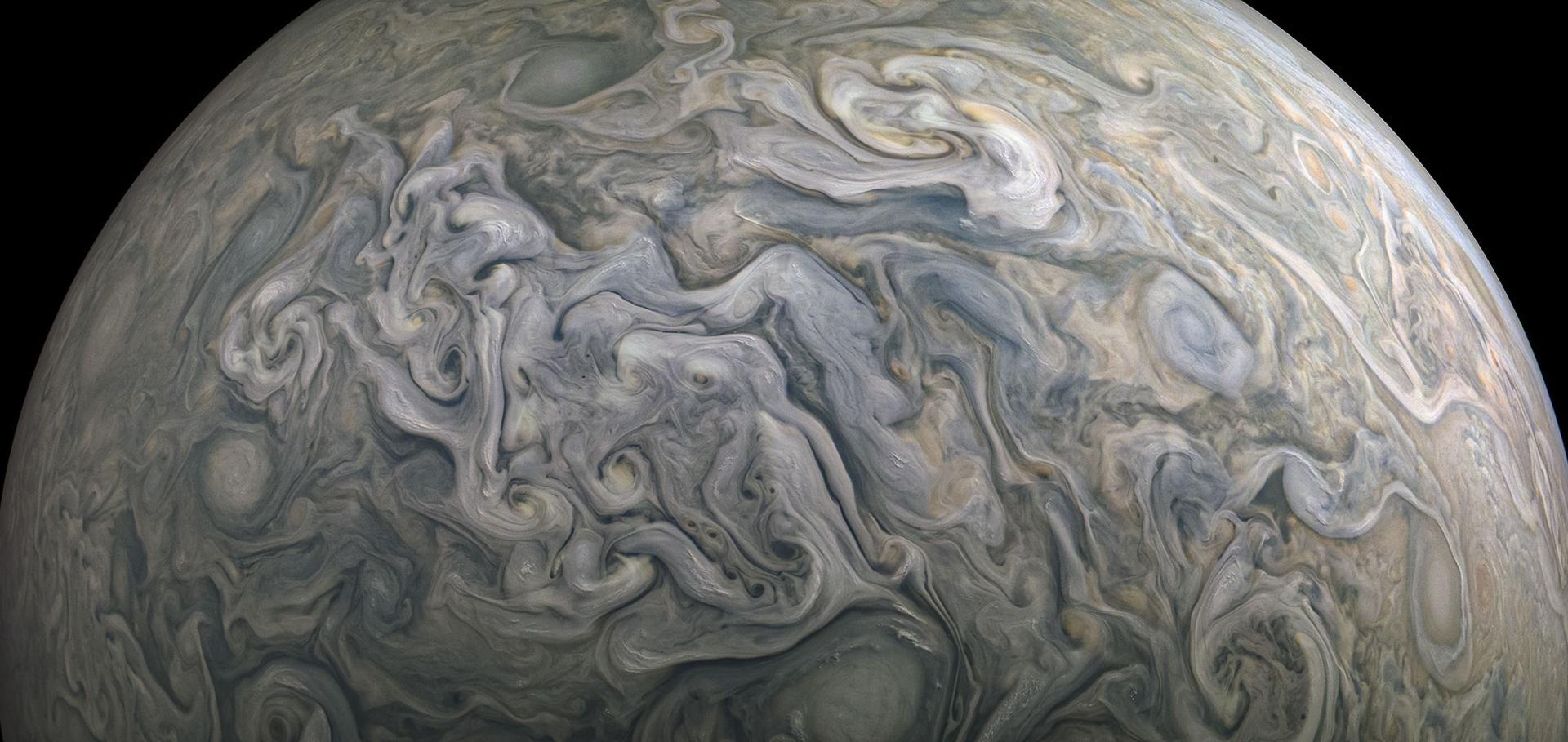
Juno Jupiter image

Prof. Patrick Irwin

Professor of Planetary Physics

Research theme

  • Exoplanets and planetary physics

Sub department

  • Atmospheric, Oceanic and Planetary Physics

Research groups

  • Exoplanet atmospheres
  • Planetary atmosphere observation analysis
  • Solar system
patrick.irwin@physics.ox.ac.uk
Telephone: 01865 (2)72083
Atmospheric Physics Clarendon Laboratory, room 306
Personal research page
NEMESIS
Github data sharing website
  • About
  • Publications

Using SOFIA’s EXES to improve the upper limits for C6H2 and C4N2 in Titan’s atmosphere

(2025)

Authors:

Zachary McQueen, Curtis DeWitt, Antoine Jolly, Juan Alday, Nicholas Teanby, Véronique Vuitton, Panayotis Lavvas, Joseph Penn, Patrick Irwin, Conor Nixon

Abstract:

IntroductionSaturn’s largest moon, Titan, has a dense atmosphere comprised mostly of nitrogen and methane. The photolysis and ionization of these major componentsleads to complex chemical reactions, which create substantial diversity among Titan’s minor atmospheric constituents. Remote sensing and molecular  pectroscopy historically have been a critical tool for detecting trace gases in Titan’s atmosphere and help corroborate predictions of Titan’s atmospheric composition from photochemical models. Following the Voyager and Cassini missions, which provided a wealth of spectroscopic studies of Titan’s  atmosphere, ground-based measurements have been useful for detecting elusive trace gases. The Echelon-Cross-Echelle Spectrometer (EXES) is a high-resolution (R ∼ 90, 000) mid-infrared spectrometer that was previously operated aboard NASA’s Stratospheric Observatory For Infrared Astronomy (SOFIA)(1 ). EXES benefited from the high altitude flights during the SOFIA mission to make observations above the bulk of the atmosphere to avoid strong telluric absorption lines that inhibit ground based mid-IR spectrometers such as its sister instrument TEXES.Here we present EXES observations of Titan which were made in an attempt to detect two trace gases, triacetylene (C6H2) and dicyanoacetylene (C4N2). C6H2 is an important polyyne and is predicted to form readily from the addition of the ethynyl (C2H) radical with diacetylene (C4H2). It remains yet tobe detected, though, and the previous upper limit study was limited by the lower spectral resolution of Voyager’s IRIS (R ∼ 145)(2 ). Delpech et al. 1994 derived an upper-limit of 6 × 10⁻¹¹ which would be detectable by EXES.Gas-phase C4N2 formation is primarily completed through C3N addition to HCN or, alternatively, CN addition to HC3N(3 ). The ice-phase C4N2, which is formed through solid-state photochemical reactions on the surface of HC3N ice grains, has been detected in spectra measured by Voyager’s IRIS and CIRSduring the Cassini mission (4, 5 ), yet C4N2 in the gas-phase remains elusive to spectroscopic detections. Again, previous studies of the gas-phase upper limits (3σ = 1.53 × 10⁻⁹) were performed using spectra collected by CIRS (R ∼ 1240) which has a resolving power significantly lower than EXES(6 ). The high-resolution of EXES will help improve on the upper limits of both of these species and allow for an updated comparison to photochemical model predictions of their vertical profiles in Titan’s atmosphere.Observations and ModelingMid-infrared observations of Titan were made in June of 2021, using EXES. These observations aim to detect the ν11 out-of-plane bending mode of C6H2 at 621 cm−1 and the perpendicular ν9 stretch of the gasphase C4N2 at 472 cm−1. Figure 1 shows a small portion of the EXES spectrum measured at the 621 cm−1 spectral setting. In this region there are strong emission features from diacetylene (C4H2) and propyne (C3H4) which must be fit before analyzing the C6H2 upper limits. Highlighted in the blue box is the region where the ν11 vibrational mode for C6H2 should be present.To model the collected spectra, we use the arch-NEMESIS radiative transfer package which is a new Python implementation of the NEMESIS radiative transfer code (7, 8 ). The radiative transfer modeling of the measured spectra occurs in two steps. The initial step is to retrieve the atmospheric profiles of the aerosols and known gases using the archNEMESIS optimal estimation algorithm. For the 621 cm−1 spectral setting, the vertical profiles of C4H2, C3H4, and aerosol continuum are retrieved, however, at the 472 cm−1 region, there are no emission features to fit and just the continuum level is retrieved by adjusting the aerosol profile. For both spectral regions, we use a temperature profile and initial gas profiles defined in Vuitton et al. 2019 photochemical model (3 ). The quality of each retrieval is determined by a goodnessof-fit metric (χ2) which compares the residual of the modeled spectrum to the noise of the measurement. Following the retrieval, we derive the upper limits by building forward models of the spectral regions where the abundance of each target species is iteratively increased and a subsequent χ2 is determined. We then take the difference, Δχ2, between the retrieved and updated forward model χ2 to find where the abundance causes significant deviation from the retrieved spectrum. Step-profiles, which have a cutoff altitude and constant abundance above this cutoff, were used to determine the upper-limits for each species. This method has been applied for many different upper limits studies of gases predicted in Titan’s atmosphere (9, 10 ).ResultsBased on these observations, C6H2 and gas-phase C4N2 remain undetected and therefore, we derive the upper limits to their atmospheric abundance. We improve upon the upper limits of C6H2 and C4N2 by an order of magnitude for both species. Figure 2 shows Δχ2 increase sharply with increased abundance for both C6H2 and C4N2. For C6H2 the 3σ upper limit (Δχ2 = 9) is on the order of 10−11 and for C4N2, 10−10. These new upper limits improve on the previously derived upper limits by an order of magnitude for each target species. More work is still being done to precisely determine the upper limits and compare these values to the current photochemical model predictions of their abundance. The values of the 1σ, 2σ, and 3σ upper limits for each species will be reported in the presentation. The upper limits derived improved upon the previous upper limits by an order of magnitude and we are currently working on comparing these upper limits to photochemical models of Titan’s atmospheric composition to build a better understanding of the chemical pathways in Titan’s atmosphere which will also be discussed in the presentation. AcknowledgmentsThe material is based upon work supported by NASA under award number 80GSFC24M0006.References1. Richter et al., 20182. Delpech et al., 19943. Vuitton et al., 20194. Samuelson et al, 19975. Anderson et al, 20166. Jolly et al., 20157. Alday et al, 20258. Irwin et al., 20089. Nixon et al., 201010. Teanby et al., 2013
More details from the publisher

 MIRMIS – The Modular Infrared Molecules and Ices Sensor for ESA’s Comet Interceptor.

(2025)

Authors:

Neil Bowles, Antti Näsilä, Tomas Kohout, Geronimo Villanueva, Chris Howe, Patrick Irwin, Antti Penttila, Alexander Kokka, Richard Cole, Sara Faggi, Aurelie Guilbert-Lepoutre, Silvia Protopapa, Aria Vitkova

Abstract:

Introduction: This presentation will describe the Modular Infrared Molecules and Ices Sensor currently in final assembly and test at the University of Oxford, UK and VTT Finland for ESA’s upcoming Comet interceptor mission.The Comet Interceptor mission: The Comet Interceptor mission [1] was selected by ESA as the first of its new “F” class of missions in June 2019 and adopted in June 2022.  Comet Interceptor (CI) aims to be the first mission to visit a long period comet, preferably, a Dynamically New Comet (DNC), a subset of long-period comets that originate in the Oort cloud and may preserve some of the most primitive material from early in our Solar System’s history. CI is scheduled to launch to the Earth-Sun L2 point with ESA’s ARIEL [2] mission in ~2029 where it will wait for a suitable DNC target.The CI mission is comprised of three spacecraft.  Spacecraft A will pass by the target nucleus at ~1000 km to mitigate against hazards caused by dust due to the wide range of possible encounter velocities (e.g. 10 – 70 km/s).  As well as acting as a science platform, Spacecraft A will deploy and provide a communications hub for two smaller spacecrafts, B1 (supplied by the Japanese space agency JAXA) and B2 that will perform closer approaches to the nucleus.  Spacecrafts B1 and B2 will make higher risk/higher return measurements but with the increased probability that they will not survive the whole encounter.The MIRMIS Instrument: The Modular InfraRed Molecules and Ices sensor (MIRMIS, Figure 1) instrument is part of the CI Spacecraft A scientific payload.  The MIRMIS consortium includes hardware contributions from Finland (VTT Finland) and the UK (University of Oxford) with members of the instrument team from the Universities of Helsinki, Lyon, NASA’s Goddard Space Flight Center, and Southwest Research Institute.MIRMIS will map the spatial distribution of temperatures, ices, minerals and gases in the nucleus and coma of the comet using covering a spectral range of 0.9 to 25 microns.  An imaging Fabry-Perot interferometer will provide maps of composition at a scale of ~180 m at closest approach from 0.9 to 1.7 microns.  A Fabry-Perot point spectrometer will make observations of the coma and nucleus at wavelengths from 2.5 to 5 microns and finally a thermal imager will map the temperature and composition of the nucleus at a spatial resolution of 260 m using a series of multi-spectral filters from 6 to 25 microns.  Figure 1: (Top) The MIRMIS instrument for ESA’s Comet Interceptor mission. (Bottom) The MIRMIS Structural Thermal model under test at University of Oxford.The MIRMIS instrument is compact (548.5 x 282.0 x 126.8 mm) and low mass (
More details from the publisher

Seasonal Evolution of Titan’s Stratospheric Tilt and Temperature Field at High Resolution from Cassini/CIRS

The Planetary Science Journal IOP Publishing 6:5 (2025) 114

Authors:

Lucy Wright, Nicholas A Teanby, Patrick GJ Irwin, Conor A Nixon, Nicholas A Lombardo, Juan M Lora, Daniel Mitchell

Abstract:

The Cassini spacecraft observed Titan from 2004 to 2017, capturing key atmospheric features, including the tilt of the middle atmosphere and the formation and breakup of winter polar vortices. We analyze low spectral resolution infrared observations from Cassini’s Composite Infrared Spectrometer (CIRS), which provide excellent spatial and temporal coverage and the best horizontal spatial resolution of any of the CIRS observations. With approximately 4 times higher meridional resolution than previous studies, we map the stratospheric temperature for almost half a Titan year. We determine the evolution of Titan’s stratospheric tilt, finding that it is most constant in the inertial frame, directed 120° ± 6° west of the Titan–Sun vector at the northern spring equinox, with seasonal oscillations in the tilt magnitude between around 2 .° 5 and 8°. Using the high meridional resolution temperature field, we reveal finer details in the zonal wind and potential vorticity. In addition to the strong winter zonal jet, a weaker zonal jet in Titan’s summer hemisphere is observed, and there is a suggestion that the main winter hemisphere jet briefly splits into two. We also present the strongest evidence yet that Titan’s polar vortex is annular for part of its life cycle.
More details from the publisher
Details from ORA
More details

The atmosphere of Titan in late northern summer from JWST and Keck observations

Nature Astronomy Springer Nature 9:7 (2025) 969-981

Authors:

Conor A Nixon, Bruno Bézard, Thomas Cornet, Brandon Park Coy, Imke de Pater, Maël Es-Sayeh, Heidi B Hammel, Emmanuel Lellouch, Nicholas A Lombardo, Manuel López-Puertas, Juan M Lora, Pascal Rannou, Sébastien Rodriguez, Nicholas A Teanby, Elizabeth P Turtle, Richard K Achterberg, Carlos Alvarez, Ashley G Davies, Katherine de Kleer, Greg Doppmann, Leigh N Fletcher, Alexander G Hayes, Bryan J Holler, Patrick GJ Irwin, Carolyn Jordan, Oliver RT King, Nicholas W Kutsop, Theresa C Marlin, Henrik Melin, Stefanie N Milam, Edward M Molter, Luke Moore, Yaniss Nyffenegger-Péré, James O’Donoghue, John O’Meara, Scot CR Rafkin, Michael T Roman, Arina Rostopchina, Naomi Rowe-Gurney, Carl Schmidt, Judy Schmidt, Christophe Sotin, Tom S Stallard, John A Stansberry, Robert A West

Abstract:

Saturn’s moon Titan undergoes a long annual cycle of 29.45 Earth years. Titan’s northern winter and spring were investigated in detail by the Cassini–Huygens spacecraft (2004–2017), but the northern summer season remains sparsely studied. Here we present new observations from the James Webb Space Telescope (JWST) and Keck II telescope made in 2022 and 2023 during Titan’s late northern summer. Using JWST’s mid-infrared instrument, we spectroscopically detected the methyl radical, the primary product of methane break-up and key to the formation of ethane and heavier molecules. Using the near-infrared spectrograph onboard JWST, we detected several non-local thermodynamic equilibrium CO and CO2 emission bands, which allowed us to measure these species over a wide altitude range. Lastly, using the near-infrared camera onboard JWST and Keck II, we imaged northern hemisphere tropospheric clouds evolving in altitude, which provided new insights and constraints on seasonal convection patterns. These observations pave the way for new observations and modelling of Titan’s climate and meteorology as it progresses through the northern fall equinox, when its atmosphere is expected to show notable seasonal changes.
More details from the publisher
Details from ORA
More details

Improved Carbon and Nitrogen Isotopic Ratios for CH 3 CN in Titan’s Atmosphere Using ALMA

The Planetary Science Journal IOP Publishing 6:5 (2025) 107

Authors:

Jonathon Nosowitz, Martin A Cordiner, Conor A Nixon, Alexander E Thelen, Zbigniew Kisiel, Nicholas A Teanby, Patrick GJ Irwin, Steven B Charnley, Véronique Vuitton

Abstract:

Titan, Saturn’s largest satellite, maintains an atmosphere composed primarily of nitrogen (N2) and methane (CH4) that leads to complex organic chemistry. Some of the nitriles (CN-bearing organics) on Titan are known to have substantially enhanced 15N abundances compared to Earth and Titan’s dominant nitrogen (N2) reservoir. The 14N/15N isotopic ratio in Titan’s nitriles can provide better constraints on the synthesis of nitrogen-bearing organics in planetary atmospheres as well as insights into the origin of Titan’s large nitrogen abundance. Using high signal-to-noise ratio (>13), disk-integrated observations obtained with the Atacama Large Millimeter/submillimeter Array Band 6 receiver (211–275 GHz), we measure the 14N/15N and 12C/13C isotopic ratios of acetonitrile (CH3CN) in Titan’s stratosphere. Using the NEMESIS, we derived the CH3CN/13CH3CN ratio to be 89.2 ± 7.0 and the CH3CN/CH313CN ratio to be 91.2 ± 6.0, in agreement with the 12C/13C ratio in Titan’s methane and other solar system species. We found the 14N/15N isotopic ratio to be 68.9 ± 4.2, consistent with previously derived values for HCN and HC3N, confirming an enhanced 15N abundance in Titan’s nitriles compared with the bulk atmospheric N2 value of 14N/15N = 168, in agreement with chemical models incorporating isotope-selective photodissociation of N2 at high altitudes.
More details from the publisher
Details from ORA
More details

Pagination

  • First page First
  • Previous page Prev
  • …
  • Page 3
  • Page 4
  • Page 5
  • Page 6
  • Current page 7
  • Page 8
  • Page 9
  • Page 10
  • Page 11
  • …
  • Next page Next
  • Last page Last

Footer Menu

  • Contact us
  • Giving to the Dept of Physics
  • Work with us
  • Media

User account menu

  • Log in

Follow us

FIND US

Clarendon Laboratory,

Parks Road,

Oxford,

OX1 3PU

CONTACT US

Tel: +44(0)1865272200

University of Oxfrod logo Department Of Physics text logo
IOP Juno Champion logo Athena Swan Silver Award logo

© University of Oxford - Department of Physics

Cookies | Privacy policy | Accessibility statement

Built by: Versantus

  • Home
  • Research
  • Study
  • Engage
  • Our people
  • News & Comment
  • Events
  • Our facilities & services
  • About us
  • Giving to Physics
  • Current students
  • Staff intranet