Home
Department Of Physics text logo
  • Research
    • Our research
    • Our research groups
    • Our research in action
    • Research funding support
    • Summer internships for undergraduates
  • Study
    • Undergraduates
    • Postgraduates
  • Engage
    • For alumni
    • For business
    • For schools
    • For the public
  • Support
Menu
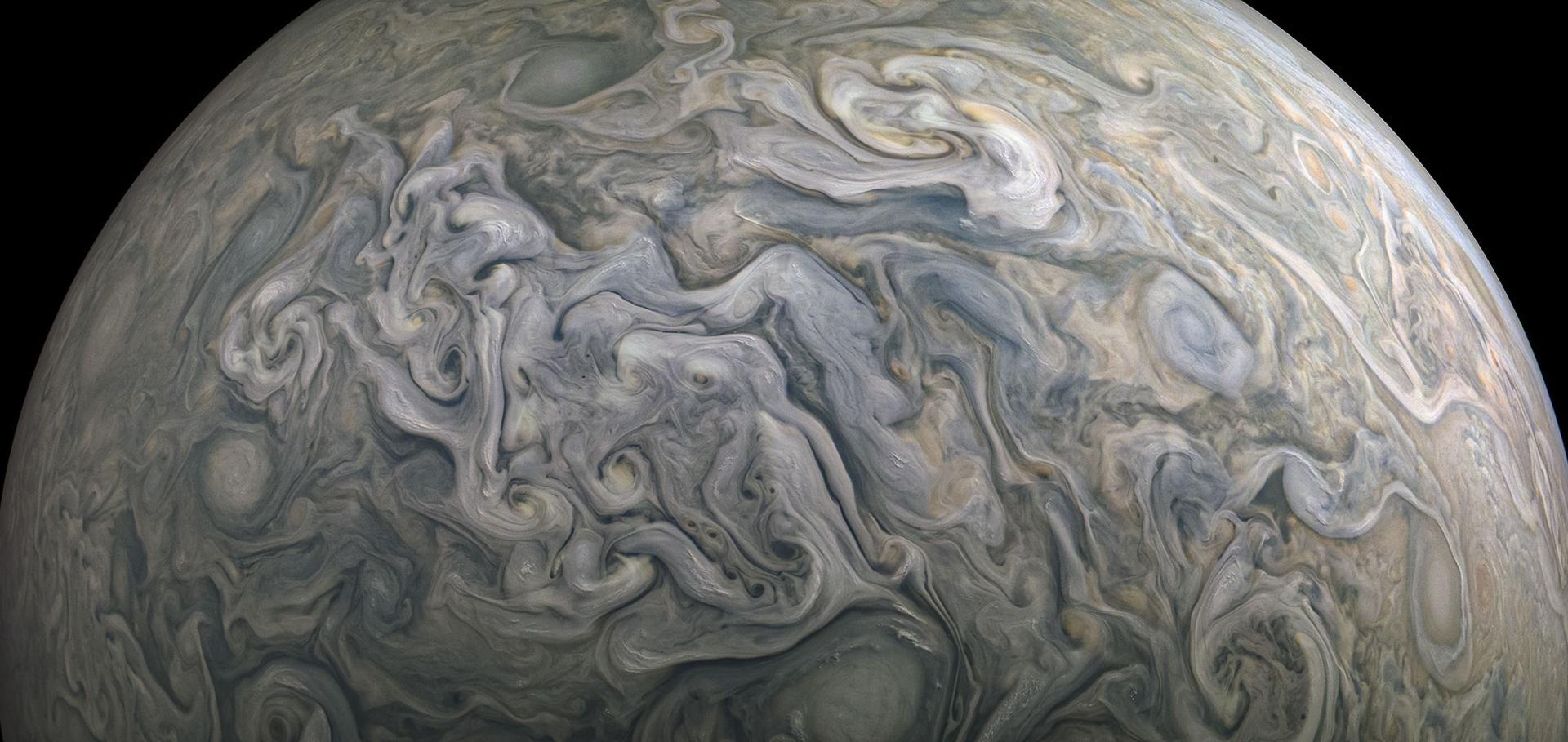
Juno Jupiter image

Prof. Patrick Irwin

Professor of Planetary Physics

Research theme

  • Exoplanets and planetary physics

Sub department

  • Atmospheric, Oceanic and Planetary Physics

Research groups

  • Exoplanet atmospheres
  • Planetary atmosphere observation analysis
  • Solar system
patrick.irwin@physics.ox.ac.uk
Telephone: 01865 (2)72083
Atmospheric Physics Clarendon Laboratory, room 306
Personal research page
NEMESIS
Github data sharing website
  • About
  • Publications

Saturn’s Local and Seasonal Aerosol Variations Inferred from Cassini Combined UV, Visual, and Near-IR Observations  

(2025)

Authors:

James Sinclair, Emma Dahl, Kevin Baines, Tom Momary, Lawrence Sromovsky, Pat Fry, Patrick Irwin

Abstract:

Clouds are the manifestations of atmospheric dynamics, chemistry, thermal evolution, and orbital characteristics; thus, understanding their physical and spectral properties and their spatial and temporal variability is critical to understanding the planet as a whole.  Observations of Saturn by the Hubble Space Telescope since 1994 and by Cassini from 2004 - 2017 have spanned almost one Saturn year (29.5 Earth years).  Despite the wealth of data, a self-consistent picture of the seasonal variations in Saturn’s haze and cloud structure remain elusive. In this work, we present a radiative transfer analysis of Cassini-VIMS (Visible and Infrared Mapping Spectrometer) spectra in order to derive the vertical structure and color properties of Saturn’s clouds and their latitudinal and seasonal variability.  VIMS records spectra over visible (0.3 to 1.05 micron) and infrared (0.85 to 5.1 micron) channels at spectral resolutions of 7 and 16 nm, respectively.  After a review of the VIMS dataset, we have identified dayside spectra that capture unique cloud features in a given latitude circle at multiple emission angles, allowing for improved vertical discrimination of cloud models. Data are additionally available over multiple epochs, allowing us to analyze any seasonal evolution.  Using the NEMESIS radiative transfer code (Irwin et al., 2008, JQSRT 109, 1136-1150), we invert the VIMS spectra to derive the vertical profiles of phosphine (PH3), ammonia (NH3) and the vertical structure of 4 haze/cloud layers (using the cloud model and cloud/gas parameters shown in Figure 1).  In preliminary findings, in adopting the chromophore optical constants derived by Sromovsky et al., 2021 (Icarus 362, 114409) for a north polar cloud observed in 2016, we find we can adequately fit the spectra for a subset of clouds observed in September 2014.  At other locations/times, the chromophore optical constants derived by Sromovsly et al., 2021, need to be varied in order to fit the spectra within uncertainty, which indicates seasonal evolution of Saturn’s chromophore.  In this work, we present derived cloud properties and the optical constants of the derived chromophore as a function of latitude and season in order to shed light on the complex interplay between cloud structure, color, chemistry, and orbital characteristics.     
More details from the publisher

Temperature, Composition, and Cloud structure in Atmosphere of Neptune from MIRI-MRS and NIRSpec-IFU Observations

(2025)

Authors:

Michael Roman, Leigh Fletcher, Heidi Hammel, Oliver King, Glenn Orton, Naomi Rowe-Gurney, Patrick Irwin, Julianne Moses, Imke de Pater, Henrik Melin, Jake Harkett, Simon Toogood, Stefanie Milam

Abstract:

We present observations and analysis of Neptune’s atmosphere from JWST, providing new constraints on hydrocarbon abundances, cloud properties, and temperature structure across the planet’s disk.  JWST observed Neptune in June 2023 (program1249) as part of the Solar System Guaranteed Time Observations (GTO). Integral field spectroscopy (IFS) with the Near-Infrared Spectrograph (NIRSpec) and the Mid-Infrared Instrument/Medium Resolution Spectrometer (MIRI/MRS) were combined to provide nearly simultaneous and continuous spatial and spectral data between 1.66 and 28.70 microns.We show how wavelengths sensitive to the atmospheric temperatures reveal a structure consistent with Voyager [1] and ground-based imaging [2,3], with a sharply defined warm polar vortex. In contrast, wavelengths sensitive to stratospheric hydrocarbons (namely acetylene and ethane) show a marked enhancement in the northern winter hemisphere.Finally, we examine the distribution and vertical structure of clouds in context of the temperature and chemical structure. Scattered light in NIRSpec observations indicate variable discrete clouds extend to pressures of roughly 50 mbar at the northernmost latitudes and south pole. [1] Conrath, B. J., F. M. Flasar, and P. J. Gierasch. "Thermal structure and dynamics of Neptune's atmosphere from Voyager measurements." Journal of Geophysical Research: Space Physics 96, no. S01 (1991): 18931-18939.[2] Fletcher, Leigh N., Imke de Pater, Glenn S. Orton, Heidi B. Hammel, Michael L. Sitko, and Patrick GJ Irwin. "Neptune at summer solstice: zonal mean temperatures from ground-based observations, 2003–2007." Icarus 231 (2014): 146-167.[3] Roman, Michael T., Leigh N. Fletcher, Glenn S. Orton, Thomas K. Greathouse, Julianne I. Moses, Naomi Rowe-Gurney, Patrick GJ Irwin et al. "Subseasonal variation in Neptune’s mid-infrared emission." The Planetary Science Journal 3, no. 4 (2022): 78.
More details from the publisher

Temperature, Composition, and Cloud structure in Atmosphere of Uranus from MIRI-MRS and NIRSpec-IFU Spectra

(2025)

Authors:

Michael Roman, Leigh Fletcher, Heidi Hammel, Patrick Irwin, Oliver King, Naomi Rowe-Gurney, Julianne Moses, Glenn Orton, Imke de Pater, Henrik Melin, Jake Harkett, Matthew Hedman, Simon Toogood, Stefanie Milam

Abstract:

Introduction: Due to Uranus’ weak thermal radiance, the thermal and compositional structures of its atmosphere have remained poorly characterised. Here, using the unprecedented sensitivity of JWST's MIRI and NIRSpec instruments, we present an analysis of Uranus' spatially resolved spectrum spanning the near- and mid-infrared, revealing how temperatures, composition, and clouds vary across the planet's northern hemisphere.Observations: JWST observed Uranus on 8--9 January 2023 (program1248) as part of the Solar System Guaranteed Time Observations (GTO). Integral field spectroscopy (IFS) with the Near-Infrared Spectrograph (NIRSpec) and the Mid-Infrared Instrument/Medium Resolution Spectrometer (MIRI/MRS) were combined to provide nearly simultaneous and continuous spatial and spectral data between 1.66 and 28.70 microns.Temperatures: The nearly continuous spectral coverage offered by the combination of NIRSpec and MIRI provide constraints on the temperature structure from the stratosphere down to several bars. The average temperature-pressure vertical profile is largely consistent with that determined from Spitzer [1], but the spatially resolved JWST reveal how these temperatures vary with latitude in the stratosphere and cloud layer for the first time [2]. They also suggest the possibility of a sub-adiabatic cloud layer.Chemistry: Our radiative transfer analysis of MIRI-MRS spectra 1) provide new constraints on minor species in Uranus’ stratosphere and 2) reveals how various hydrocarbons vary as a function of latitude. The observed distributions are indicative of a combination of seasonal photochemistry [3] and dynamical processes, as we will briefly discuss.Clouds and hazes: Finally, we briefly examine the vertical cloud structure and its latitudinal variation as sensed by NIRSpec data. The data reveal the opacity of Uranus clouds and hazes spanning the transition from scattered sunlight to thermal emission for the first time. The overall vertical structure suggested by these new data largely agrees with that of prior work [3,4,5], but a comparison between observed and model spectra reveal interesting discrepancies and possibly a need for additional sources of opacity. [1] Orton, G.S., Fletcher, L.N., Moses, J.I., Mainzer, A.K., Hines, D., Hammel, H.B., Martin-Torres, F.J., Burgdorf, M., Merlet, C., Line, M.R.: Mid-infrared spectroscopy of uranus from the spitzer infrared spectrometer: 1. determination of the mean temperature structure of the upper troposphere and stratosphere. Icarus 243, 494–513 (2014)[2] Roman, M.T., Fletcher, L.N., Orton, G.S., Rowe-Gurney, N., Irwin, P.G.: Uranus in northern midspring: persistent atmospheric temperatures and circulations inferred from thermal imaging. The Astronomical Journal 159(2), 45 (2020)[3] Moses, J.I., Fletcher, L.N., Greathouse, T.K., Orton, G.S., Hue, V.: Seasonal stratospheric photochemistry on uranus and neptune. Icarus 307, 124–145 (2018)[4] Sromovsky, L.A., Karkoschka, E., Fry, P.M., Pater, I., Hammel, H.B.: The methane distribution and polar brightening on uranus based on hst/stis, keck-nirc2, and irtf/spex observations through 2015. Icarus 317, 266–306 (2019)189[5] Irwin, P.G., Teanby, N.A., Fletcher, L.N., Toledo, D., Orton, G.S., Wong, M.H.,Roman, M.T., Perez-Hoyos, S., James, A., Dobinson, J.: Hazy blue worlds:A holistic aerosol model for uranus and neptune, including dark spots[6] Roman, M.T., Banfield, D., Gierasch, P.J.: Aerosols and methane in the ice giant atmospheres inferred from spatially resolved, near-infrared spectra: I. uranus, 2001–2007. Icarus 310, 54–76 (2018)
More details from the publisher

The Rise and Fall of a Mid-West Tilt: Seasonal Evolution of Titan’s Stratospheric Tilt Axis

(2025)

Authors:

Lucy Wright, Nicholas Teanby, Patrick Irwin, Conor Nixon, Nicholas Lombardo, Juan Lora, Daniel Mitchell

Abstract:

Titan’s entire stratosphere is in superrotation (Flasar et al. 2005) and appears to rotate about an axis offset from its solid body rotation axis by around 4o (Achterberg et al. 2008). The stratospheric tilt axis has been estimated previously through temperature measurements (Achterberg et al. 2011; 2008), composition retrievals (Sharkey et al. 2020; Teanby 2010), and by analysis of stratospheric haze (Kutsop et al. 2022; Roman et al. 2009; Snell and Banfield 2024; Vashist et al. 2023) and a polar cloud (West et al. 2016). Despite this, the mechanism causing the tilt is not well understood. This challenge is further heightened as Titan General Circulation Models (GCMs) are yet to resolve a tilt consistent with observations (e.g., Lombardo and Lora (2023a; 2023b)).Understanding the cause of Titan’s stratospheric tilt may provide insight into the underlying dynamics that drive superrotation in Titan’s atmosphere and the behaviour of superrotating atmospheres in general. Furthermore, due to the strength of Titan’s zonal winds, the offset of the stratospheric rotation axis may have a significant effect on the atmospheric descent of the upcoming Dragonfly mission to Titan. Thus, improved constraints on the tilt axis may better inform the landing site calculations for Dragonfly.We determine the evolution of Titan’s stratospheric tilt axis over 13 years (Ls = 293—93o), which spans almost half a Titan year. The tilt was determined by inspecting zonal symmetry in the (i) thermal and (ii) composition structure of Titan’s stratosphere. These two independent methods probe different latitude regions. We use infrared observations acquired by the Composite Infrared Spectrometer (CIRS) (Flasar et al. 2004; Jennings et al. 2017; Nixon et al. 2019) instrument onboard the Cassini spacecraft, which toured the Saturn system from 2004 to 2017. We use nadir CIRS observations acquired at a low apodised spectral resolution (FWHM∼13.5–15.5 cm−1). This data set provides excellent spatial coverage of Titan’s middle atmosphere throughout the Cassini mission and achieves the best horizontal spatial resolution of any of the CIRS observations. Despite the subtle and often blended spectral features in these data, Wright et al. (2024) show that they can be reliably forward modelled. Vertical profiles of temperature and gas volume mixing ratios (VMRs) are estimated from CIRS FP3/4 spectra using the Non-linear Optimal Estimator for MultivariatE Spectral AnalySIS (NEMESIS) radiative transfer and retrieval code (Irwin et al. 2008). The observations probe pressure levels of ~10—10-3 mbar in Titan’s atmosphere, with peak contributions at around 1 mbar. These data enable us to reveal Titan’s stratospheric thermal and composition structure in the highest meridional resolution to date and facilitate an independent study of the tilt offset of Titan’s stratosphere.We find that the tilt axis in the mid-latitudes (from (i)) and the equatorial region (from (ii)) are in good agreement, which supports the theory that Titan’s entire stratosphere is tilted relative to its solid body (Achterberg et al. 2008). In addition to this, we present the best evidence yet that the pointing direction of Titan’s stratospheric tilt axis is constant in the inertial reference frame (Wright et al. in press), consistent with previous studies (Achterberg et al. 2011; Kutsop et al. 2022; Sharkey et al. 2020; Snell and Banfield 2024). The tilt azimuth is determined to be 121± 7o West of the sub-solar point at Titan’s northern spring equinox (Ls = 0o). Put another way, the pointing direction of the tilt axis would appear constant to an observer looking down on the Solar System.In addition, we present new evidence that the magnitude of Titan’s stratospheric tilt axis may have a seasonal dependence, oscillating between values of approximately 2o to 10o with a period similar in length to half a Titan year. If this pattern is real, it suggests that the tilt of Titan’s stratosphere is impacted by seasonal forcing, even though the direction of the tilt remains constant.Fig 1: Schematic showing the direction of Titan’s stratospheric tilt axis from Wright et al. (in press). Titan and Saturn are shown at some example times in their orbit. The tilt direction is determined to be approximately constant in the inertial reference frame, that is, fixed with respect to the Titan-Sun vector at northern spring equinox (Ls = 0◦). The approximate size of the tilt magnitude, β, is indicated by font size. References:Achterberg, R. K., et al. 2008. Icarus 197 (2): 549–55. https://doi.org/10.1016/j.icarus.2008.05.014.Achterberg, R. K., et al. 2011. Icarus 211 (1): 686–98. https://doi.org/10.1016/j.icarus.2010.08.009.Flasar, F. M., et al. 2005. Science 308 (5724): 975–78. https://doi.org/10.1126/science.1111150.Flasar, F. M., et al. 2004. Space Science Reviews 115 (1–4): 169–297. https://doi.org/10.1007/s11214-004-1454-9.Irwin, P.G.J., et al. 2008. Journal of Quantitative Spectroscopy and Radiative Transfer 109 (6): 1136–50. https://doi.org/10.1016/j.jqsrt.2007.11.006.Jennings, D. E., et al. 2017. Applied Optics 56 (18): 5274. https://doi.org/10.1364/AO.56.005274.Kutsop, N. W., et al. 2022. The Planetary Science Journal 3 (5): 114. https://doi.org/10.3847/PSJ/ac582d.Lombardo, N. A., and J. M. Lora. 2023a. Journal of Geophysical Research: Planets 128 (12): e2023JE008061. https://doi.org/10.1029/2023JE008061.Lombardo, N. A., and Juan M. Lora. 2023b. Icarus 390 (January):115291. https://doi.org/10.1016/j.icarus.2022.115291.Nixon, C. A., et al. 2019. The Astrophysical Journal Supplement Series 244 (1): 14. https://doi.org/10.3847/1538-4365/ab3799.Roman, M. T., et al. 2009. Icarus 203 (1): 242–49. https://doi.org/10.1016/j.icarus.2009.04.021.Sharkey, J., et al. 2020. Icarus 337 (February):113441. https://doi.org/10.1016/j.icarus.2019.113441.Snell, C., and D. Banfield. 2024. The Planetary Science Journal 5 (1): 12. https://doi.org/10.3847/PSJ/ad0bec.Teanby, N. A. 2010. Faraday Discussions 147:51. https://doi.org/10.1039/c001690j.Vashist, Aadvik S, et al. 2023. The Planetary Science Journal 4 (6): 118. https://doi.org/10.3847/PSJ/acdd05.West, R. A., et al. 2016. Icarus 270 (May):399–408. https://doi.org/10.1016/j.icarus.2014.11.038.Wright, L., et al. 2024. Experimental Astronomy 57 (2): 15. https://doi.org/10.1007/s10686-024-09934-y.Wright, L., et al. in press. The Planetary Science Journal. https://doi.org/10.3847/PSJ/adcab3.
More details from the publisher

The bolometric Bond albedo and energy balance of Uranus

(2025)

Authors:

Patrick Irwin, Daniel Wenkert, Amy Simon, Emma Dahl, Heidi Hammel

Abstract:

The radiative heat balance of Uranus has long been a mystery amongst the solar system giant planets. Jupiter, Saturn and Neptune all emit much more power thermally (Pout) than they absorb from the Sun (Pin) with Pout/Pin having values of 1.7 to 2.6. This shows that all three planets retain a considerable amount of heat left over from formation, which they are still slowly radiating away into space. In stark contrast, Uranus appears to be unexpectedly cold. Measurements made by Voyager-2 determined a radiative heat balance ratio of only Pout/Pin = 1.06 ± 0.08 (Pearl et al. 1990), which is consistent (to within error) with Uranus being in thermal equilibrium with the Sun and thus, perhaps, having no heat of formation left over at all. Meanwhile, Voyager-2 determined a radiative heat balance ratio for Neptune of Pout/Pin = 2.61 ± 0.28 (Pearl and Conrath, 1991), which is the largest ratio determined for any of the giant planets.How can the radiative heat balance ratios of Uranus and Neptune, the solar system’s ‘Ice Giants’ be so different? And is Uranus really in thermal equilibrium with the Sun, with no internal heat of formation left over? To answer this last question, we have performed a modelling study (Irwin et al., 2025) using our NEMESIS radiative transfer tool (Irwin et al., 2008) and a newly developed ‘holistic’ atmospheric model of the aerosol structure in Uranus’s atmosphere, based upon observations made by HST/STIS, Gemini/NIFS and IRTF/SpeX from 2000 – 2009 (Irwin et al., 2022). Taking our fitted aerosol structure and extrapolating our calculations to all wavelengths, we have made a new estimate of the bolometric geometric albedo of Uranus during the period 2002 – 2009 of p* = 0.249. The bolometric geometric albedo is the fraction of sunlight reflected by the planet back towards an observer in line with the Sun, but to determine heat balance we need to calculate the bolometric Bond Albedo, which is the fraction of sunlight incident on the planet that is scattered into all directions. With our holistic aerosol model and NEMESIS, we can calculate the appearance of Uranus to an observer at any phase angle from the Sun, and integrating these modelled curves over all phase angles we can calculate the phase integral, q, which relates the geometric albedo, p, to the Bond albedo, A, through the relation A = pq.From this modelling we determine a bolometric (i.e., integrated over all wavelengths) phase integral of 𝑞∗ = 1.36, and thus a bolometric Bond albedo of 𝐴∗ = 0.338 for the period 2002 – 2009. However, to determine the overall radiative heat balance of Uranus, we first need to account for the seasonal variation in 𝐴∗, which changes significantly during Uranus’s year due to the formation of a polar ‘hood’ of haze over the summer pole, which becomes thicker and more observable near the solstices. In addition, in terms of energy balance, we also need to account for the fact that the incident sunlight at Uranus varies significantly during its eccentric (e = 0.046) orbit about the Sun by ±10%. Also, since Uranus is significantly oblate and has high polar inclination, there is a small, but significant difference in its projected area towards the Sun between solstice and equinox, which affects the total power of sunlight received by the planet.To estimate the orbital-average bolometric Bond albedo and radiative heat balance we used a simple seasonal model, developed by Irwin et al. (2024) to be consistent with the disc-integrated blue and green magnitude data from the Lowell Observatory from 1950 – 2016 (Lockwood, 2019). Taking all hood thickness/visibility, distance and projected area effects into account, we model how Uranus’s reflectivity and heat budget vary during its orbit and determine a new orbital-mean average value for the bolometric Bond albedo of 𝐴∗ = 0.349 ± 0.016 and estimate the orbital-average mean absorbed solar flux to be  𝑃in = 0.604 ± 0.027 W m−2. Assuming the outgoing thermal flux to be 𝑃out = 0.693 ± 0.013 W m−2, previously determined from Voyager 2 observations, we arrive at a new estimate of Uranus’s average heat flux budget of Pout/Pin = 1.15 ± 0.06. We find, however, that there is considerable variation of the radiative heat balance with time due mainly to Uranus’s orbital eccentricity, which leads Pout/Pin to vary from 1.03 near perihelion, to 1.24 near aphelion. We conclude that although Pout/Pin is still considerably smaller than for the other giant planets, Uranus is not in thermal equilibrium with the Sun.References. Irwin et al. (2008) DOI:10.1016/j.jqsrt.2007.11.006; Irwin et al. (2022) DOI: 10.1029/2022JE007189; Irwin et al. (2024) DOI: 10.1093/mnras/stad3761;Irwin et al. (2025) DOI: 10.48550/arXiv.2502.18971; Lockwood (2019) DOI: 10.1016/j.icarus.2019.01.024; Pearl et al. (1990) DOI:  10.1016/0019-1035(90)90155-3; Pearl and Conrath (1991) DOI: 10.1029/91JA01087; Wenkert (2023) DOI: 10.17189/T2R8-RK88
More details from the publisher

Pagination

  • First page First
  • Previous page Prev
  • …
  • Page 2
  • Page 3
  • Page 4
  • Page 5
  • Current page 6
  • Page 7
  • Page 8
  • Page 9
  • Page 10
  • …
  • Next page Next
  • Last page Last

Footer Menu

  • Contact us
  • Giving to the Dept of Physics
  • Work with us
  • Media

User account menu

  • Log in

Follow us

FIND US

Clarendon Laboratory,

Parks Road,

Oxford,

OX1 3PU

CONTACT US

Tel: +44(0)1865272200

University of Oxfrod logo Department Of Physics text logo
IOP Juno Champion logo Athena Swan Silver Award logo

© University of Oxford - Department of Physics

Cookies | Privacy policy | Accessibility statement

Built by: Versantus

  • Home
  • Research
  • Study
  • Engage
  • Our people
  • News & Comment
  • Events
  • Our facilities & services
  • About us
  • Giving to Physics
  • Current students
  • Staff intranet