
Home
Department Of Physics text logo
  • Research
    • Our research
    • Our research groups
    • Our research in action
    • Research funding support
    • Summer internships for undergraduates
  • Study
    • Undergraduates
    • Postgraduates
  • Engage
    • For young people
    • For teachers
    • For the public
    • For alumni
    • For business
  • Support
Menu
where I'd like to be ...

Prof Subir Sarkar

Professor Emeritus

Research theme

  • Particle astrophysics & cosmology
  • Fundamental particles and interactions

Sub department

  • Rudolf Peierls Centre for Theoretical Physics

Research groups

  • Particle theory
Subir.Sarkar@physics.ox.ac.uk
Telephone: 01865 (2)73962
Rudolf Peierls Centre for Theoretical Physics, room 60.12
Old homepage
Brief CV
  • About
  • Research
  • Teaching
  • Service
  • Outreach
  • Awards/News
  • IceCube@Oxford
  • Publications

IceCube

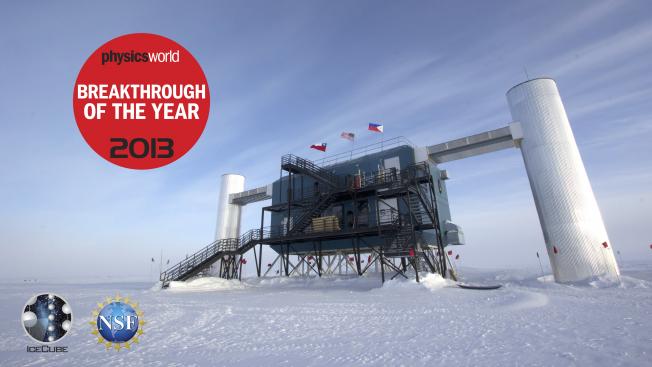
Physics World 2013 Breakthrough of the Year
IceCube at Oxford

I am a member since 2004 of the IceCube collaboration which discovered cosmic high energy neutrinos and identified some of their astrophysical sources.

IceCube @ Oxford

Anisotropy and chemical composition of ultra-high energy cosmic rays using arrival directions measured by the Pierre Auger Observatory

Journal of Cosmology and Astroparticle Physics 2011:6 (2011)

Authors:

P Abreu, M Aglietta, EJ Ahn, IFM Albuquerque, D Allard, I Allekotte, J Allen, P Allison, J Alvarez Castillo, J Alvarez-Mũniz, M Ambrosio, A Aminaei, L Anchordoqui, S Andringa, T Antičić, A Anzalone, C Aramo, E Arganda, F Arqueros, H Asorey, P Assis, J Aublin, M Ave, M Avenier, G Avila, T Bäcker, M Balzer, KB Barber, AF Barbosa, R Bardenet, SLC Barroso, B Baughman, J Bäuml, JJ Beatty, BR Becker, KH Becker, A Bellétoile, JA Bellido, S BenZvi, C Berat, X Bertou, PL Biermann, P Billoir, F Blanco, M Blanco, C Bleve, H Blümer, M Boháčová, D Boncioli, C Bonifazi, R Bonino, N Borodai, J Brack, P Brogueira, WC Brown, R Bruijn, P Buchholz, A Bueno, RE Burton, KS Caballero-Mora, L Caramete, R Caruso, A Castellina, O Catalano, G Cataldi, L Cazon, R Cester, J Chauvin, SH Cheng, A Chiavassa, JA Chinellato, A Chou, J Chudoba, RW Clay, MR Coluccia, R Conceição, F Contreras, H Cook, MJ Cooper, J Coppens, A Cordier, U Cotti, S Coutu, CE Covault, A Creusot, A Criss, J Cronin, A Curutiu, S Dagoret-Campagne, R Dallier, S Dasso, K Daumiller

Abstract:

The Pierre Auger Collaboration has reported evidence for anisotropy in the distribution of arrival directions of the cosmic rays with energies E > Eth= 5.5 × 10¹⁹eV. These show a correlation with the distribution of nearby extragalactic objects, including an apparent excess around the direction of Centaurus A. If the particles responsible for these excesses at E > Ethare heavy nuclei with charge Z, the proton component of the sources shouldłead to excesses in the same regions at energies E/Z. We here report thełack of anisotropies in these directions at energies above Eth/Z (for illustrative values of Z = 6,13,26). If the anisotropies above Ethare due to nuclei with charge Z, and under reasonable assumptions about the acceleration process, these observations imply stringent constraints on the allowed proton fraction at thełower energies. © 2011 IOP Publishing Ltd and SISSA.
More details from the publisher
More details
Details from ArXiV

Constraints on the extremely-high energy cosmic neutrino flux with the IceCube 2008-2009 data

Physical Review D - Particles, Fields, Gravitation and Cosmology 83:9 (2011)

Authors:

R Abbasi, Y Abdou, T Abu-Zayyad, J Adams, JA Aguilar, M Ahlers, K Andeen, J Auffenberg, X Bai, M Baker, SW Barwick, R Bay, JL Bazo Alba, K Beattie, JJ Beatty, S Bechet, JK Becker, KH Becker, ML Benabderrahmane, S Benzvi, J Berdermann, P Berghaus, D Berley, E Bernardini, D Bertrand, DZ Besson, D Bindig, M Bissok, E Blaufuss, J Blumenthal, DJ Boersma, C Bohm, D Bose, S Böser, O Botner, J Braun, AM Brown, S Buitink, M Carson, D Chirkin, B Christy, J Clem, F Clevermann, S Cohen, C Colnard, DF Cowen, MV D'Agostino, M Danninger, J Daughhetee, JC Davis, C Declercq, L Demirörs, T Denger, O Depaepe, F Descamps, P Desiati, G De Vries-Uiterweerd, T Deyoung, JC Díaz-Vélez, M Dierckxsens, J Dreyer, JP Dumm, R Ehrlich, J Eisch, RW Ellsworth, O Engdegård, S Euler, PA Evenson, O Fadiran, AR Fazely, A Fedynitch, T Feusels, K Filimonov, C Finley, T Fischer-Wasels, MM Foerster, BD Fox, A Franckowiak, R Franke, TK Gaisser, J Gallagher, M Geisler, L Gerhardt, L Gladstone, T Glüsenkamp, A Goldschmidt, JA Goodman, D Gora, D Grant, T Griesel, A Groß, S Grullon, M Gurtner, C Ha, A Hallgren, F Halzen, K Han, K Hanson, D Heinen, K Helbing

Abstract:

We report on a search for extremely-high energy neutrinos with energies greater than 106GeV using the data taken with the IceCube detector at the South Pole. The data was collected between April 2008 and May 2009 with the half-completed IceCube array. The absence of signal candidate events in the sample of 333.5 days of live time significantly improves model-independent limits from previous searches and allows to place a limit on the diffuse flux of cosmic neutrinos with an E-2 spectrum in the energy range 2.0×10⁶-6.3×10⁹GeV to a level of E2φ≤3.6×10 -8GeVcm-2sec-1sr-1. © 2011 American Physical Society.
More details from the publisher
More details
Details from ArXiV

Observation of Anisotropy in the Arrival Directions of Galactic Cosmic Rays at Multiple Angular Scales with IceCube

ArXiv 1105.2326 (2011)

Authors:

IceCube Collaboration, R Abbasi, Y Abdou, T Abu-Zayyad, J Adams, JA Aguilar, M Ahlers, D Altmann, K Andeen, J Auffenberg, X Bai, M Baker, SW Barwick, R Bay, JL Bazo Alba, K Beattie, JJ Beatty, S Bechet, JK Becker, K-H Becker, ML Benabderrahmane, S BenZvi, J Berdermann, P Berghaus, D Berley, E Bernardini, D Bertrand, DZ Besson, D Bindig, M Bissok, E Blaufuss, J Blumenthal, DJ Boersma, C Bohm, D Bose, S Böser, O Botner, AM Brown, S Buitink, KS Caballero-Mora, M Carson, D Chirkin, B Christy, J Clem, F Clevermann, S Cohen, C Colnard, DF Cowen, MV D'Agostino, M Danninger, J Daughhetee, JC Davis, C De Clercq, L Demirörs, T Denger, O Depaepe, F Descamps, P Desiati, G de Vries-Uiterweerd, T DeYoung, JC Díaz-Vélez, M Dierckxsens, J Dreyer, JP Dumm, R Ehrlich, J Eisch, RW Ellsworth, O Engdegård, S Euler, PA Evenson, O Fadiran, AR Fazely, A Fedynitch, J Feintzeig, T Feusels, K Filimonov, C Finley, T Fischer-Wasels, MM Foerster, BD Fox, A Franckowiak, R Franke, TK Gaisser, J Gallagher, L Gerhardt, L Gladstone, T Glüsenkamp, A Goldschmidt, JA Goodman, D Gora, D Grant, T Griesel, A Groß, S Grullon, M Gurtner, C Ha, A Hajismail, A Hallgren, F Halzen, K Han, K Hanson, D Heinen, K Helbing, P Herquet, S Hickford, GC Hill, KD Hoffman, A Homeier, K Hoshina, D Hubert, W Huelsnitz, J-P Hülß, PO Hulth, K Hultqvist, S Hussain, A Ishihara, J Jacobsen, GS Japaridze, H Johansson, JM Joseph, K-H Kampert, A Kappes, T Karg, A Karle, P Kenny, J Kiryluk, F Kislat, SR Klein, J-H Köhne, G Kohnen, H Kolanoski, L Köpke, S Kopper, DJ Koskinen, M Kowalski, T Kowarik, M Krasberg, T Krings, G Kroll, N Kurahashi, T Kuwabara, M Labare, S Lafebre, K Laihem, H Landsman, MJ Larson, R Lauer, J Lünemann, B Madajczyk, J Madsen, P Majumdar, A Marotta, R Maruyama, K Mase, HS Matis, K Meagher, M Merck, P Mészáros, T Meures, E Middell, N Milke, J Miller, T Montaruli, R Morse, SM Movit, R Nahnhauer, JW Nam, U Naumann, P Nießen, DR Nygren, S Odrowski, A Olivas, M Olivo, A O'Murchadha, M Ono, S Panknin, L Paul, C Pérez de los Heros, J Petrovic, A Piegsa, D Pieloth, R Porrata, J Posselt, CC Price, PB Price, GT Przybylski, K Rawlins, P Redl, E Resconi, W Rhode, M Ribordy, A Rizzo, JP Rodrigues, P Roth, F Rothmaier, C Rott, T Ruhe, D Rutledge, B Ruzybayev, D Ryckbosch, H-G Sander, M Santander, S Sarkar, K Schatto, T Schmidt, A Schönwald, A Schukraft, A Schultes, O Schulz, M Schunck, D Seckel, B Semburg, SH Seo, Y Sestayo, S Seunarine, A Silvestri, A Slipak, GM Spiczak, C Spiering, M Stamatikos, T Stanev, G Stephens, T Stezelberger, RG Stokstad, A Stössl, S Stoyanov, EA Strahler, T Straszheim, M Stür, GW Sullivan, Q Swillens, H Taavola, I Taboada, A Tamburro, A Tepe, S Ter-Antonyan, S Tilav, PA Toale, S Toscano, D Tosi, D Turčan, N van Eijndhoven, J Vandenbroucke, A Van Overloop, J van Santen, M Vehring, M Voge, C Walck, T Waldenmaier, M Wallraff, M Walter, Ch Weaver, C Wendt, S Westerhoff, N Whitehorn, K Wiebe, CH Wiebusch, DR Williams, R Wischnewski, H Wissing, M Wolf, TR Wood, K Woschnagg, C Xu, XW Xu, G Yodh, S Yoshida, P Zarzhitsky, M Zoll

Abstract:

Between May 2009 and May 2010, the IceCube neutrino detector at the South Pole recorded 32 billion muons generated in air showers produced by cosmic rays with a median energy of 20 TeV. With a data set of this size, it is possible to probe the southern sky for per-mille anisotropy on all angular scales in the arrival direction distribution of cosmic rays. Applying a power spectrum analysis to the relative intensity map of the cosmic ray flux in the southern hemisphere, we show that the arrival direction distribution is not isotropic, but shows significant structure on several angular scales. In addition to previously reported large-scale structure in the form of a strong dipole and quadrupole, the data show small-scale structure on scales between 15 degrees and 30 degrees. The skymap exhibits several localized regions of significant excess and deficit in cosmic ray intensity. The relative intensity of the smaller-scale structures is about a factor of 5 weaker than that of the dipole and quadrupole structure. The most significant structure, an excess localized at right ascension 122.4 degrees and declination -47.4 degrees, extends over at least 20 degrees in right ascension and has a post-trials significance of 5.3 sigma. The origin of this anisotropy is still unknown.
Details from ArXiV
More details from the publisher
More details

Time-integrated searches for point-like sources of neutrinos with the 40-string IceCube detector

Astrophysical Journal 732:1 (2011)

Authors:

R Abbasi, Y Abdou, T Abu-Zayyad, J Adams, JA Aguilar, M Ahlers, K Andeen, J Auffenberg, X Bai, M Baker, SW Barwick, R Bay, JLB Alba, K Beattie, JJ Beatty, S Bechet, JK Becker, KH Becker, ML Benabderrahmane, S Benzvi, J Berdermann, P Berghaus, D Berley, E Bernardini, D Bertrand, DZ Besson, M Bissok, E Blaufuss, J Blumenthal, DJ Boersma, C Bohm, D Bose, S Böser, O Botner, J Braun, AM Brown, S Buitink, M Carson, D Chirkin, B Christy, J Clem, F Clevermann, S Cohen, C Colnard, DF Cowen, MV D'Agostino, M Danninger, J Daughhetee, JC Davis, C De Clercq, L Demirörs, O Depaepe, F Descamps, P Desiati, G De Vries-Uiterweerd, T Deyoung, JC Díaz-Vélez, M Dierckxsens, J Dreyer, JP Dumm, R Ehrlich, J Eisch, RW Ellsworth, O Engdegård, S Euler, PA Evenson, O Fadiran, AR Fazely, A Fedynitch, T Feusels, K Filimonov, C Finley, MM Foerster, BD Fox, A Franckowiak, R Franke, TK Gaisser, J Gallagher, M Geisler, L Gerhardt, L Gladstone, T Glüsenkamp, A Goldschmidt, JA Goodman, D Grant, T Griesel, A Gro, S Grullon, M Gurtner, C Ha, A Hallgren, F Halzen, K Han, K Hanson, K Helbing, P Herquet, S Hickford, GC Hill, KD Hoffman, A Homeier

Abstract:

We present the results of time-integrated searches for astrophysical neutrino sources in both the northern and southern skies. Data were collected using the partially completed IceCube detector in the 40-string configuration recorded between 2008 April 5 and 2009 May 20, totaling 375.5 days livetime. An unbinned maximum likelihood ratio method is used to search for astrophysical signals. The data sample contains 36,900 events: 14,121 from the northern sky, mostly muons induced by atmospheric neutrinos, and 22,779 from the southern sky, mostly high-energy atmospheric muons. The analysis includes searches for individual point sources and stacked searches for sources in a common class, sometimes including a spatial extent. While this analysis is sensitive to TeV-PeV energy neutrinos in the northern sky, it is primarily sensitive to neutrinos with energy greater than about 1 PeV in the southern sky. No evidence for a signal is found in any of the searches. Limits are set for neutrino fluxes from astrophysical sources over the entire sky and compared to predictions. The sensitivity is at least a factor of two better than previous searches (depending on declination), with 90% confidence level muon neutrino flux upper limits being between E 2 dΦ/dE ∼ 2-200 × 10 -12 TeV cm-2 s-1 in the northern sky and between 3-700 × 10-12 TeV cm-2 s-1 in the southern sky. The stacked source searches provide the best limits to specific source classes. The full IceCube detector is expected to improve the sensitivity to dΦ/dEE ∝ -2 sources by another factor of two in the first year of operation. © 2011. The American Astronomical Society. All rights reserved.
More details from the publisher
More details
Details from ArXiV

A Search for a Diffuse Flux of Astrophysical Muon Neutrinos with the IceCube 40-String Detector

ArXiv 1104.5187 (2011)

Authors:

IceCube Collaboration, R Abbasi, Y Abdou, T Abu-Zayyad, J Adams, JA Aguilar, M Ahlers, K Andeen, J Auffenberg, X Bai, M Baker, SW Barwick, R Bay, JL Bazo Alba, K Beattie, JJ Beatty, S Bechet, JK Becker, K-H Becker, ML Benabderrahmane, S BenZvi, J Berdermann, P Berghaus, D Berley, E Bernardini, D Bertrand, DZ Besson, D Bindig, M Bissok, E Blaufuss, J Blumenthal, DJ Boersma, C Bohm, D Bose, S Böser, O Botner, J Braun, AM Brown, S Buitink, M Carson, D Chirkin, B Christy, J Clem, F Clevermann, S Cohen, C Colnard, DF Cowen, MV D'Agostino, M Danninger, J Daughhetee, JC Davis, C De Clercq, L Demirörs, T Denger, O Depaepe, F Descamps, P Desiati, G de Vries-Uiterweerd, T DeYoung, JC Díaz-Vélez, M Dierckxsens, J Dreyer, JP Dumm, R Ehrlich, J Eisch, RW Ellsworth, O Engdegård, S Euler, PA Evenson, O Fadiran, AR Fazely, A Fedynitch, T Feusels, K Filimonov, C Finley, T Fischer-Wasels, MM Foerster, BD Fox, A Franckowiak, R Franke, TK Gaisser, J Gallagher, M Geisler, L Gerhardt, L Gladstone, T Glüsenkamp, A Goldschmidt, JA Goodman, D Gora, D Grant, T Griesel, A Groß, S Grullon, M Gurtner, C Ha, A Hallgren, F Halzen, K Han, K Hanson, D Heinen, K Helbing, P Herquet, S Hickford, GC Hill, KD Hoffman, A Homeier, K Hoshina, D Hubert, W Huelsnitz, J-P Hülß, PO Hulth, K Hultqvist, S Hussain, A Ishihara, J Jacobsen, GS Japaridze, H Johansson, JM Joseph, K-H Kampert, A Kappes, T Karg, A Karle, JL Kelley, P Kenny, J Kiryluk, F Kislat, SR Klein, J-H Köhne, G Kohnen, H Kolanoski, L Köpke, S Kopper, DJ Koskinen, M Kowalski, T Kowarik, M Krasberg, T Krings, G Kroll, T Kuwabara, M Labare, S Lafebre, K Laihem, H Landsman, MJ Larson, R Lauer, J Lünemann, J Madsen, P Majumdar, A Marotta, R Maruyama, K Mase, HS Matis, K Meagher, M Merck, P Mészáros, T Meures, E Middell, N Milke, J Miller, T Montaruli, R Morse, SM Movit, R Nahnhauer, JW Nam, U Naumann, P Nießen, DR Nygren, S Odrowski, A Olivas, M Olivo, A O'Murchadha, M Ono, S Panknin, L Paul, C Pérez de los Heros, J Petrovic, A Piegsa, D Pieloth, R Porrata, J Posselt, PB Price, GT Przybylski, K Rawlins, P Redl, E Resconi, W Rhode, M Ribordy, A Rizzo, JP Rodrigues, P Roth, F Rothmaier, C Rott, T Ruhe, D Rutledge, B Ruzybayev, D Ryckbosch, H-G Sander, M Santander, S Sarkar, K Schatto, T Schmidt, A Schönwald, A Schukraft, A Schultes, O Schulz, M Schunck, D Seckel, B Semburg, SH Seo, Y Sestayo, S Seunarine, A Silvestri, A Slipak, GM Spiczak, C Spiering, M Stamatikos, T Stanev, G Stephens, T Stezelberger, RG Stokstad, A Stössl, S Stoyanov, EA Strahler, T Straszheim, M Stür, GW Sullivan, Q Swillens, H Taavola, I Taboada, A Tamburro, A Tepe, S Ter-Antonyan, S Tilav, PA Toale, S Toscano, D Tosi, D Turčan, N van Eijndhoven, J Vandenbroucke, A Van Overloop, J van Santen, M Vehring, M Voge, C Walck, T Waldenmaier, M Wallraff, M Walter, Ch Weaver, C Wendt, S Westerhoff, N Whitehorn, K Wiebe, CH Wiebusch, DR Williams, R Wischnewski, H Wissing, M Wolf, TR Wood, K Woschnagg, C Xu, XW Xu, G Yodh, S Yoshida, P Zarzhitsky

Abstract:

The IceCube Neutrino Observatory is a 1 km$^{3}$ detector currently taking data at the South Pole. One of the main strategies used to look for astrophysical neutrinos with IceCube is the search for a diffuse flux of high-energy neutrinos from unresolved sources. A hard energy spectrum of neutrinos from isotropically distributed astrophysical sources could manifest itself as a detectable signal that may be differentiated from the atmospheric neutrino background by spectral measurement. This analysis uses data from the IceCube detector collected in its half completed configuration which operated between April 2008 and May 2009 to search for a diffuse flux of astrophysical muon neutrinos. A total of 12,877 upward going candidate neutrino events have been selected for this analysis. No evidence for a diffuse flux of astrophysical muon neutrinos was found in the data set leading to a 90 percent C.L. upper limit on the normalization of an $E^{-2}$ astrophysical $ν_μ$ flux of $8.9 \times 10^{-9} \ \mathrm{GeV \ cm^{-2} \ s^{-1} \ sr^{-1}}$. The analysis is sensitive in the energy range between $35 \ \mathrm{TeV} - 7 \ \mathrm{PeV}$. The 12,877 candidate neutrino events are consistent with atmospheric muon neutrinos measured from 332 GeV to 84 TeV and no evidence for a prompt component to the atmospheric neutrino spectrum is found.
Details from ArXiV
More details from the publisher
More details

Pagination

  • First page First
  • Previous page Prev
  • …
  • Page 228
  • Page 229
  • Page 230
  • Page 231
  • Current page 232
  • Page 233
  • Page 234
  • Page 235
  • Page 236
  • …
  • Next page Next
  • Last page Last

Footer Menu

  • Contact us
  • Giving to the Dept of Physics
  • Work with us
  • Media

User account menu

  • Log in

Follow us

FIND US

Clarendon Laboratory,

Parks Road,

Oxford,

OX1 3PU

CONTACT US

Tel: +44(0)1865272200

University of Oxfrod logo Department Of Physics text logo
IOP Juno Champion logo Athena Swan Silver Award logo

© University of Oxford - Department of Physics

Cookies | Privacy policy | Accessibility statement

Built by: Versantus

  • Home
  • Research
  • Study
  • Engage
  • Our people
  • News & Comment
  • Events
  • Our facilities & services
  • About us
  • Giving to Physics
  • Current students
  • Staff intranet