
Home
Department Of Physics text logo
  • Research
    • Our research
    • Our research groups
    • Our research in action
    • Research funding support
    • Summer internships for undergraduates
  • Study
    • Undergraduates
    • Postgraduates
  • Engage
    • For young people
    • For teachers
    • For the public
    • For alumni
    • For business
  • Support
Menu
where I'd like to be ...

Prof Subir Sarkar

Professor Emeritus

Research theme

  • Particle astrophysics & cosmology
  • Fundamental particles and interactions

Sub department

  • Rudolf Peierls Centre for Theoretical Physics

Research groups

  • Particle theory
Subir.Sarkar@physics.ox.ac.uk
Telephone: 01865 (2)73962
Rudolf Peierls Centre for Theoretical Physics, room 60.12
Old homepage
Brief CV
  • About
  • Research
  • Teaching
  • Service
  • Outreach
  • Awards/News
  • IceCube@Oxford
  • Publications

IceCube

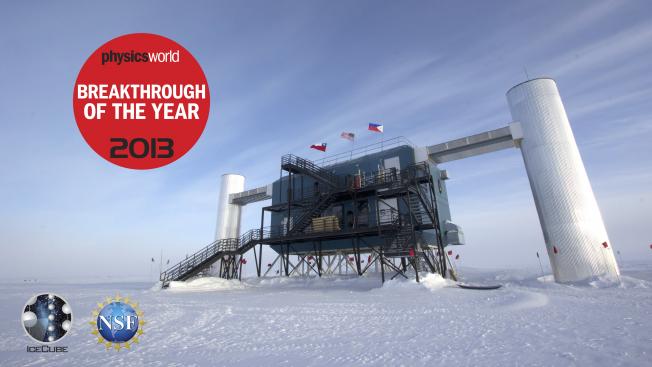
Physics World 2013 Breakthrough of the Year
IceCube at Oxford

I am a member since 2004 of the IceCube collaboration which discovered cosmic high energy neutrinos and identified some of their astrophysical sources.

IceCube @ Oxford

Fermi gamma-ray `bubbles' from stochastic acceleration of electrons

ArXiv 1104.3585 (2011)

Authors:

Philipp Mertsch, Subir Sarkar

Abstract:

Gamma-ray data from Fermi-LAT reveal a bi-lobular structure extending up to 50 degrees above and below the galactic centre, which presumably originated in some form of energy release there less than a few million years ago. It has been argued that the gamma-rays arise from hadronic interactions of high energy cosmic rays which are advected out by a strong wind, or from inverse-Compton scattering of relativistic electrons accelerated at plasma shocks present in the bubbles. We explore the alternative possibility that the relativistic electrons are undergoing stochastic 2nd-order Fermi acceleration by plasma wave turbulence through the entire volume of the bubbles. The observed gamma-ray spectral shape is then explained naturally by the resulting hard electron spectrum and inverse Compton losses. Rather than a constant volume emissivity as in other models, we predict a nearly constant surface brightness, and reproduce the observed sharp edges of the bubbles.
Details from ArXiV
More details from the publisher
More details
More details

Fermi gamma-ray `bubbles' from stochastic acceleration of electrons

(2011)

Authors:

Philipp Mertsch, Subir Sarkar
More details from the publisher

Limits on neutrino emission from gamma-ray bursts with the 40 string IceCube detector.

Phys Rev Lett 106:14 (2011) 141101

Authors:

R Abbasi, Y Abdou, T Abu-Zayyad, J Adams, JA Aguilar, M Ahlers, K Andeen, J Auffenberg, X Bai, M Baker, SW Barwick, R Bay, JL Bazo Alba, K Beattie, JJ Beatty, S Bechet, JK Becker, K-H Becker, ML Benabderrahmane, S BenZvi, J Berdermann, P Berghaus, D Berley, E Bernardini, D Bertrand, DZ Besson, D Bindig, M Bissok, E Blaufuss, J Blumenthal, DJ Boersma, C Bohm, D Bose, S Böser, O Botner, J Braun, AM Brown, S Buitink, M Carson, D Chirkin, B Christy, J Clem, F Clevermann, S Cohen, C Colnard, DF Cowen, MV D'Agostino, M Danninger, J Daughhetee, JC Davis, C De Clercq, L Demirörs, O Depaepe, F Descamps, P Desiati, G de Vries-Uiterweerd, T DeYoung, JC Díaz-Vélez, M Dierckxsens, J Dreyer, JP Dumm, R Ehrlich, J Eisch, RW Ellsworth, O Engdegård, S Euler, PA Evenson, O Fadiran, AR Fazely, A Fedynitch, T Feusels, K Filimonov, C Finley, T Fischer-Wasels, MM Foerster, BD Fox, A Franckowiak, R Franke, TK Gaisser, J Gallagher, M Geisler, L Gerhardt, L Gladstone, T Glüsenkamp, A Goldschmidt, JA Goodman, D Grant, T Griesel, A Gross, S Grullon, M Gurtner, C Ha, A Hallgren, F Halzen, K Han, K Hanson, D Heinen, K Helbing, P Herquet, S Hickford, GC Hill, KD Hoffman, A Homeier, K Hoshina, D Hubert, W Huelsnitz, J-P Hülss, PO Hulth, K Hultqvist, S Hussain, A Ishihara, J Jacobsen, GS Japaridze, H Johansson, JM Joseph, K-H Kampert, A Kappes, T Karg, A Karle, JL Kelley, N Kemming, P Kenny, J Kiryluk, F Kislat, SR Klein, J-H Köhne, G Kohnen, H Kolanoski, L Köpke, S Kopper, DJ Koskinen, M Kowalski, T Kowarik, M Krasberg, T Krings, G Kroll, K Kuehn, T Kuwabara, M Labare, S Lafebre, K Laihem, H Landsman, MJ Larson, R Lauer, R Lehmann, J Lünemann, J Madsen, P Majumdar, A Marotta, R Maruyama, K Mase, HS Matis, K Meagher, M Merck, P Mészáros, T Meures, E Middell, N Milke, J Miller, T Montaruli, R Morse, SM Movit, R Nahnhauer, JW Nam, U Naumann, P Niessen, DR Nygren, S Odrowski, A Olivas, M Olivo, A O'Murchadha, M Ono, S Panknin, L Paul, C Pérez de los Heros, J Petrovic, A Piegsa, D Pieloth, R Porrata, J Posselt, PB Price, M Prikockis, GT Przybylski, K Rawlins, P Redl, E Resconi, W Rhode, M Ribordy, A Rizzo, JP Rodrigues, P Roth, F Rothmaier, C Rott, T Ruhe, D Rutledge, B Ruzybayev, D Ryckbosch, H-G Sander, M Santander, S Sarkar, K Schatto, T Schmidt, A Schoenwald, A Schukraft, A Schultes, O Schulz, M Schunck, D Seckel, B Semburg, SH Seo, Y Sestayo, S Seunarine, A Silvestri, A Slipak, GM Spiczak, C Spiering, M Stamatikos, T Stanev, G Stephens, T Stezelberger, RG Stokstad, S Stoyanov, EA Strahler, T Straszheim, GW Sullivan, Q Swillens, H Taavola, I Taboada, A Tamburro, O Tarasova, A Tepe, S Ter-Antonyan, S Tilav, PA Toale, S Toscano, D Tosi, D Turčan, N van Eijndhoven, J Vandenbroucke, A Van Overloop, J van Santen, M Vehring, M Voge, B Voigt, C Walck, T Waldenmaier, M Wallraff, M Walter, C Weaver, C Wendt, S Westerhoff, N Whitehorn, K Wiebe, CH Wiebusch, DR Williams, R Wischnewski, H Wissing, M Wolf, K Woschnagg, C Xu, XW Xu, G Yodh, S Yoshida, P Zarzhitsky, IceCube Collaboration

Abstract:

IceCube has become the first neutrino telescope with a sensitivity below the TeV neutrino flux predicted from gamma-ray bursts if gamma-ray bursts are responsible for the observed cosmic-ray flux above 10(18)  eV. Two separate analyses using the half-complete IceCube detector, one a dedicated search for neutrinos from pγ interactions in the prompt phase of the gamma-ray burst fireball and the other a generic search for any neutrino emission from these sources over a wide range of energies and emission times, produced no evidence for neutrino emission, excluding prevailing models at 90% confidence.
More details from the publisher
More details
Details from ArXiV

Dark matter profiles and annihilation in dwarf spheroidal galaxies: prospectives for present and future gamma-ray observatories - I. The classical dSphs

ArXiv 1104.0412 (2011)

Authors:

A Charbonnier, C Combet, M Daniel, S Funk, JA Hinton, D Maurin, C Power, JI Read, S Sarkar, MG Walker, MI Wilkinson

Abstract:

Due to their large dynamical mass-to-light ratios, dwarf spheroidal galaxies (dSphs) are promising targets for the indirect detection of dark matter (DM) in gamma-rays. We examine their detectability by present and future gamma-ray observatories. The key innovative features of our analysis are: (i) We take into account the angular size of the dSphs; while nearby objects have higher gamma ray flux, their larger angular extent can make them less attractive targets for background-dominated instruments. (ii) We derive DM profiles and the astrophysical J-factor (which parameterises the expected gamma-ray flux, independently of the choice of DM particle model) for the classical dSphs directly from photometric and kinematic data. We assume very little about the DM profile, modelling this as a smooth split-power law distribution, with and without sub-clumps. (iii) We use a Markov Chain Monte Carlo (MCMC) technique to marginalise over unknown parameters and determine the sensitivity of our derived J-factors to both model and measurement uncertainties. (iv) We use simulated DM profiles to demonstrate that our J-factor determinations recover the correct solution within our quoted uncertainties. Our key findings are: (i) Sub-clumps in the dSphs do not usefully boost the signal; (ii) The sensitivity of atmospheric Cherenkov telescopes to dSphs within 20 kpc with cored halos can be up to ~50 times worse than when estimated assuming them to be point-like. Even for the satellite-borne Fermi-LAT the sensitivity is significantly degraded on the relevant angular scales for long exposures, hence it is vital to consider the angular extent of the dSphs when selecting targets; (iii) No DM profile has been ruled out by current data, but using a prior on the inner dark matter cusp slope 0=gamma=1 provides J-factor estimates accurate to a factor of a few if an appropriate angular scale [abridged]
Details from ArXiV
More details from the publisher
More details

Dark matter profiles and annihilation in dwarf spheroidal galaxies: prospectives for present and future gamma-ray observatories - I. The classical dSphs

(2011)

Authors:

A Charbonnier, C Combet, M Daniel, S Funk, JA Hinton, D Maurin, C Power, JI Read, S Sarkar, MG Walker, MI Wilkinson
More details from the publisher

Pagination

  • First page First
  • Previous page Prev
  • …
  • Page 229
  • Page 230
  • Page 231
  • Page 232
  • Current page 233
  • Page 234
  • Page 235
  • Page 236
  • Page 237
  • …
  • Next page Next
  • Last page Last

Footer Menu

  • Contact us
  • Giving to the Dept of Physics
  • Work with us
  • Media

User account menu

  • Log in

Follow us

FIND US

Clarendon Laboratory,

Parks Road,

Oxford,

OX1 3PU

CONTACT US

Tel: +44(0)1865272200

University of Oxfrod logo Department Of Physics text logo
IOP Juno Champion logo Athena Swan Silver Award logo

© University of Oxford - Department of Physics

Cookies | Privacy policy | Accessibility statement

Built by: Versantus

  • Home
  • Research
  • Study
  • Engage
  • Our people
  • News & Comment
  • Events
  • Our facilities & services
  • About us
  • Giving to Physics
  • Current students
  • Staff intranet