Home
Department Of Physics text logo
  • Research
    • Our research
    • Our research groups
    • Our research in action
    • Research funding support
    • Summer internships for undergraduates
  • Study
    • Undergraduates
    • Postgraduates
  • Engage
    • For alumni
    • For business
    • For schools
    • For the public
  • Support
Menu
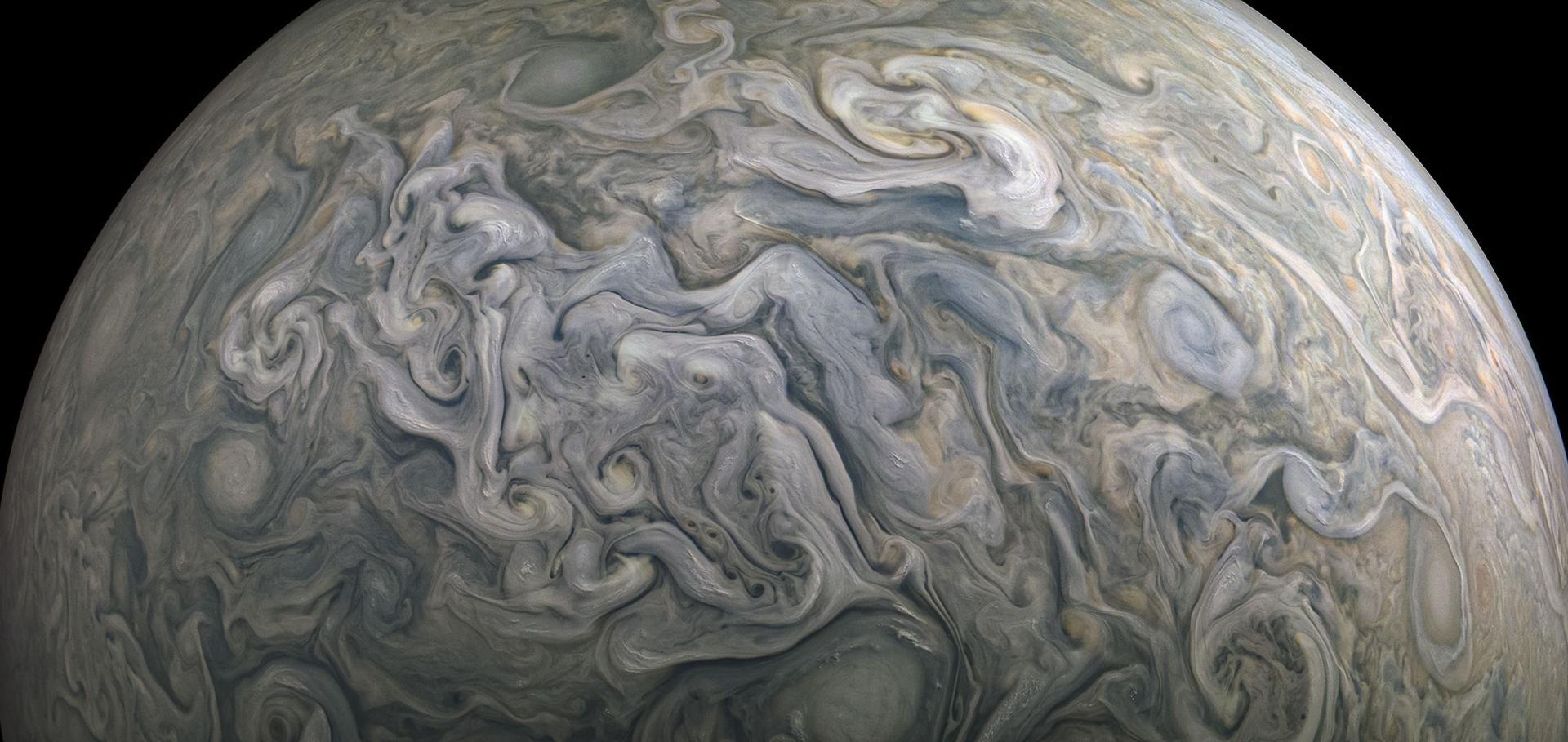
Juno Jupiter image

Neil Bowles

Professor of Planetary Science

Sub department

  • Atmospheric, Oceanic and Planetary Physics

Research groups

  • Planetary atmosphere observation analysis
  • Planetary surfaces
  • Solar system
  • Space instrumentation
Neil.Bowles@physics.ox.ac.uk
Telephone: 01865 (2)72097
Atmospheric Physics Clarendon Laboratory, room 307
  • About
  • Publications

 MIRMIS – The Modular Infrared Molecules and Ices Sensor for ESA’s Comet Interceptor.

(2025)

Authors:

Neil Bowles, Antti Näsilä, Tomas Kohout, Geronimo Villanueva, Chris Howe, Patrick Irwin, Antti Penttila, Alexander Kokka, Richard Cole, Sara Faggi, Aurelie Guilbert-Lepoutre, Silvia Protopapa, Aria Vitkova

Abstract:

Introduction: This presentation will describe the Modular Infrared Molecules and Ices Sensor currently in final assembly and test at the University of Oxford, UK and VTT Finland for ESA’s upcoming Comet interceptor mission.The Comet Interceptor mission: The Comet Interceptor mission [1] was selected by ESA as the first of its new “F” class of missions in June 2019 and adopted in June 2022.  Comet Interceptor (CI) aims to be the first mission to visit a long period comet, preferably, a Dynamically New Comet (DNC), a subset of long-period comets that originate in the Oort cloud and may preserve some of the most primitive material from early in our Solar System’s history. CI is scheduled to launch to the Earth-Sun L2 point with ESA’s ARIEL [2] mission in ~2029 where it will wait for a suitable DNC target.The CI mission is comprised of three spacecraft.  Spacecraft A will pass by the target nucleus at ~1000 km to mitigate against hazards caused by dust due to the wide range of possible encounter velocities (e.g. 10 – 70 km/s).  As well as acting as a science platform, Spacecraft A will deploy and provide a communications hub for two smaller spacecrafts, B1 (supplied by the Japanese space agency JAXA) and B2 that will perform closer approaches to the nucleus.  Spacecrafts B1 and B2 will make higher risk/higher return measurements but with the increased probability that they will not survive the whole encounter.The MIRMIS Instrument: The Modular InfraRed Molecules and Ices sensor (MIRMIS, Figure 1) instrument is part of the CI Spacecraft A scientific payload.  The MIRMIS consortium includes hardware contributions from Finland (VTT Finland) and the UK (University of Oxford) with members of the instrument team from the Universities of Helsinki, Lyon, NASA’s Goddard Space Flight Center, and Southwest Research Institute.MIRMIS will map the spatial distribution of temperatures, ices, minerals and gases in the nucleus and coma of the comet using covering a spectral range of 0.9 to 25 microns.  An imaging Fabry-Perot interferometer will provide maps of composition at a scale of ~180 m at closest approach from 0.9 to 1.7 microns.  A Fabry-Perot point spectrometer will make observations of the coma and nucleus at wavelengths from 2.5 to 5 microns and finally a thermal imager will map the temperature and composition of the nucleus at a spatial resolution of 260 m using a series of multi-spectral filters from 6 to 25 microns.  Figure 1: (Top) The MIRMIS instrument for ESA’s Comet Interceptor mission. (Bottom) The MIRMIS Structural Thermal model under test at University of Oxford.The MIRMIS instrument is compact (548.5 x 282.0 x 126.8 mm) and low mass (
More details from the publisher

LIRIS: demonstrating how small satellites can revolutionise lunar science data sets

Proceedings of SPIE--the International Society for Optical Engineering SPIE, the international society for optics and photonics 13546 (2025) 135460d-135460d-9

Authors:

A Harvey, L Middlemass, J Friend, N Bowles, T Warren, S Eckersley, S Knox, B Hooper, A da Silva Curiel, K Nowicki, K Shirley
More details from the publisher

Lunar thermal mapper ground testing calibration data

University of Oxford (2025)

Abstract:

Ground test data from the Lunar Thermal Mapper instrument. Described in Bowles et al. 2025 submitted to JGR Planets.
More details from the publisher
Details from ORA

Bidirectional reflectance distribution function measurements of characterized Apollo regolith samples using the visible oxford space environment goniometer

Meteoritics & Planetary Science Wiley (2024)

Authors:

RJ Curtis, TJ Warren, KA Shirley, DA Paige, NE Bowles

Abstract:

A laboratory study was performed using the Visible Oxford Space Environment Goniometer in which the broadband (350–1250 nm) bidirectional reflectance distribution functions (BRDFs) of two representative Apollo regolith samples were measured, for two surface roughness profiles, across a range of viewing angles—reflectance: 0–70°, in steps of 5°; incidence: 15°, 30°, 45°, and 60°; and azimuthal: 0°, 45°, 90°, 135°, and 180°. The BRDF datasets were fitted using the Hapke BRDF model to (1) provide a method of comparison to other photometric studies of the lunar regolith and (2) to produce Hapke parameter values which can be used to extrapolate the BRDF to all angles. Importantly, the surface profiles of the samples were characterized using an Alicona 3D® instrument, allowing two of the free parameters within the Hapke model, φ and θ ¯ $$ \overline{\theta} $$ , which represent porosity and surface roughness, respectively, to be constrained. The study determined that, for θ ¯ $$ \overline{\theta} $$ , the 500–1000 μm size‐scale is the most relevant for the BRDF. Thus, it deduced the following “best fit” Hapke parameters for each of the samples: Apollo 11 rough— w $$ w $$ = 0.315 ± 0.021, b $$ b $$ = 0.261 ± 0.007, and h S $$ {h}_S $$ = 0.039 ± 0.005 (with θ ¯ $$ \overline{\theta} $$ = 21.28° and φ = 0.41 ± 0.02); Apollo 11 smooth— w $$ w $$ = 0.281 ± 0.028, b $$ b $$ = 0.238 ± 0.008, and h S $$ {h}_S $$ = 0.032 ± 0.006 (with θ ¯ $$ \overline{\theta} $$ = 13.80° and φ = 0.60 ± 0.02); Apollo 16 rough— w $$ w $$ = 0.485 ± 0.155, b $$ b $$ = 0.155 ± 0.083, and h S $$ {h}_S $$ = 0.135 ± 0.007 (with θ ¯ $$ \overline{\theta} $$ = 21.69° and φ = 0.55 ± 0.02); Apollo 16 smooth— w $$ w $$ = 0.388 ± 0.057, b $$ b $$ = 0.063 ± 0.033, and h S $$ {h}_S $$ = 0.221 ± 0.011 (with θ ¯ $$ \overline{\theta} $$ = 14.27° and φ = 0.40 ± 0.02). Finally, updated hemispheric albedo functions were determined for the samples, which can be used to set laboratory measured visible scattering functions within thermal models.
More details from the publisher
Details from ORA
More details

Design and testing of the Lunar Thermal Mapper optics

SPIE, the international society for optics and photonics (2024) 98

Authors:

Rory Evans, Neil Bowles, Simon Calcutt, Keith Nowicki, Cyril Bourgenot, Bethany L Ehlmann
More details from the publisher

Pagination

  • First page First
  • Previous page Prev
  • Page 1
  • Page 2
  • Page 3
  • Current page 4
  • Page 5
  • Page 6
  • Page 7
  • Page 8
  • Page 9
  • …
  • Next page Next
  • Last page Last

Footer Menu

  • Contact us
  • Giving to the Dept of Physics
  • Work with us
  • Media

User account menu

  • Log in

Follow us

FIND US

Clarendon Laboratory,

Parks Road,

Oxford,

OX1 3PU

CONTACT US

Tel: +44(0)1865272200

University of Oxfrod logo Department Of Physics text logo
IOP Juno Champion logo Athena Swan Silver Award logo

© University of Oxford - Department of Physics

Cookies | Privacy policy | Accessibility statement

Built by: Versantus

  • Home
  • Research
  • Study
  • Engage
  • Our people
  • News & Comment
  • Events
  • Our facilities & services
  • About us
  • Giving to Physics
  • Current students
  • Staff intranet