Home
Department Of Physics text logo
  • Research
    • Our research
    • Our research groups
    • Our research in action
    • Research funding support
    • Summer internships for undergraduates
  • Study
    • Undergraduates
    • Postgraduates
  • Engage
    • For alumni
    • For business
    • For schools
    • For the public
  • Support
Menu
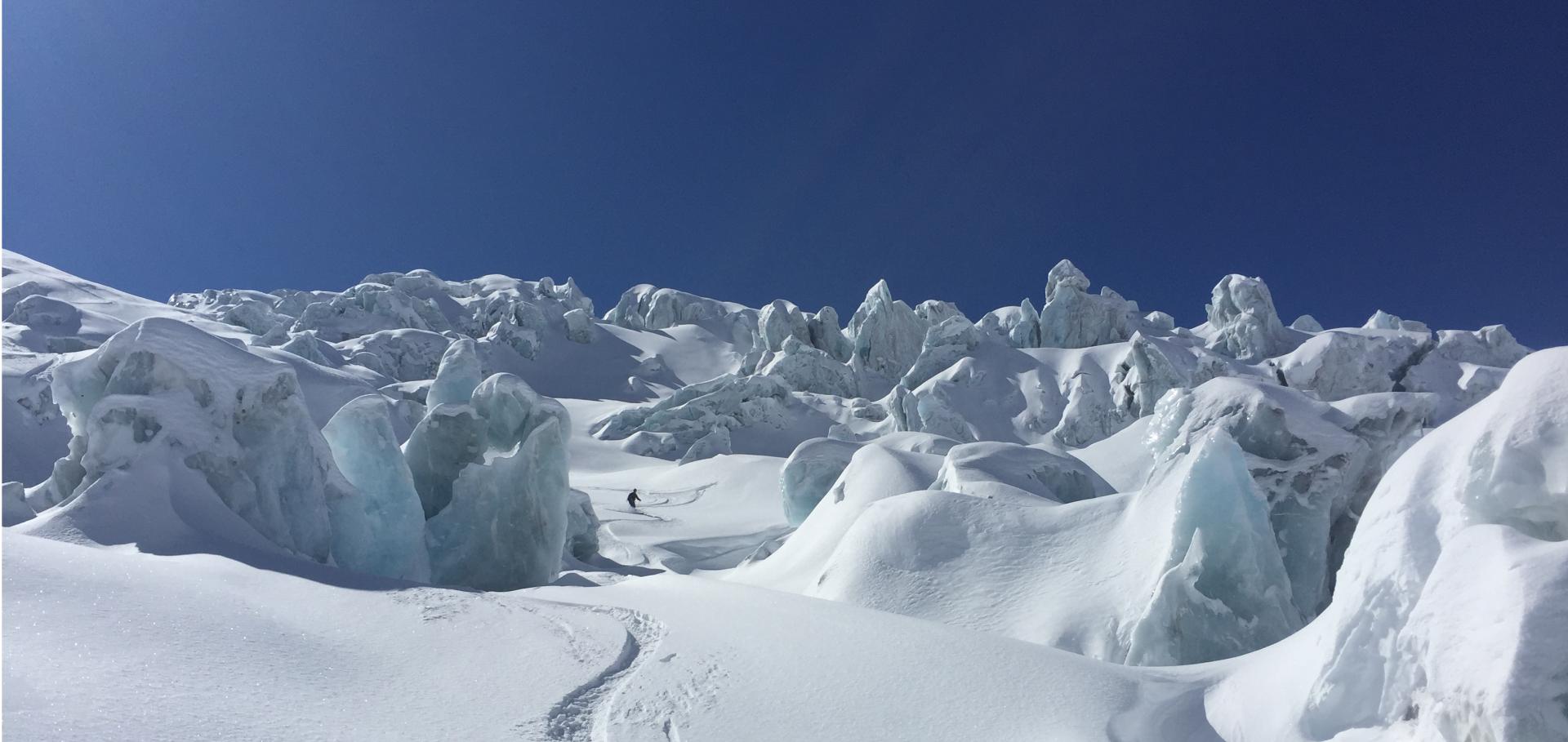
Arzhang's natural habitat

Prof Arzhang Ardavan

Professor of Physics

Research theme

  • Quantum materials

Sub department

  • Condensed Matter Physics

Research groups

  • Quantum spin dynamics
arzhang.ardavan@physics.ox.ac.uk
Telephone: 01865 (2)72366
Clarendon Laboratory, room 265,020,010,267
Personal website
  • About
  • Publications

Electron spin relaxation of N@C60 in CS2

(2005)

Authors:

John JL Morton, Alexei M Tyryshkin, Arzhang Ardavan, Kyriakos Porfyrakis, SA Lyon, G Andrew D Briggs
More details from the publisher

Distinguishing two isomers of Nd@C82 by scanning tunneling microscopy and density functional theory

Chemical Physics Letters 414:4-6 (2005) 307-310

Authors:

DF Leigh, JHG Owen, SM Lee, K Porfyrakis, A Ardavan, TJS Dennis, DG Pettifor, GAD Briggs

Abstract:

Two different structural isomers of Nd@C82 have been isolated using two-stage high-performance liquid chromatography. Their molecular orbital structures have been studied by a combination of scanning tunneling microscopy (STM) and density functional theory (DFT). Matching filled and empty-states STM images to DFT calculations allowed us to distinguish directly between the two isomers on the surface. © 2005 Elsevier B.V. All rights reserved.
More details from the publisher

Isolation and spectroscopic characterization of two isomers of the metallofullerene Nd@C82

Aip Conference Proceedings 786 (2005) 73-76

Authors:

K Porfyrakis, M Kanai, GW Morley, A Ardavan, TJS Dennis, GAD Briggs

Abstract:

For the first time, two types of the metallofullerene Nd@C82 have been isolated and characterized. HPLC was used to isolate Nd@C 82(I, II). The two isomers were characterized by mass spectrometry and UV-Vis-NIR absorption spectroscopy. Nd@C82(I) was found to be similar in structure to the main isomer of other lanthanofullerenes such as La@C82, as was previously reported. We assign Nd@C82(I) to have a C2v cage symmetry. Nd@C82(II) showed a markedly different UV-Vis-NIR absorption spectrum to Nd@C82(I). Its spectrum is in good agreement with that of the minor isomer of metallofullerenes such as Pr@C82. We therefore assign Nd@C82(II) to have a C s cage symmetry. In contrast to other metallofullerenes, both isomers appear to be equally abundant. © 2005 American Institute of Physics.
More details from the publisher

Magnetic oscillations, disorder and the Hofstadter butterfly in finite systems

SYNTHETIC MET 154:1-3 (2005) 265-268

Authors:

JG Analytis, SJ Blundell, A Ardavan

Abstract:

We present numerical calculations of a tight-binding model applied to a finite square lattice in the presence of a perpendicular magnetic field. The persistent current associated with each eigenstate is calculated, the chirality of which is determined by whether the eigenstate exists within the bulk or localised to the edges of the lattice. This treatment allows us to extract oscillations in the magnetization, which are analogous to de Haas-van Alphen oscillations. We consider the influence of short range disorder and long range potential modulations on these systems.
More details from the publisher

Millimetre-wave studies on the high-spin molecules Cr-10(OMe)(20)(O2CCMe3)(10) and Cr12O9(OH)(3)(O2CCMe3)(15)

SYNTHETIC MET 154:1-3 (2005) 305-308

Authors:

S Sharmin, A Ardavan, SJ Blundell, AI Coldea

Abstract:

We report millimetre-wave electron spin resonance (ESR) measurements on single crystals of the high-spin molecules Cr-10(OMe)(20)(O2CCMe3)(10) and Cr12O9(OH)(3)(O2CCMe3)(15) within a temperature range of 1.4 K to 50 K and in magnetic fields of up to 5 Tesla. In our experiments it is possible to vary the orientation of the magnetic field with respect to the crystal axes, and thus to study the ESR lineshapes as a function of both temperature and angle. Our results confirm that Cr-10(OMe)(20)(O2CCMe3)(10) behaves as a single-molecule magnet with S = 15 and D = -0.03 K, while Cr12O9(OH)(3)(O2CCMe3)(15) has S = 6 and D similar to 0.1 K. A comparison of the experimental spectra with numerical simulations gives good agreement at low temperatures. At higher temperatures, we observe a narrowing of the ESR spectrum that is not explained by simple models.
More details from the publisher

Pagination

  • First page First
  • Previous page Prev
  • …
  • Page 50
  • Page 51
  • Page 52
  • Page 53
  • Current page 54
  • Page 55
  • Page 56
  • Page 57
  • Page 58
  • …
  • Next page Next
  • Last page Last

Footer Menu

  • Contact us
  • Giving to the Dept of Physics
  • Work with us
  • Media

User account menu

  • Log in

Follow us

FIND US

Clarendon Laboratory,

Parks Road,

Oxford,

OX1 3PU

CONTACT US

Tel: +44(0)1865272200

University of Oxfrod logo Department Of Physics text logo
IOP Juno Champion logo Athena Swan Silver Award logo

© University of Oxford - Department of Physics

Cookies | Privacy policy | Accessibility statement

Built by: Versantus

  • Home
  • Research
  • Study
  • Engage
  • Our people
  • News & Comment
  • Events
  • Our facilities & services
  • About us
  • Giving to Physics
  • Current students
  • Staff intranet