Home
Department Of Physics text logo
  • Research
    • Our research
    • Our research groups
    • Our research in action
    • Research funding support
    • Summer internships for undergraduates
  • Study
    • Undergraduates
    • Postgraduates
  • Engage
    • For alumni
    • For business
    • For schools
    • For the public
  • Support
Menu
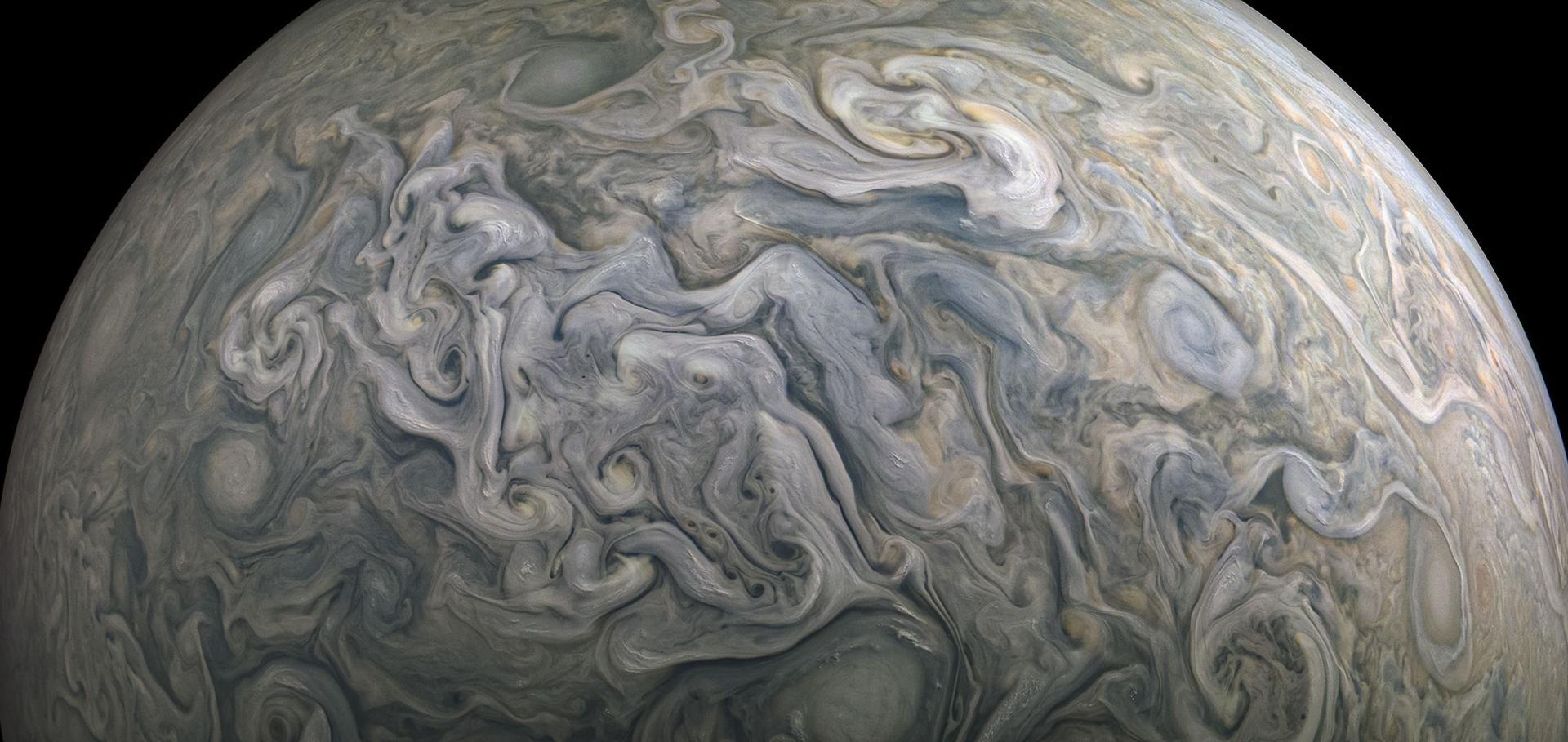
Juno Jupiter image

Prof. Patrick Irwin

Professor of Planetary Physics

Research theme

  • Exoplanets and planetary physics

Sub department

  • Atmospheric, Oceanic and Planetary Physics

Research groups

  • Exoplanet atmospheres
  • Planetary atmosphere observation analysis
  • Solar system
patrick.irwin@physics.ox.ac.uk
Telephone: 01865 (2)72083
Atmospheric Physics Clarendon Laboratory, room 306
Personal research page
NEMESIS
Github data sharing website
  • About
  • Publications

ESA/JUICE encounters Earth/Moon in 2024: overview of the Moons And Jupiter Imaging Spectrometer (MAJIS) observations

Annales Geophysicae 44:1 (2026) 163-193

Authors:

F Poulet, G Piccioni, Y Langevin, C Dumesnil, V Carlier, B Seignovert, M Dexet, Ln Fletcher, C Leyrat, F Altieri, J Carter, E D’Aversa, M De Sanctis, D Grassi, S Guerlet, S Le Mouélic, A Migliorini, F Oliva, C Royer, S Rodriguez, K Stephan, F Tosi, F Zambon, A Adriani, G Arnold, Jp Bibring, D Bockelée, R Brunetto, F Capaccioni, C Carli, T Cavalié, Mc González, M Ciarnello, S De Angelis, P Drossart, G Filacchione, T Fouchet, Jc Gérard, D Grodent, P Irwin, S Jacquinod, O Karatekin, E Lellouch, N Ligier, N Mangold, M Mebsout, F Merlin, A Morbidelli, A Mura, A Nathues

Abstract:

The Lunar-Earth Gravitational Assist (LEGA) of 19-20 August 2024 marked the first in-flight opportunity beyond functional checks to perform MAJIS (Moons and Jupiter Imaging Spectrometer) observations on-board the ESA’s Jupiter Icy Moons Explorer (JUICE) spacecraft. This unique double flyby involved sequential close approaches to the Moon and Earth, offering an unprecedented configuration to evaluate MAJIS under high radiance, rapidly changing geometric, and operationally constrained conditions. A total of 24 hyperspectral image cubes were acquired (5 targeting the Moon and 19 the Earth) providing a dataset of approximately 7.5 Gbit. This work presents the primary goal of this observation campaign, which was to verify key aspects of MAJIS performance, including radiometric and spectral calibration, straylight behavior, geometric alignment, the use of onboard browse products, and interference tests with other JUICE instruments. This event also enabled assessment of thermal behavior and susceptibility to electromagnetic interference, and provided a first operational benchmark for MAJIS and a basis for refining future observation strategies and data analyses during JUICE’s cruise and science phases. In addition, despite limited spatial and temporal coverage of the observations, the analyses presented here and in a series of companion papers of the special issue “The first-ever lunar-Earth flyby: a unique test environment for JUICE” demonstrated the instrument’s ability to characterize mineralogical features on the Moon and atmospheric constituents on Earth. Observations include detection of mafic minerals (some associated to fresh excavated materials), thermal emission, and emissivity variations on the Moon at spatial scale of 100-200 m. Characterization of atmospheric absorption features, thermal brightness, icy cloud properties are captured for the Earth at km-scale and briefly discussed in the framework of the atmospheric biosignatures relevant to exoplanet habitability studies. Near-coincident acquisitions with other JUICE instruments and Earth-orbiting spectrometers provided valuable inter-calibration and cross-validation opportunities.
More details from the publisher
More details

Jovian upper clouds and hazes from visible and near infrared spectroscopy using CARMENES

Icarus Elsevier 450 (2026) 116978

Authors:

José Ribeiro, Pedro Machado, Santiago Pérez-Hoyos, Asier Anguiano-Arteaga, Patrick Irwin

Abstract:

The aerosol scheme for Jupiter’s upper hazes and clouds is still debated to this day, for the Crème Brûlée aerosol scheme has trouble in fitting some specific Jovian atmospheric features (Braude et al., 2020; Dahl et al., 2021). We analyse observations of Jupiter acquired with CARMENES in 2019, from visible to near infrared (0.52–1.71μm), to test three competing aerosols schemes. These observations are unique due to their spectral coverage with both high spatial and spectral resolutions, paving the way for future observations of Solar System objects. We used a model with two blue wavelength attenuating hazes (chromophores) by Anguiano-Arteaga et al., (2021); Anguiano-Arteaga et al., (2023), a model that has a single blue attenuating haze by Braude et al., (2020) and a model where the blue attenuating haze is physically constrained in a thin layer (“Crème Brûlée model”) with a more up to date parameter values from Pérez-Hoyos et al., (2020). We grouped the observations into 5 regions of the atmosphere of Jupiter and performed a Minnaert limb-darkening approximation, producing synthetic spectra at 0° and 61.45° zenith angles for each. We found that the properties of the highest aerosol layer dominate the fit to the observations, with particle size (Models A and B) and cloud base abundance (Models A and C) being the most influential parameters. We found that the extended chromophore model from Braude et al., (2020) fits the observations better than the other two models. However, none of the tested schemes fully reproduce the data, as all yield X2/Nfree values greater than unity, indicating limitations in the current aerosol parametrisations. These results suggest that a consistent characterisation of Jovian aerosols requires models constrained by a broader spectral range, including ultraviolet observations sensitive to chromophore absorption and thermal infrared data probing deeper cloud layers.

More details from the publisher
Details from ORA
More details

Using SOFIA’s EXES to Search for C 6 H 2 and C 4 N 2 in Titan’s Atmosphere

The Planetary Science Journal IOP Publishing 6:12 (2025) 287

Authors:

Zachary C McQueen, Conor A Nixon, Curtis de Witt, Véronique Vuitton, Panayotis Lavvas, Juan Alday, Nicholas A Teanby, Joseph Penn, Antoine Jolly, Patrick GJ Irwin

Abstract:

In Titan’s atmosphere, the chemistry of simple hydrocarbons (e.g., CH4 and C2H2) and nitrogen bearing species (e.g., N2 and CN) represents an important link between molecular species and the ubiquitous organic haze that gives Titan its characteristic orange hue. Here we present a new search for two previously undetected molecules, triacetylene (C6H2) and the gas phase dicyanoacetylene (C4N2), using the Echelon-Cross-Echelle Spectrograph instrument on board the Stratospheric Observatory for Infrared Astronomy aircraft. We do not detect these two molecules but determine upper limits for their mixing ratios and column abundances. We find the 3σ upper limits on the uniform volume mixing ratio (VMR) above 100 km for C6H2 to be 4.3 × 10⁻¹¹, which is lower than the photochemical model predictions. This new upper limit suggests that the growth of linear molecules is inhibited. We also put a strict upper limit on the uniform VMR for gas phase C4N2 above 125 km to be 1.0 × 10⁻¹⁰. This upper limit is well below the saturation mixing ratio at this altitude for C4N2 and greatly limits the feasibility of C4N2 forming ice from condensation.
More details from the publisher
Details from ORA
More details

Machine learning spectral clustering techniques: Application to Jovian clouds from Juno/JIRAM and JWST/NIRSpec

Astronomy & Astrophysics EDP Sciences 701 (2025) ARTN A247

Authors:

F Biagiotti, Ln Fletcher, D Grassi, Mt Roman, G Piccioni, A Mura, I de Pater, T Fouchet, Mh Wong, R Hueso, O King, H Melin, J Harkett, S Toogood, Pgj Irwin, F Tosi, A Adriani, G Sindoni, C Plainaki, R Sordini, R Noschese, A Cicchetti, G Orton, P Rodriguez-Ovalle, Gl Bjoraker, S Levin, C Li, S Bolton

Abstract:

We present a new method, based on a joint application of a principal component analysis (PCA) and Gaussian mixture models (GMM), to automatically find similar groups of spectra in a collection. We applied the method (condensed in the public code chopper.py ) to archival Jupiter spectral data in the 2–5 µm range collected by NASA Juno/JIRAM in its first perijove passage (August 2016) and to mosaics of the great red spot (GRS) acquired by JWST/NIRSpec (July 2022). Using JIRAM data analyzed in previous work, we show that using a PCA+GMM clustering can increase the efficiency of the retrieval stage without any loss of accuracy in terms of the retrieved parameters. We show that a PCA+GMM approach is able to automatically identify spectra of known regions of interest (e.g., belts, zones, GRS) belonging to different clusters. The application of the method to the NIRSpec data leads to detection of substructures inside the GRS, which appears to be composed of an outer halo characterized by low reflectivity and an inner brighter main oval. By applying these techniques to JIRAM data, we were able to identify the same substructure. We remark that these new structures have not been seen before at visible wavelengths. In both cases, the spectra belonging to the inner oval have solar and thermal signals comparable to those belonging to the halo, but they present broadened 2.73 µm solar-reflected peaks. Performing forward simulations with the NEMESIS radiative transfer suite, we propose that the broadening may be caused by differences in the vertical extension of the main cloud layer. This finding is consistent with recent 3D fluid dynamics simulations.
More details from the publisher
More details

A comprehensive picture about Jovian clouds and hazes from Juno/JIRAM infrared spectral data

(2025)

Authors:

Francesco Biagiotti, Davide Grassi, Tristan Guillot, Leigh N Fletcher, Sushil Atreya, Giuliano Liuzzi, Geronimo Villanueva, Pascal Rannou, Patrick Irwin, Giuseppe Piccioni, Alessandro Mura, Federico Tosi, Alberto Adriani, Roberto Sordini, Raffaella Noschese, Andrea Cicchetti, Giuseppe Sindoni, Christina Plainaki, Cheng Li, Scott Bolton

Abstract:

Jupiter, the largest planet in our solar system, is a vital reference point for understanding gaseous exoplanets and their atmospheres. While we know its upper tropospheric chemical composition well, the nature and structure of its clouds remain puzzling. We, therefore, rely on theoretical models and remote sensing data to address this.While traditional equilibrium chemistry condensation models (ECCM) are sensitive to input parameters, advanced models [1] offer more realistic cloud property predictions. Remote sensing data can help determine cloud properties and test theoretical predictions thanks to the application of multiple scattering atmospheric retrieval. Still, the process is highly degenerate and, therefore, computationally demanding. The predicted tropospheric layers are upper ammonia ice (∼0.7 bar) and ammonium hydrosulfide (∼2 bar) clouds [2], but their spectral detection has been limited to small, dynamically active regions (
More details from the publisher

Pagination

  • First page First
  • Previous page Prev
  • Page 1
  • Page 2
  • Current page 3
  • Page 4
  • Page 5
  • Page 6
  • Page 7
  • Page 8
  • Page 9
  • …
  • Next page Next
  • Last page Last

Footer Menu

  • Contact us
  • Giving to the Dept of Physics
  • Work with us
  • Media

User account menu

  • Log in

Follow us

FIND US

Clarendon Laboratory,

Parks Road,

Oxford,

OX1 3PU

CONTACT US

Tel: +44(0)1865272200

University of Oxfrod logo Department Of Physics text logo
IOP Juno Champion logo Athena Swan Silver Award logo

© University of Oxford - Department of Physics

Cookies | Privacy policy | Accessibility statement

Built by: Versantus

  • Home
  • Research
  • Study
  • Engage
  • Our people
  • News & Comment
  • Events
  • Our facilities & services
  • About us
  • Giving to Physics
  • Current students
  • Staff intranet