Home
Department Of Physics text logo
  • Research
    • Our research
    • Our research groups
    • Our research in action
    • Research funding support
    • Summer internships for undergraduates
  • Study
    • Undergraduates
    • Postgraduates
  • Engage
    • For young people
    • For teachers
    • For the public
    • For alumni
    • For business
  • Support
Menu
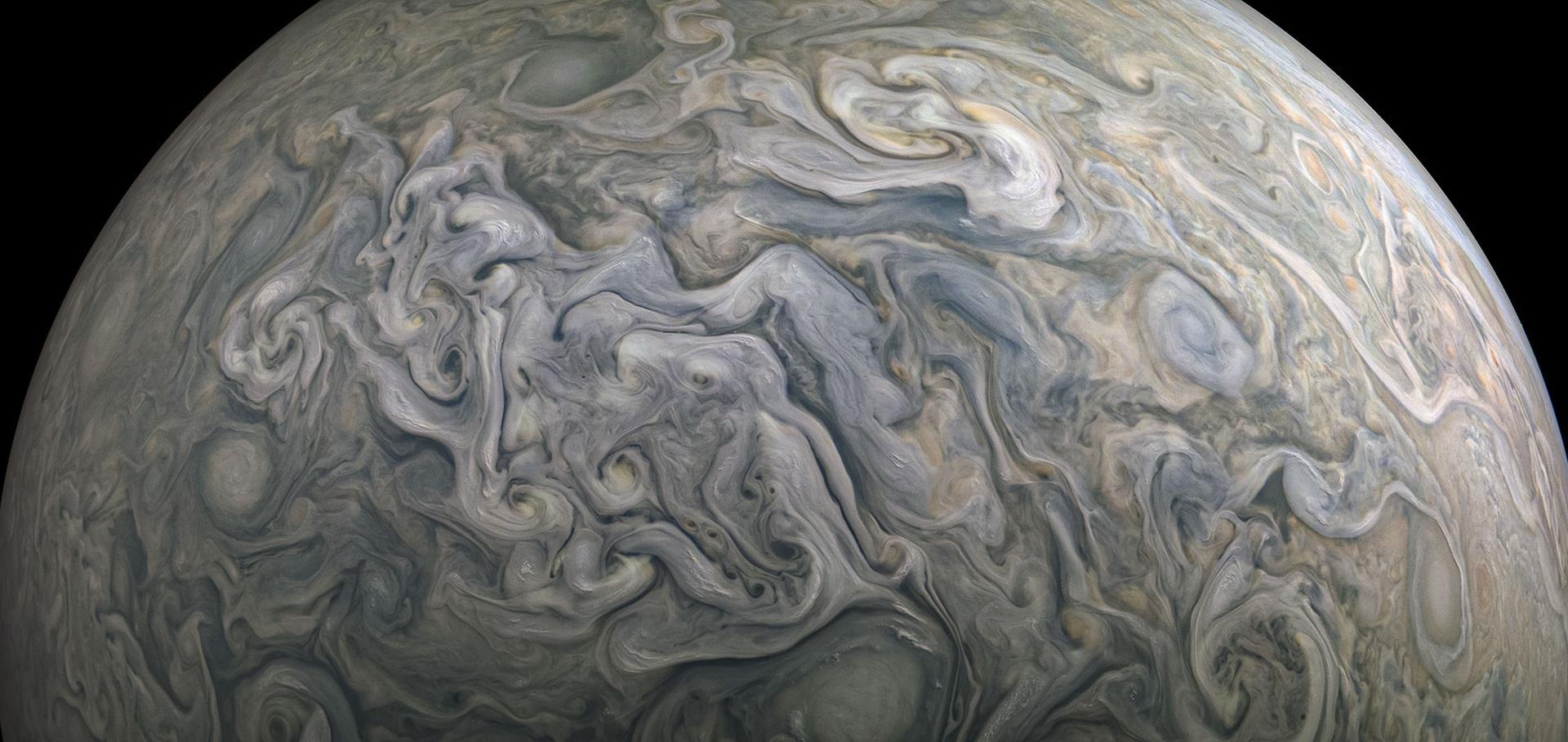
Juno Jupiter image

Duncan Lyster

DPhil Student - Planetary Physics

Research theme

  • Exoplanets and planetary physics

Sub department

  • Atmospheric, Oceanic and Planetary Physics

Research groups

  • Planetary surfaces
  • Space instrumentation
duncan.lyster@physics.ox.ac.uk
Atmospheric Physics Clarendon Laboratory, room 209h
  • About
  • Publications

TEMPEST - A modular Python-based thermophysical model for rough, irregularly-shaped airless bodies

RAS Techniques and Instruments Oxford University Press (OUP) (2026) rzag093

Authors:

Duncan G Lyster, Carly JA Howett

Abstract:

Abstract Comparing observed and predicted surface temperatures on airless planetary bodies is crucial for interpreting their surface processes, constraining activity, and deriving their surface properties. We present a new tool in this endeavour: TEMPEST (Thermophysical Evolution Model for Planetary Environment Surface Temperatures). It is a modular, open-source Python model for diurnal thermal evolution on irregular bodies. TEMPEST can reproduce non-Lambertian multiple scattering using arbitrary Bidirectional Reflectance Distribution Functions (BRDFs) and notably incorporates surface roughness on sub-facet scales through representative sphere-section geometry. The model includes an explicit time-stepping one-dimensional periodic conduction solver influenced by Spencer’s thermal model Thermprojrs, and a semi-implicit Crank-Nicolson solver, and can be paired with other thermal solvers. Precomputed look-up tables enable fast application of scattering laws (Lambertian, Lommel-Seeliger, Hapke, or input empirical BRDF data), allowing the user to assess their effects in permanently shadowed regions or partially shadowed terrains. TEMPEST is parallelised, running on personal computers in minutes for thousands of facets and scaling to high-performance servers for models exceeding 100,000 facets. Validation was performed against Thermprojrs in one dimension, against Sorli’s Binary Thermophysical Model in three dimensions, and with empirical thermal data from the Lunar Reconnaissance Orbiter, showing good agreement in each case. Application to the high-resolution shape-model of 25143 Itokawa shows the importance of self-shadowing and radiative mutual heating in controlling local temperatures. TEMPEST has already been used to analyse data from the Lucy Mission, Galileo, and ground-based observations, and is adaptable to upcoming datasets from targets of missions such as Comet Interceptor and Europa Clipper.
More details from the publisher

TEMPEST - A modular Python-based thermophysical model for rough, irregularly-shaped airless bodies

ArXiv 2610.40406 (2026)

Authors:

DG Lyster, CJA Howett
Details from ArXiV

Tailoring Infra-Red Filters for Global Mapping of Enceladus' Thermal Environment

ArXiv 2610.40456 (2026)

Authors:

DG Lyster, CJA Howett, NE Bowles, K Nowicki, R Evans, TJ Warren
Details from ArXiV

Dynamical behavior and surface features of Large Super-Fast Rotator Near-Earth Asteroid (436724) 2011 UW158

Icarus Elsevier BV (2026) 117340

Authors:

Caio Gomes, Andre Amarante, Filipe Monteiro, Alessandra Ferreira, Leonardo Braga, AK de Almeida, Duncan Lyster, Nicoli Rocha, Gabriel Damilano, Leonardo Barbosa
More details from the publisher

Thermal Inertia and Bolometric Bond Albedo Measurements of Europa’s Surface using Galileo PPR

Monthly Notices of the Royal Astronomical Society Oxford University Press (OUP) (2026) stag1507

Authors:

Sarah E Howes, CJA Howett, DG Lyster, L Lange, S Piqueux

Abstract:

Abstract We investigate the diurnal temperature variations of Europa’s surface using brightness temperatures taken by Galileo’s Photopolarimeter-Radiometer (PPR) instrument. Diurnal curves created from these data are compared to those predicted by a thermophysical model to determine what thermal inertias and Bond albedos can fit the data within a reduced chi-squared cutoff of $\chi _{\textrm {red}}^2\le 1.0$. This analysis is used to extensively quantify the uncertainty for the first time of the two thermophysical parameters derived from PPR. We map the albedo and thermal inertia for 33% and 24% of Europa’s surface area, respectively. We find a range of 0.375-0.75 for albedo and 20-110 J m−2 K−1 s−1/2 for thermal inertia. Our uncertainty analysis indicates well-constrained estimates for albedo, while upper limits for thermal inertia remain poorly constrained. When averaged across nine geological areas, albedo varies as expected: lower values are obtained for darker regions in visible wavelengths. Thermal inertia appears to vary independently from geological boundaries. The surface was also divided based on electron bombardment energy flux and non-ice composition fraction. Thermal inertia behaves opposite of what is expected: lower thermal inertias are located in regions of high-energy electron bombardment. This possibly indicates a mechanism competing with electron-induced sintering is present that is lowering the surface conductivity. No endogenic anomalies were detected that could not be explained by passive emission alone. Nevertheless, these results aid in preparing for future thermal measurements from Europa Clipper and Juice by improving the surface coverage of Europa’s passive thermal properties and providing uncertainties of their values.
More details from the publisher
More details

Pagination

  • Current page 1
  • Page 2
  • Page 3
  • Page 4
  • Next page Next
  • Last page Last

Footer Menu

  • Contact us
  • Giving to the Dept of Physics
  • Work with us
  • Media

User account menu

  • Log in

Follow us

FIND US

Clarendon Laboratory,

Parks Road,

Oxford,

OX1 3PU

CONTACT US

Tel: +44(0)1865272200

University of Oxfrod logo Department Of Physics text logo
IOP Juno Champion logo Athena Swan Silver Award logo

© University of Oxford - Department of Physics

Cookies | Privacy policy | Accessibility statement

Built by: Versantus

  • Home
  • Research
  • Study
  • Engage
  • Our people
  • News & Comment
  • Events
  • Our facilities & services
  • About us
  • Giving to Physics
  • Current students
  • Staff intranet