Home
Department Of Physics text logo
  • Research
    • Our research
    • Our research groups
    • Our research in action
    • Research funding support
    • Summer internships for undergraduates
  • Study
    • Undergraduates
    • Postgraduates
  • Engage
    • For young people
    • For teachers
    • For the public
    • For alumni
    • For business
  • Support
Menu
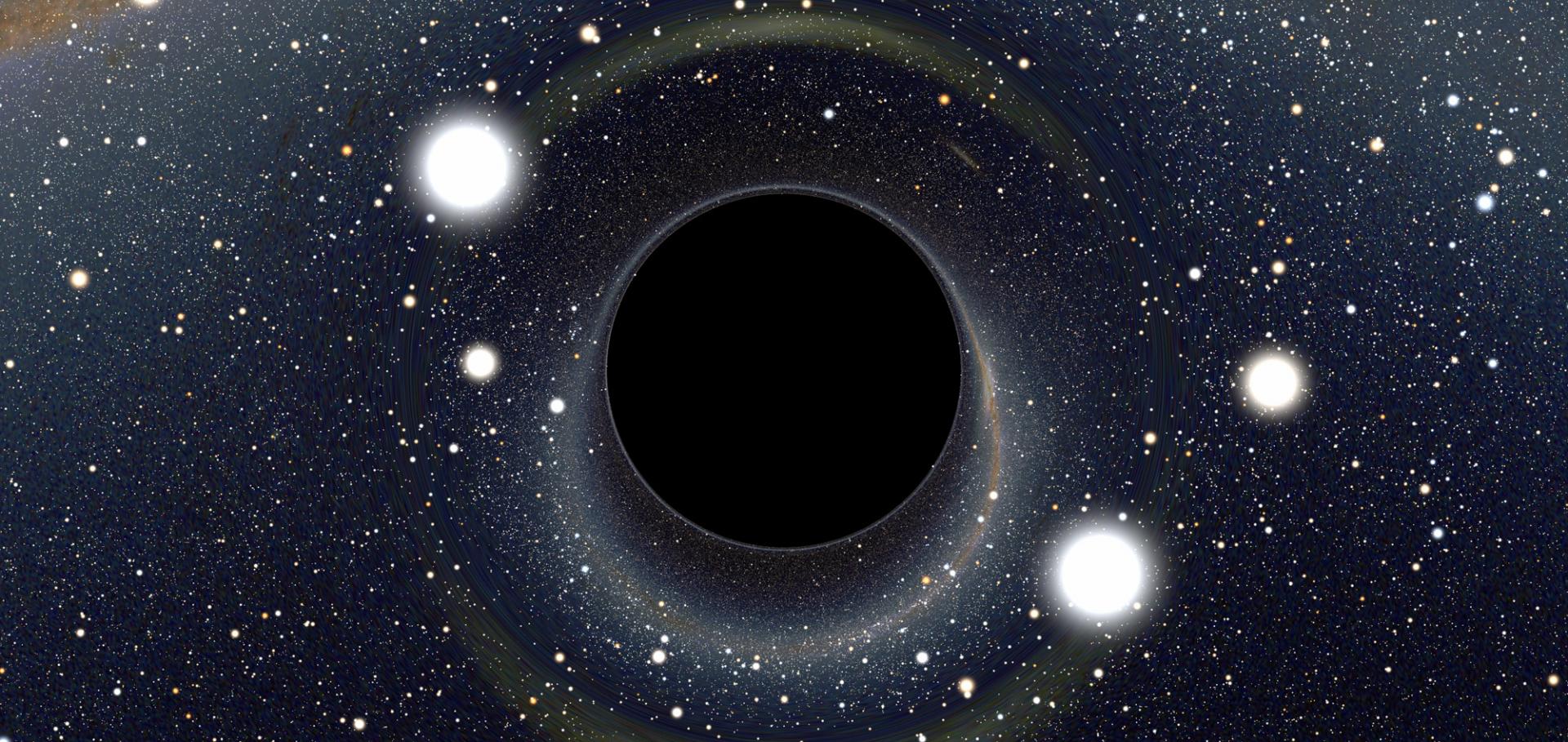
Black Hole

Lensing of space time around a black hole. At Oxford we study black holes observationally and theoretically on all size and time scales - it is some of our core work.

Credit: ALAIN RIAZUELO, IAP/UPMC/CNRS. CLICK HERE TO VIEW MORE IMAGES.

Dr Lauren Rhodes

TSI Postdoctoral Research Fellow

Research theme

  • Astronomy and astrophysics

Sub department

  • Astrophysics

Research groups

  • MeerKAT
  • Pulsars, transients and relativistic astrophysics
  • The Square Kilometre Array (SKA)
  • Gamma-ray astronomy
lauren.rhodes@physics.ox.ac.uk
laurenrhodes.github.io
  • About
  • Publications

Evidence for an intrinsic luminosity-decay correlation in GRB radio afterglows

ArXiv 2508.07276 (2025)

Authors:

SPR Shilling, SR Oates, DA Kann, J Patel, JL Racusin, B Cenko, R Gupta, M Smith, L Rhodes, KR Hinds, M Nicholl, A Breeveld, M Page, M De Pasquale, B Gompertz
Details from ArXiV

The Double Tidal Disruption Event AT 2022dbl Implies that at Least Some “Standard” Optical Tidal Disruption Events Are Partial Disruptions

The Astrophysical Journal Letters American Astronomical Society 987:1 (2025) L20

Authors:

Lydia Makrygianni, Iair Arcavi, Megan Newsome, Ananya Bandopadhyay, Eric R Coughlin, Itai Linial, Brenna Mockler, Eliot Quataert, Chris Nixon, Benjamin Godson, Miika Pursiainen, Giorgos Leloudas, K Decker French, Adi Zitrin, Sara Faris, Marco C Lam, Assaf Horesh, Itai Sfaradi, Michael Fausnaugh, Ehud Nakar, Kendall Ackley, Moira Andrews, Panos Charalampopoulos, Benjamin DR Davies, Rob Fender, Lauren Rhodes

Abstract:

Flares produced following the tidal disruption of stars by supermassive black holes can reveal the properties of the otherwise dormant majority of black holes and the physics of accretion. In the past decade, a class of optical-ultraviolet tidal disruption flares has been discovered whose emission properties do not match theoretical predictions. This has led to extensive efforts to model the dynamics and emission mechanisms of optical-ultraviolet tidal disruptions in order to establish them as probes of supermassive black holes. Here we present the optical-ultraviolet tidal disruption event AT 2022dbl, which showed a nearly identical repetition 700 days after the first flare. Ruling out gravitational lensing and two chance unrelated disruptions, we conclude that at least the first flare represents the partial disruption of a star, possibly captured through the Hills mechanism. Since both flares are typical of the optical-ultraviolet class of tidal disruptions in terms of their radiated energy, temperature, luminosity, and spectral features, it follows that either the entire class are partial rather than full stellar disruptions, contrary to the prevalent assumption, or some members of the class are partial disruptions, having nearly the same observational characteristics as full disruptions. Whichever option is true, these findings could require revised models for the emission mechanisms of optical-ultraviolet tidal disruption flares and a reassessment of their expected rates.
More details from the publisher
Details from ORA
More details

Thermal electrons in the radio afterglow of relativistic tidal disruption event ZTF22aaajecp/AT2022cmc

(2025)

Authors:

Lauren Rhodes, Ben Margalit, Joe S Bright, Hannah Dykaar, Rob Fender, David A Green, Daryl Haggard, Assaf Horesh, Alexander J van der Horst, Andrew Hughes, Kunal Mooley, Itai Sfaradi, David Titterington, David WIlliams-Baldwin
More details from the publisher
Details from ArXiV

The Double Tidal Disruption Event AT 2022dbl Implies That at Least Some "Standard" Optical TDEs are Partial Disruptions

ArXiv 2505.16867 (2025)

Authors:

Lydia Makrygianni, Iair Arcavi, Megan Newsome, Ananya Bandopadhyay, Eric R Coughlin, Itai Linial, Brenna Mockler, Eliot Quataert, Chris Nixon, Benjamin Godson, Miika Pursiainen, Giorgos Leloudas, K Decker French, Adi Zitrin, Sara Faris, Marco C Lam, Assaf Horesh, Itai Sfaradi, Michael Fausnaugh, Ehud Nakar, Kendall Ackley, Moira Andrews, Panos Charalampopoulos, Benjamin DR Davies, Yael Dgany, Martin J Dyer, Joseph Farah, Rob Fender, David A Green, D Andrew Howell, Thomas Killestein, Niilo Koivisto, Joseph Lyman, Curtis McCully, Morgan A Mitchell, Estefania Padilla Gonzalez, Lauren Rhodes, Anwesha Sahu, Giacomo Terreran, Ben Warwick
More details from the publisher
Details from ArXiV

Variability of X-ray polarization of Cyg X-1

ArXiv 2505.03942 (2025)

Authors:

Vadim Kravtsov, Anastasiia Bocharova, Alexandra Veledina, Juri Poutanen, Andrew K Hughes, Michal Dovčiak, Elise Egron, Fabio Muleri, Jakub Podgorny, Jiři Svoboda, Sofia V Forsblom, Andrei V Berdyugin, Dmitry Blinov, Joe S Bright, Francesco Carotenuto, David A Green, Adam Ingram, Ioannis Liodakis, Nikos Mandarakas, Anagha P Nitindala, Lauren Rhodes, Sergei A Trushkin, Sergey S Tsygankov, Maimouna Brigitte, Alessandro Di Marco, Noemi Iacolina, Henric Krawczynski, Fabio La Monaca, Vladislav Loktev, Guglielmo Mastroserio, Pierre-Olivier Petrucci, Maura Pilia, Francesco Tombesi, Andrzej A Zdziarski
Details from ArXiV

Pagination

  • First page First
  • Previous page Prev
  • Page 1
  • Page 2
  • Page 3
  • Page 4
  • Current page 5
  • Page 6
  • Page 7
  • Page 8
  • Page 9
  • …
  • Next page Next
  • Last page Last

Footer Menu

  • Contact us
  • Giving to the Dept of Physics
  • Work with us
  • Media

User account menu

  • Log in

Follow us

FIND US

Clarendon Laboratory,

Parks Road,

Oxford,

OX1 3PU

CONTACT US

Tel: +44(0)1865272200

University of Oxfrod logo Department Of Physics text logo
IOP Juno Champion logo Athena Swan Silver Award logo

© University of Oxford - Department of Physics

Cookies | Privacy policy | Accessibility statement

Built by: Versantus

  • Home
  • Research
  • Study
  • Engage
  • Our people
  • News & Comment
  • Events
  • Our facilities & services
  • About us
  • Giving to Physics
  • Current students
  • Staff intranet