

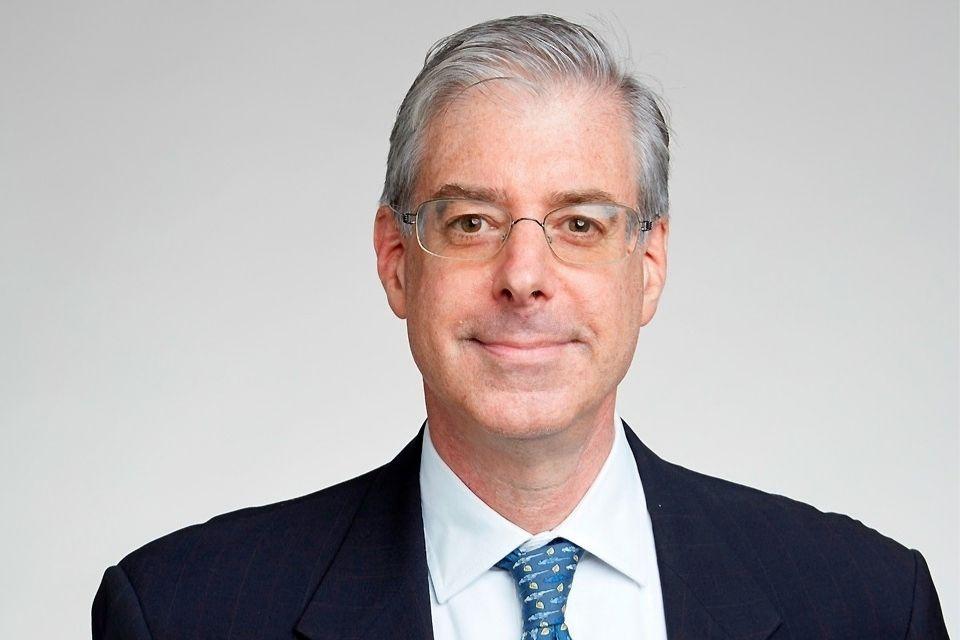
The Savilian Professor of Astronomy chair has a long and illustrious heritage with more than 400 years of history to its name – previous incumbents include Sir Christopher Wren and James Bradley. Post holders have been towering intellects in the field of astrophysics, making seminal contributions to our understanding of the cosmos over the centuries. The professorship was founded by mathematician Sir Henry Savile who was warden of Merton College and who used his considerable wealth to establish the chair in 1619. The professorship combined both tradition and modernity and, with ever more accurate telescopes and technology informing our understanding of the universe, the premise is as pertinent today as it was then. The most recent Savilian professor, Steven Balbus FRS, held the chair from 2012-2024 and, last year, co-edited a book on the topic: Oxford’s Savilian Professors of Astronomy: The First 400 Years. We spoke with him to find out what it means to hold the title.
What was your journey to the professorship?
I spent the first half of my career in the US, educated at the Massachusetts Institute of Technology, where I studied both mathematics and physics before gaining my PhD in theoretical astrophysics at the University of California Berkeley. I went on to hold academic posts at Princeton University, MIT and the University of Virginia before moving to Europe in 2003. I was at the Ecole Normale Supérieure de Paris for 9 years before the Savilian professorship opportunity arose. The person who drew the opening to my attention was Professor Alexander Schekochihin, a theorist at Oxford whose field of expertise is plasma physics. We share many common scientific interests and I have known him since he was a postdoc; we both like to get our fingernails dirty and dive right into the fundamental underlying equations to see what we can learn from them and we have a similar, somewhat heuristic, style. He was keen that the person who took the Savilian chair would be more oriented to the physics side of astronomy. rather than the perhaps more obvious choice of a cosmologist. The last two appointments had both been cosmologists. With that in mind – that I wasn’t perhaps the most obvious candidate – I was prepared for my application not to be successful. But I found myself with an offer and was absolutely delighted to accept.
What makes this chair so special in your view?
The chair has a long, illustrious and interesting history which has been important in shaping astronomy. The two most famous people in history who have held the chair in my view are Sir Christopher Wren who was Savilian Professor in 1661, and James Bradley who took up the post in 1721. While Wren is the more famous individual, if I were reviewing him as his headmaster, I wouldn’t say he was the most accomplished astronomer; his contributions to astronomy were far outshone by those of Bradley. Bradley was a really interesting figure: he was an observational astronomer but extremely gifted mathematically, and he was the first person to measure the speed of light quantitatively – and he did so with great accuracy. He was well ahead of his time: it would be hundreds of years before we fully understood what how light and relative motion interacted, but Bradley’s 18th century understanding of it was sufficient to determine the speed of light to an accuracy of 1%. His work was really the first kind of introduction of relativity into optics.
To follow in the footsteps of these important figures is both flattering, and kind of daunting. But a large part of what makes the chair so special is Oxford itself. As a professor, first and foremost, I was excited because the students at Oxford really are outstanding; it is so important to have students who are bright, keen, and full of energy—the sort of young people who enable you to accomplish so much more than you could on your own.
Midway through my Savilian tenure, an opportunity arose to teach the general relativity course. This was a requirement for all undergraduates, which was rather unusual at the time. It wasn’t a topic which I then knew very much about, but as Head of Astrophysics, I viewed as my duty to step in. I immersed myself into the project, and much to my astonishment, fell in love with the subject. I approached the course with the zeal of a fresh convert, and it was well-received. Ultimately, I even wrote a textbook on the subject. As a result of this serendipitous opportunity, my research then shifted to working on problems with a much larger general relativity content – I still worked on accretion discs, but now the discs tended to be almost exclusively black holes. It was a very lively and unforeseen new direction in my research.
Another aspect that is unique to Oxford and therefore to the Savilian chair itself, is the University’s collegiate system. The post is associated with New College and, as such, I was welcomed into a very interesting, very stimulating, and very friendly group of college fellows – one of whom was the British evolutionary biologist and zoologist Richard Dawkins. Over a lunch one day, I told him about an idea that I had informally discussed years ago with colleagues at Virginia – the fact that the sun and the moon look like they are the same size in the sky. Believe it or not, this can be related to the tidal forces they exert; things that look like they're the same size on the sky will inevitably have, to within a factor of 2 or so, the same tidal forces on the earth. In turn, this affects biological evolution: tides can have very different strengths depending on the relative orientation of the sun amd moon. An evolutionary selection for those fish who can navigate on land to get back to the sea from a stranded tidal pool after a high tide, perhaps using an air bladder to store oxygen – may, oddly enough, be related to the apparent size of the sun and the moon! I talked about this with Richard and before I knew it, I was giving a colloquium in the Department of Zoology. That the Savilian Professor of Astronomy would be lecturing in the Department of Zoology on the evolutionary principle of Mr Darwin: where else could that happen but Oxford?
What is next for the Savilian chair?
The sort of theoretical problems in astronomy right now are as exciting as they can be. There is now an entire field of gravitational wave astronomy that didn’t exist when I took the chair in 2012, so that would be a field I would be very pleased to see somebody working in because that really is at the forefront of the subject. Extra-solar planets is another area; of course, what everyone is interested in is life, but it is an entire field even without that aspect to it, learning what we can about planets and how they evolve under very different conditions from our own solar system. Even subjects like orbital dynamics – things that they studied at the time of Henry Savile, and well before – they are coming back into the fore because we see planetary systems that don't look anything like our own. And so that's another area where there will be a lot of very interesting work done. And then there is high energy physics, things like pulsar astronomy; there is now a whole field which blends an understanding of neutron stars and pulsars with gravitational waves. There are so many possibilities. I think it is a very exciting time for a new Savilian professor who has grown up with this background to come in and go forward in a leadership position with the new astronomy that is going to be emerging from these fields.
The person who I think would do best in the chair would be someone who understands and takes full advantage of the system we have at Oxford. Oxford has held on to its traditions and its heritage, which are very, very valuable to one's intellectual development. Being exposed on a daily basis to people outside your field thanks to the collegiate system makes this a very special place and the Savilian chair a unique opportunity.
The Savilian Professorship of Astronomy was originally funded by philanthropist Sir Henry Savile in 1619 and financial support for the chair is as important now as it was then. To find out more about how you can help write the next chapter in astrophysics by supporting the Savilian chair, contact Felicity Fearon: felicity.fearon@dae.ox.ac.uk