

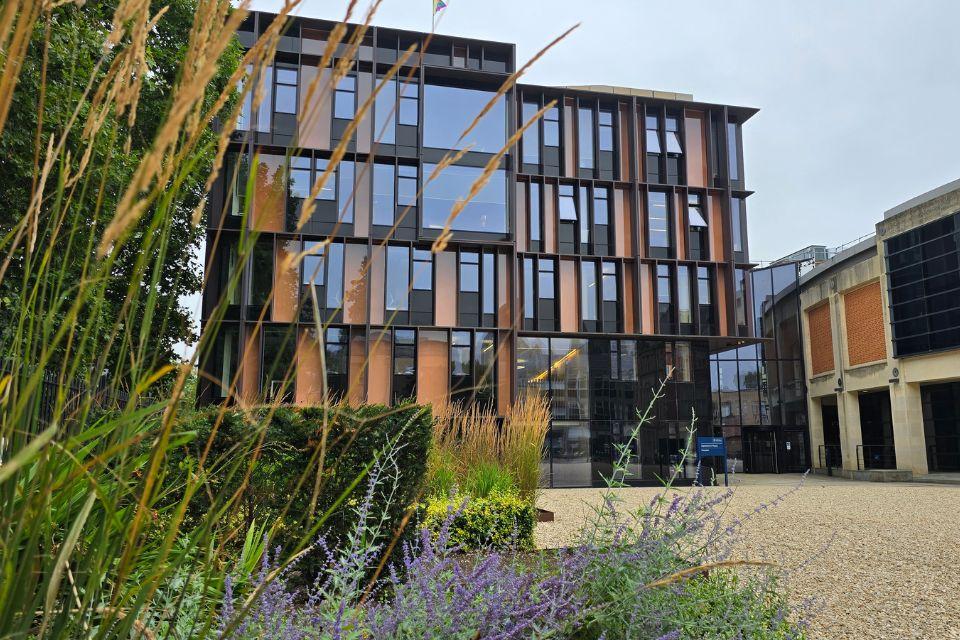
Martin Wood Complex, Department of Physics, University of Oxford, Parks Road, Oxford, OX1 3PU
Professor Shivaji Sondhi, FRS, University of Oxford
Professor Ard Louis, University of Oxford
Dr Anders Sandberg, Institute for Futures Studies, Stockholm
Jordan Summers, Theoretical Physics Administrator, at tpadmin@physics.ox.ac.uk
Programme
Morning of TP talks aim to explain the science to an audience familiar with physics at about the second-year undergraduate level. There should be ample time both for questions after each talk and for informal discussion with members of the Centre over coffee and refreshments.
LECTURE 1: An Introduction to Large Language Models (Prof Shivaji Sondhi FRS)
The extraordinary recent progress in artificial intelligence has been driven by large neural networks trained on enormous quantities of data. At the heart of systems such as ChatGPT is a deceptively simple task: given a sequence of words, predict what comes next. Yet systems trained in this way can write essays and computer programs, translate languages, solve mathematical problems and engage in intelligent conversation.
I will explain the basic ideas behind LLMs and how such systems are trained and discuss some of the Physics adjacent ideas that have been applied to further their understanding.
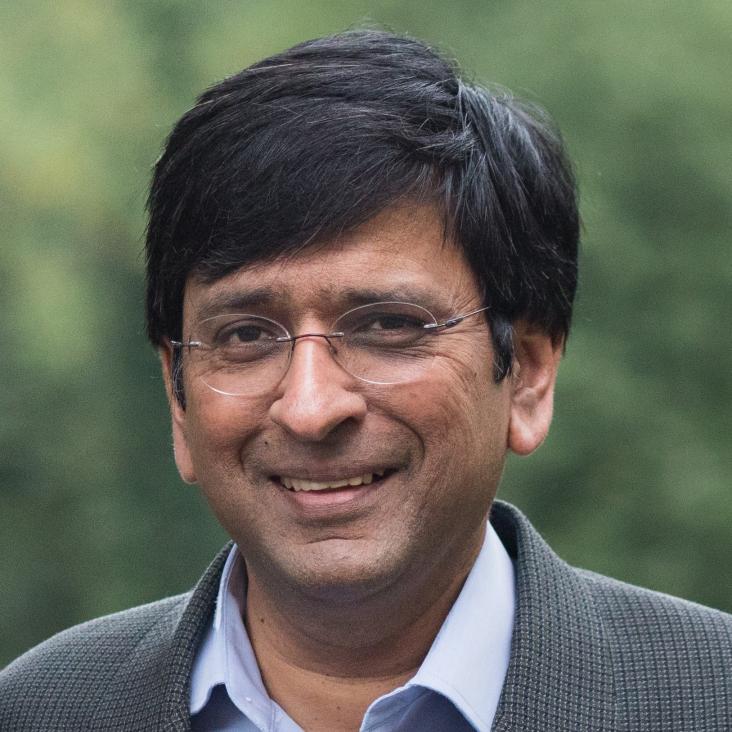 About Shivaji Sondhi
Professor Shivaji Sondhi is a theoretical condensed matter physicist and Wykeham Professor of Physics at the University of Oxford. Born in India, he received his PhD from UCLA and spent 25 years at Princeton University. His research spans quantum many-body physics and statistical mechanics, with seminal contributions to the quantum Hall effect, quantum magnetism and non-equilibrium quantum matter. He is known for his work on skyrmions, magnetic monopoles in spin ice and time crystals.
LECTURE 2: From Turing to Deep Learning: How Machines Learned to Learn (Prof Ard Louis)
In 1950, Alan Turing suggested that instead of trying to programme a computer to emulate an adult mind, we might build a “child machine” and teach it to think. Seventy-five years later, that remarkably prescient idea sits at the heart of modern AI.
I will trace the turbulent journey from the first artificial neurons to deep learning: breakthroughs, dead ends, AI winters and spectacular revivals. Along the way, we will ask what it actually means for a machine to learn, how neural networks went from an academic backwater to Nobel Prize recognition, and how ideas familiar to physicists, from statistical mechanics and phase transitions to symmetry and scaling laws, have helped to shape the AI revolution.
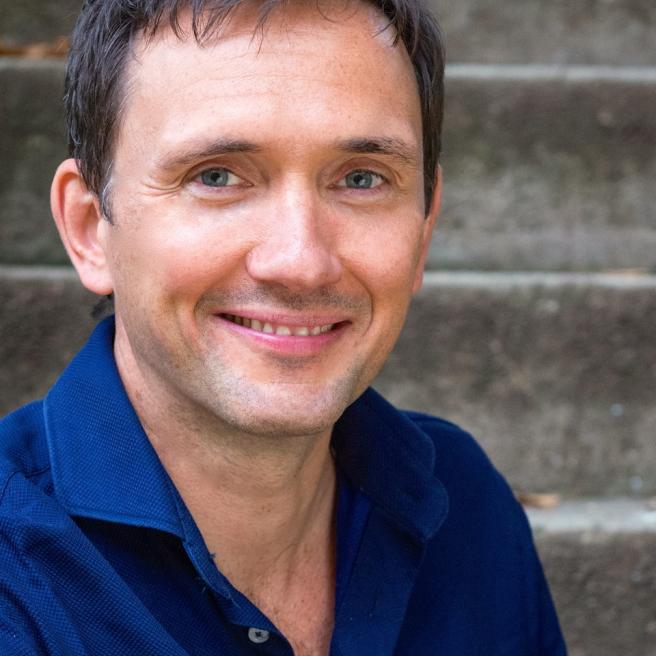
About Ard Louis
Ard Louis is a theoretical physicist with a broad interdisciplinary set of interests, including self-assembling DNA, theories of evolution, the dynamics of soft matter, machine learning and applications of algorithmic information theory. He happily collaborates with biologists, chemists, computer scientists, mathematicians, philosophers and theologians.
LECTURE 3: State of the AI Alignment Problem (Dr Anders Sandberg)
The AI alignment problem is how to ensure that AI reliably performs its functions in a way that is safe and beneficial to humans, despite actions, safety, and beneficence being underspecified. Even if they were well specified it is unclear how to ensure how the specification should determine behaviour.
This talk will give a brief overview of the history of the concept, attempted solutions, and the state of the art. It will discuss the implications in the large of the difficulty and what would a solution actually look like.
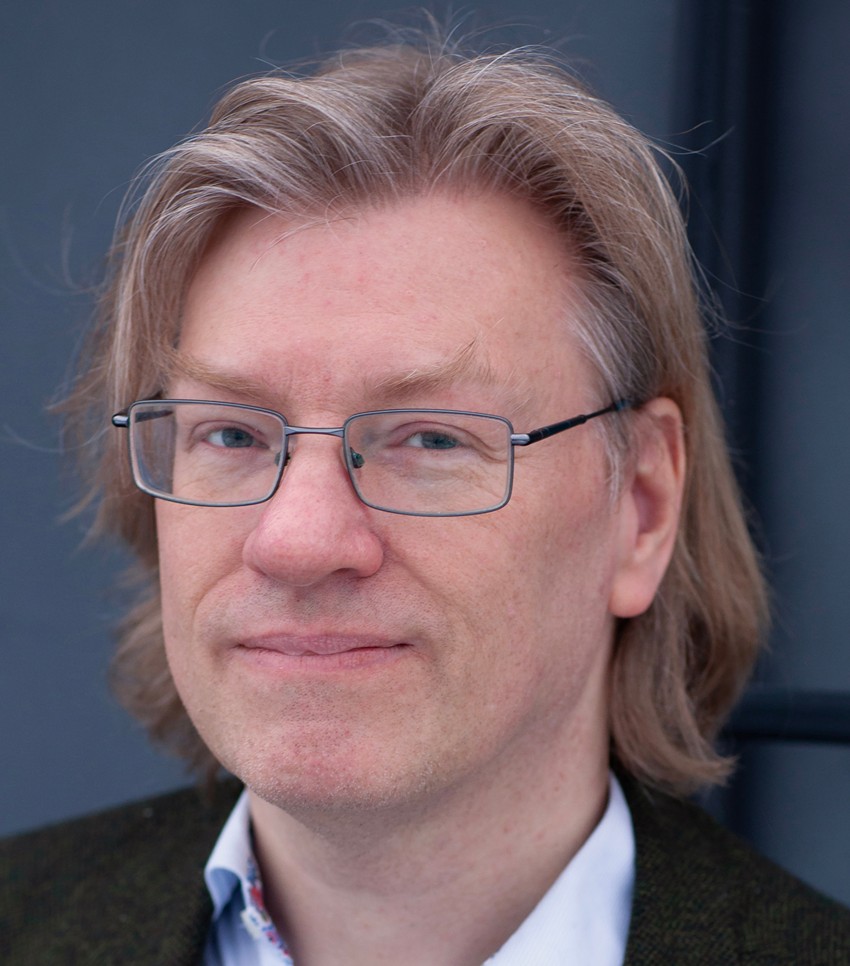
About Anders Sandberg
Dr. Anders Sandberg is a researcher at the Institute for Futures Studies in Stockholm. He was senior research fellow at the Future of Humanity Institute at the University of Oxford 2006-2024. His research centres on management of low-probability high-impact risks, estimating the capabilities of future technologies, neuroethics, and very long-range futures. He is an elected member of the Royal Swedish Academy of Engineering Sciences and the Linnean Society of London. He is on the board of the non-profits ALLFED and AI Objectives Institute. Anders has a background in computer science, neuroscience and medical engineering. He obtained his Ph.D. in computational neuroscience from Stockholm University, Sweden, for work on neural network modelling of human memory.