

Martin Wood Complex, Department of Physics, University of Oxford, Parks Road, Oxford, OX1 3PU
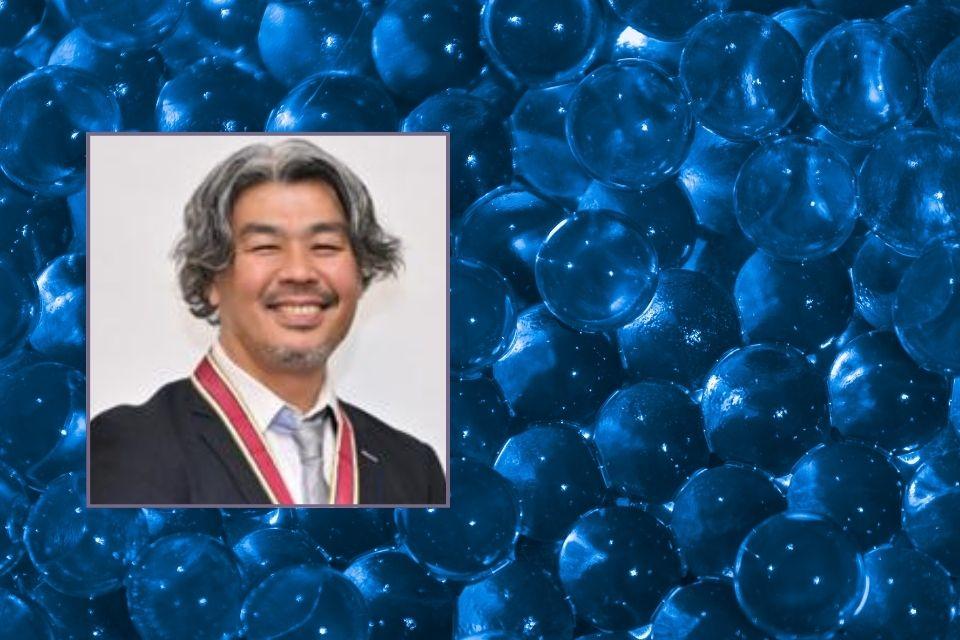
Professor Takamasa Sakai, University of Tokyo (Japan)
The Sir Martin Wood Prize Lecture
'Innovation of Gel Science Based on the Creation of Homogeneous Gels'
Professor Takamasa Sakai
(Department of Bioengineering, The University of Tokyo, Japan)
Professor Sakai was awarded the Sir Martin Wood Prize at the Millennium Science Forum which took place in November 2025. The Millennium Science Forum was established in 1998 to promote scientific exchange between Britain and Japan and recognize the work of outstanding young Japanese researchers. The prize is named after Sir Martin Wood, founder of Oxford Instruments.
This event is open to general public, but the talk will include technical concepts.
Registration required, please be seated by 13:55hs.
Abstract:
A hydrogel (hereafter referred to as a “gel”) is a material in which a three-dimensional polymer network absorbs and swells with water. Gels are familiar materials found in dairy items such as diapers, soft contact lenses, and food products. Moreover, since the soft tissues of living organisms have similar structures and compositions, gels have attracted attention both as models for biological tissues and as candidates for medical applications. A precise understanding of the relationship between network structure and physical properties is the starting point for achieving these goals and holds a central position in gel science. However, the network structure of a gel is inherently heterogeneous, and even the most advanced microscopy techniques cannot visualize it, making it impossible to quantitatively represent the network structure. Consequently, experimental verification of theoretical predictions for the structure–property relationship of gels has been challenging, and conventional theories have been treated as only coarse approximations. In response, we conceived that synthesizing a series of gels with suppressed heterogeneity—previously considered unavoidable—would be the starting point for a fundamental understanding of gels. Based on this idea, we pioneered the design and development of structurally homogeneous gels, termed Tetra Gels. Tetra Gels are synthesized from two types of four-armed prepolymers, each bearing mutually reactive functional groups. This molecular design limits the degrees of freedom of the resulting network, thereby eliminating, in principle, several types of heterogeneity intrinsic to conventional gels. Furthermore, the Tetra Gel family can be defined by three independent control parameters: (i) the molecular weight of the prepolymers, (ii) the prepolymer concentration, and (iii) the extent of connectivity between prepolymers. By systematically tuning these parameters and comprehensively measuring the physical properties of the resulting gels, we succeeded in describing various gel properties as functions of the three independent variables. Through the promotion of this experimentally grounded and quantitative approach—what we term “Precision Gel Science”—we have discovered phenomena such as negative energy elasticity hidden in gel elasticity, a universal equation of state of osmotic pressure, and the quantitative characterization of network inhomogeneity. In the presentation, these findings will be introduced and discussed. In parallel with these fundamental studies, we are also developing medical hydrogels using Tetra Gel as a platform. Because the structure–property relationships of Tetra Gels are formulated, prototyping can be achieved extremely rapidly—within as little as one week. Tetra Gels can be designed to solidify at a desired time, exhibit targeted mechanical properties, and degrade at a controlled rate. Using this rational design approach, we are developing medical gels such as hemostatic agents, anti-adhesion materials, and scaffolds for regenerative medicine. This lecture will also present the current status of these translational research efforts.
*Biography of the guest speaker
2007.3.
Ph.D (Engineering), Department of
Materials Engineering, The University of Tokyo
2007.4.
Project Assistant Professor, Center
of Nanobio Integration, The University of Tokyo
2009.4 Project Assistant Professor, Center of Medical System Innovation, The University of Tokyo
2011.1.
Assistant Professor, Department of
Bioengineering, The University of Tokyo
2015.6.
Associate Professor, Department of
Bioengineering, The University of Tokyo
2019.1.
Director and Chief Technology
Officer (CTO), Gellyk, Inc.
2020.2.
Professor, Department of
Bioengineering, The University of Tokyo
2021.10.- present. Professor, Department of Chemistry & Biotechnology, The University of Tokyo