
Home
Department Of Physics text logo
  • Research
    • Our research
    • Our research groups
    • Our research in action
    • Research funding support
    • Summer internships for undergraduates
  • Study
    • Undergraduates
    • Postgraduates
  • Engage
    • For young people
    • For teachers
    • For the public
    • For alumni
    • For business
  • Support
Menu
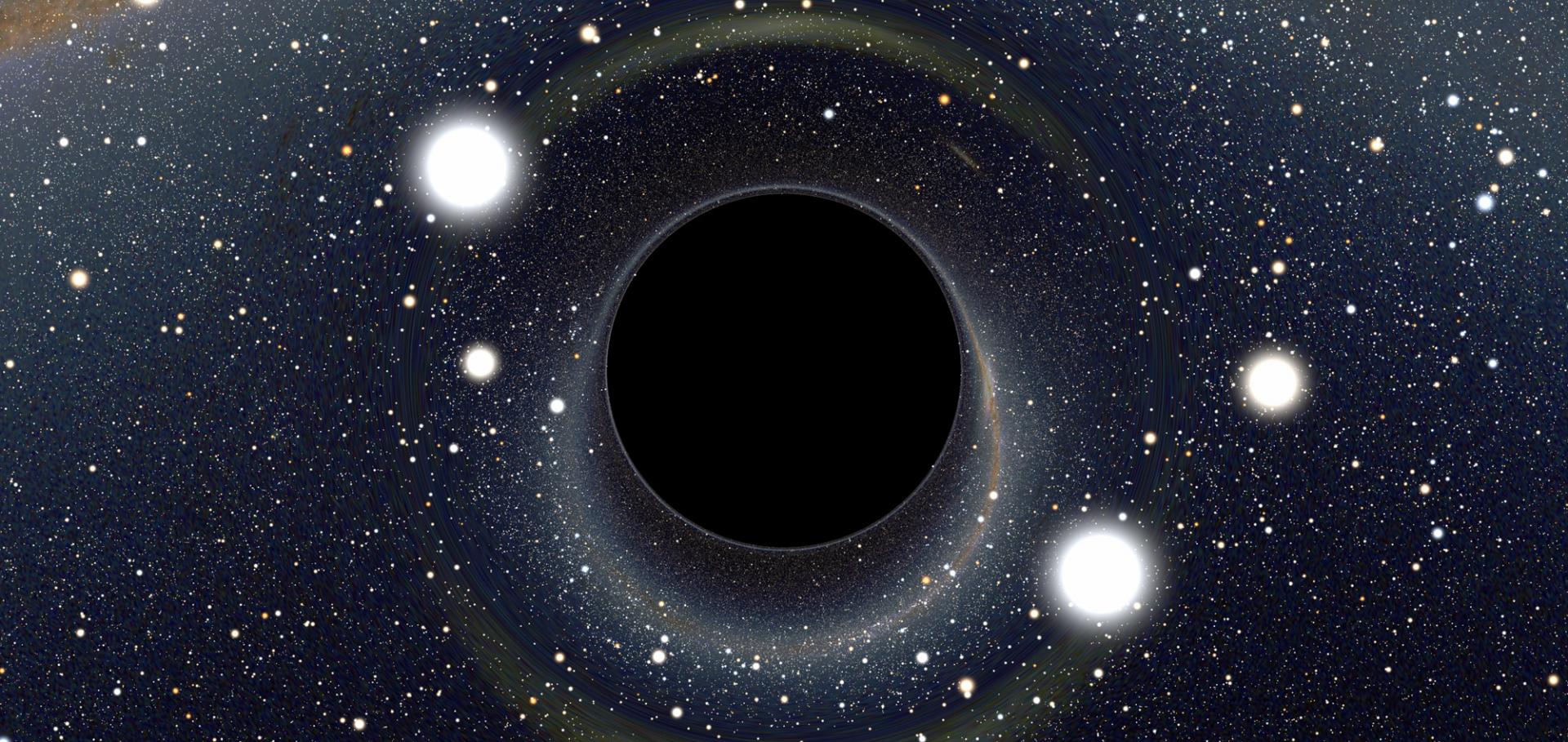
Black Hole

Lensing of space time around a black hole. At Oxford we study black holes observationally and theoretically on all size and time scales - it is some of our core work.

Credit: ALAIN RIAZUELO, IAP/UPMC/CNRS. CLICK HERE TO VIEW MORE IMAGES.

Julien Devriendt

Professor of Astrophysics

Research theme

  • Astronomy and astrophysics
  • Particle astrophysics & cosmology

Sub department

  • Astrophysics

Research groups

  • Beecroft Institute for Particle Astrophysics and Cosmology
  • Cosmology
  • Galaxy formation and evolution
julien.devriendt@physics.ox.ac.uk
Telephone: 01865 (2)73307
Denys Wilkinson Building, room 555D
  • About
  • Teaching
  • Publications

Galactic star formation in parsec-scale resolution simulations

(2010)

Authors:

Leila C Powell, Frederic Bournaud, Damien Chapon, Julien Devriendt, Adrianne Slyz, Romain Teyssier
More details from the publisher

The Origin and Evolution of the Mass-Metallicity Relation using GalICS

(2010)

Authors:

Jeremy Sakstein, Antonio Pipino, Julien Devriendt, Roberto Maiolino
More details from the publisher

The skeleton: Connecting large scale structures to galaxy formation

Aip Conference Proceedings 1241 (2010) 1108-1117

Authors:

C Pichon, C Gay, D Pogosyan, S Prunet, T Sousbie, S Colombi, A Slyz, J Devriendt

Abstract:

We report on two quantitative, morphological estimators of the filamentary structure of the Cosmic Web, the so-called global and local skeletons. The first, based on a global study of the matter density gradient flow, allows us to study the connectivity between a density peak and its surroundings, with direct relevance to the anisotropic accretion via cold flows on galactic halos. From the second, based on a local constraint equation involving the derivatives of the field, we can derive predictions for powerful statistics, such as the differential length and the relative saddle to extrema counts of the Cosmic web as a function of density threshold (with application to percolation of structures and connectivity), as well as a theoretical framework to study their cosmic evolution through the onset of gravity-induced non-linearities. © 2010 American Institute of Physics.
More details from the publisher

The hierarchical build-up of the Tully-Fisher relation

(2010)

Authors:

Chiara Tonini, Claudia Maraston, Bodo Ziegler, Asmus Böhm, Daniel Thomas, Julien Devriendt, Joseph Silk
More details from the publisher

The hierarchical build-up of the Tully-Fisher relation

ArXiv 1006.0229 (2010)

Authors:

Chiara Tonini, Claudia Maraston, Bodo Ziegler, Asmus Böhm, Daniel Thomas, Julien Devriendt, Joseph Silk

Abstract:

We use the semi-analytic model GalICS to predict the Tully-Fisher relation in the B, I and for the first time, in the K band, and its evolution with redshift, up to z~1. We refined the determination of the disk galaxies rotation velocity, with a dynamical recipe for the rotation curve, rather than a simple conversion from the total mass to maximum velocity. The new recipe takes into account the disk shape factor, and the angular momentum transfer occurring during secular evolution leading to the formation of bulges. This produces model rotation velocities that are lower by ~20-25% for the majority of the spirals. We implemented stellar population models with a complete treatment of the TP-AGB, which leads to a revision of the mass-to-light ratio in the near-IR. I/K band luminosities increase by ~0.3/0.5 mags at redshift z=0 and by ~0.5/1 mags at z=3. With these two new recipes in place, the comparison between the predicted Tully-Fisher relation with a series of datasets in the optical and near-IR, at redshifts between 0 and 1, is used as a diagnostics of the assembly and evolution of spiral galaxies in the model. At 0.4
Details from ArXiV
More details from the publisher
More details

Pagination

  • First page First
  • Previous page Prev
  • …
  • Page 71
  • Page 72
  • Page 73
  • Page 74
  • Current page 75
  • Page 76
  • Page 77
  • Page 78
  • Page 79
  • …
  • Next page Next
  • Last page Last

Footer Menu

  • Contact us
  • Giving to the Dept of Physics
  • Work with us
  • Media

User account menu

  • Log in

Follow us

FIND US

Clarendon Laboratory,

Parks Road,

Oxford,

OX1 3PU

CONTACT US

Tel: +44(0)1865272200

University of Oxfrod logo Department Of Physics text logo
IOP Juno Champion logo Athena Swan Silver Award logo

© University of Oxford - Department of Physics

Cookies | Privacy policy | Accessibility statement

Built by: Versantus

  • Home
  • Research
  • Study
  • Engage
  • Our people
  • News & Comment
  • Events
  • Our facilities & services
  • About us
  • Giving to Physics
  • Current students
  • Staff intranet