Home
Department Of Physics text logo
  • Research
    • Our research
    • Our research groups
    • Our research in action
    • Research funding support
    • Summer internships for undergraduates
  • Study
    • Undergraduates
    • Postgraduates
  • Engage
    • For young people
    • For teachers
    • For the public
    • For alumni
    • For business
  • Support
Menu
CMP
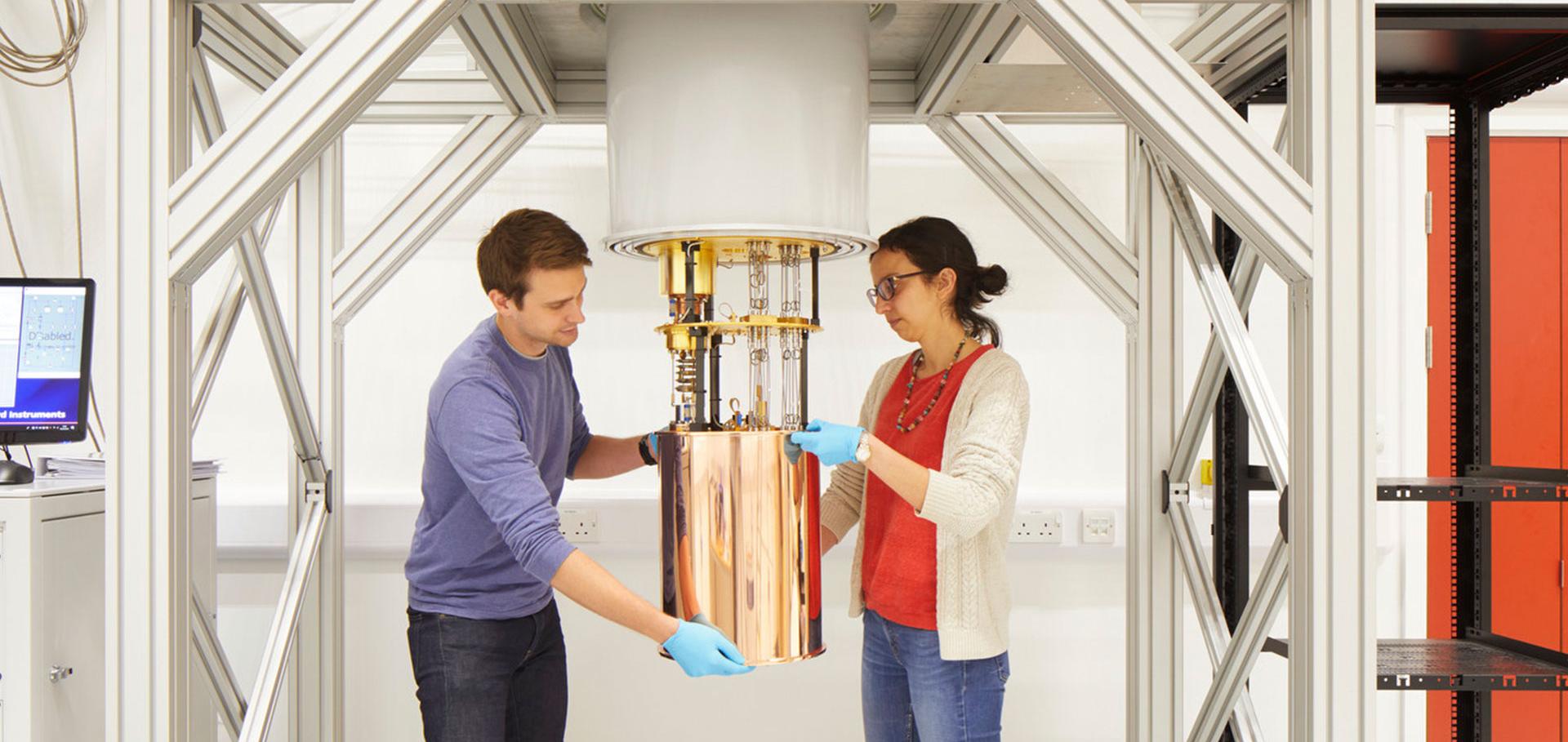
Credit: Jack Hobhouse

Prof Henry Snaith FRS

Professor of Physics

Sub department

  • Condensed Matter Physics

Research groups

  • Photovoltaic & Optoelectronic Device Group
Henry.Snaith@physics.ox.ac.uk
Clarendon Laboratory, room 045,045,044,071.6,071.5,071.4,071.3,G21 (office)
  • About
  • Publications

The promise and challenges of inverted perovskite solar cells

Chemical Reviews American Chemical Society 124:19 (2024) 10623-10700

Authors:

Peng Chen, Yun Xiao, Shunde Li, Xiaohan Jia, Deying Luo, Wei Zhang, Henry J Snaith, Qihuang Gong, Rui Zhu

Abstract:

Recently, there has been an extensive focus on inverted perovskite solar cells (PSCs) with a p-i-n architecture due to their attractive advantages, such as exceptional stability, high efficiency, low cost, low-temperature processing, and compatibility with tandem architectures, leading to a surge in their development. Single-junction and perovskite-silicon tandem solar cells (TSCs) with an inverted architecture have achieved certified PCEs of 26.15% and 33.9% respectively, showing great promise for commercial applications. To expedite real-world applications, it is crucial to investigate the key challenges for further performance enhancement. We first introduce representative methods, such as composition engineering, additive engineering, solvent engineering, processing engineering, innovation of charge transporting layers, and interface engineering, for fabricating high-efficiency and stable inverted PSCs. We then delve into the reasons behind the excellent stability of inverted PSCs. Subsequently, we review recent advances in TSCs with inverted PSCs, including perovskite-Si TSCs, all-perovskite TSCs, and perovskite-organic TSCs. To achieve final commercial deployment, we present efforts related to scaling up, harvesting indoor light, economic assessment, and reducing environmental impacts. Lastly, we discuss the potential and challenges of inverted PSCs in the future.
More details from the publisher
Details from ORA
More details
More details

Roadmap on established and emerging photovoltaics for sustainable energy conversion

Journal of Physics: Energy IOP Publishing (2024)

Authors:

James C Blakesley, Ruy Sebastian Bonilla, Marina Freitag, Alex Ganose, Nicola Gasparini, Pascal Kaienburg, George Koutsourakis, Jonathan D Major, Jenny Nelson, Nakita K Noel, Bart Roose, Jae Sung Yun, Simon Aliwell, Pietro Altermatt, Tayebeh Ameri, Virgil Andrei, Ardalan Armin, Diego Bagnis, Jenny Baker, Hamish Beath, Mathieu Bellanger, Philippe Berrouard, Jochen Blumberger, Stuart Boden, Hugo Bronstein, Matthew J Carnie, Chris Case, Fernando A Castro, Yi-Ming Chang, Elmer Chao, Tracey M Clarke, Graeme Cooke, Pablo Docampo, Ken Durose, James Durrant, Marina Filip, Richard H Friend, Jarvist M Frost, Elizabeth Gibson, Alexander J Gillett, Pooja Goddard, Severin Habisreutinger, Martin Heeney, Arthur D Hendsbee, Louise Caroline Hirst, Saiful Islam, Imalka Jayawardena, Michael Johnston, Matthias Kauer, Jeff Kettle, Ji-Seon Kim, Dan Lamb, David G Lidzey, Jihoo Lim, Roderick Mackenzie, Nigel Mason, Iain McCulloch, Keith McKenna, Sebastian Meier, Paul Meredith, Graham Morse, John Murphy, Chris Nicklin, Paloma Ortega-Arriaga, Thomas Osterberg, Jay Patel, Anthony Peaker, Moritz Riede, Martyn Rush, James Ryan, David O Scanlon, Peter Skabara, Franky So, Henry J Snaith, Ludmilla Steier, Jarla Thiesbrummel, Alessandro Troisi, Craig Underwood, Karsten Walzer, Trystan M Watson, Michael Walls, Aron Walsh, Lucy Dorothy Whalley, Benedict Winchester, Sam Stranks, Robert Hoye

Abstract:

Abstract Photovoltaics (PVs) are a critical technology for curbing growing levels of anthropogenic greenhouse gas emissions, and meeting increases in future demand for low-carbon electricity. In order to fulfil ambitions for net-zero carbon dioxide equivalent (CO2eq) emissions worldwide, the global cumulative capacity of solar PVs must increase by an order of magnitude from 0.9 TWp in 2021 to 8.5 TWp by 2050 according to the International Renewable Energy Agency, which is considered to be a highly conservative estimate. In 2020, the Henry Royce Institute brought together the UK PV community to discuss the critical technological and infrastructure challenges that need to be overcome to address the vast challenges in accelerating PV deployment. Herein, we examine the key developments in the global community, especially the progress made in the field since this earlier roadmap, bringing together experts primarily from the UK across the breadth of the photovoltaics community. The focus is both on the challenges in improving the efficiency, stability and levelized cost of electricity of current technologies for utility-scale PVs, as well as the fundamental questions in novel technologies that can have a significant impact on emerging markets, such as indoor PVs, space PVs, and agrivoltaics. We discuss challenges in advanced metrology and computational tools, as well as the growing synergies between PVs and solar fuels, and offer a perspective on the environmental sustainability of the PV industry. Through this roadmap, we emphasize promising pathways forward in both the short- and long-term, and for communities working on technologies across a range of maturity levels to learn from each other.
More details from the publisher
Details from ORA
More details

First-Principles Approach to Finite Element Simulation of Flexible Photovoltaics

Energies MDPI 17:16 (2024) 4064

Authors:

Francis Ako Marley, Joseph Asare, Daniel Sekyi-Arthur, Tino Lukas, Augustine Nana Sekyi Appiah, Dennis Charway, Benjamin Agyei-Tuffour, Richard Boadi, Patryk Janasik, Samuel Yeboah, G Gebreyesus, George Nkrumah-Buandoh, Marcin Adamiak, Henry James Snaith

Abstract:

This study explores the potential of copper-doped nickel oxide (Cu:NiO) as a hole transport layer (HTL) in flexible photovoltaic (PV) devices using a combined first-principles and finite element analysis approach. Density functional theory (DFT) calculations reveal that Cu doping introduces additional states in the valence band of NiO, leading to enhanced charge transport. Notably, Cu:NiO exhibits a direct band gap (reduced from 3.04 eV in NiO to 1.65 eV in the stable supercell structure), facilitating the efficient hole transfer from the active layer. Furthermore, the Fermi level shifts towards the valence band in Cu:NiO, promoting hole mobility. This translates to an improved photovoltaic performance, with Cu:NiO-based HTLs achieving ~18% and ~9% power conversion efficiencies (PCEs) in perovskite and poly 3-hexylthiophene: 1-3-methoxycarbonyl propyl-1-phenyl 6,6 C 61 butyric acid methyl ester (P3HT:PCBM) polymer solar cells, respectively. Finally, a finite element analysis demonstrates the potential of these composite HTLs with Poly 3,4-ethylene dioxythiophene)—polystyrene sulfonate (PEDOT:PSS) in flexible electronics design and the optimization of printing processes. Overall, this work highlights Cu:NiO as a promising candidate for high-performance and flexible organic–inorganic photovoltaic cells.
More details from the publisher
Details from ORA
More details

Improved reverse bias stability in p–i–n perovskite solar cells with optimized hole transport materials and less reactive electrodes

Nature Energy Nature Research 9:10 (2024) 1275-1284

Authors:

Fangyuan Jiang, Yangwei Shi, Tanka R Rana, Daniel Morales, Isaac E Gould, Declan P McCarthy, Joel A Smith, M Greyson Christoforo, Muammer Y Yaman, Faiz Mandani, Tanguy Terlier, Hannah Contreras, Stephen Barlow, Aditya D Mohite, Henry J Snaith, Seth R Marder, J Devin MacKenzie, Michael D McGehee, David S Ginger

Abstract:

As perovskite photovoltaics stride towards commercialization, reverse bias degradation in shaded cells that must current match illuminated cells is a serious challenge. Previous research has emphasized the role of iodide and silver oxidation, and the role of hole tunnelling from the electron-transport layer into the perovskite to enable the flow of current under reverse bias in causing degradation. Here we show that device architecture engineering has a significant impact on the reverse bias behaviour of perovskite solar cells. By implementing both a ~35-nm-thick conjugated polymer hole transport layer and a more electrochemically stable back electrode, we demonstrate average breakdown voltages exceeding −15 V, comparable to those of silicon cells. Our strategy for increasing the breakdown voltage reduces the number of bypass diodes needed to protect a solar module that is partially shaded, which has been proven to be an effective strategy for silicon solar panels.
More details from the publisher
Details from ORA
More details

Contrasting Ultra-Low Frequency Raman and Infrared Modes in Emerging Metal Halides for Photovoltaics

ACS Energy Letters American Chemical Society 9:8 (2024) 4127-4135

Authors:

Vincent J-Y Lim, Marcello Righetto, Siyu Yan, Jay B Patel, Thomas Siday, Benjamin Putland, Kyle M McCall, Maximilian T Sirtl, Yuliia Kominko, Jiali Peng, Qianqian Lin, Thomas Bein, Maksym Kovalenko, Henry J Snaith, Michael B Johnston, Laura M Herz

Abstract:

Lattice dynamics are critical to photovoltaic material performance, governing dynamic disorder, hot-carrier cooling, charge-carrier recombination, and transport. Soft metal-halide perovskites exhibit particularly intriguing dynamics, with Raman spectra exhibiting an unusually broad low-frequency response whose origin is still much debated. Here, we utilize ultra-low frequency Raman and infrared terahertz time-domain spectroscopies to provide a systematic examination of the vibrational response for a wide range of metal-halide semiconductors: FAPbI3, MAPbI x Br3–x , CsPbBr3, PbI2, Cs2AgBiBr6, Cu2AgBiI6, and AgI. We rule out extrinsic defects, octahedral tilting, cation lone pairs, and “liquid-like” Boson peaks as causes of the debated central Raman peak. Instead, we propose that the central Raman response results from an interplay of the significant broadening of Raman-active, low-energy phonon modes that are strongly amplified by a population component from Bose–Einstein statistics toward low frequency. These findings elucidate the complexities of light interactions with low-energy lattice vibrations in soft metal-halide semiconductors emerging for photovoltaic applications.
More details from the publisher
Details from ORA
More details
More details

Pagination

  • First page First
  • Previous page Prev
  • …
  • Page 11
  • Page 12
  • Page 13
  • Page 14
  • Current page 15
  • Page 16
  • Page 17
  • Page 18
  • Page 19
  • …
  • Next page Next
  • Last page Last

Footer Menu

  • Contact us
  • Giving to the Dept of Physics
  • Work with us
  • Media

User account menu

  • Log in

Follow us

FIND US

Clarendon Laboratory,

Parks Road,

Oxford,

OX1 3PU

CONTACT US

Tel: +44(0)1865272200

University of Oxfrod logo Department Of Physics text logo
IOP Juno Champion logo Athena Swan Silver Award logo

© University of Oxford - Department of Physics

Cookies | Privacy policy | Accessibility statement

Built by: Versantus

  • Home
  • Research
  • Study
  • Engage
  • Our people
  • News & Comment
  • Events
  • Our facilities & services
  • About us
  • Giving to Physics
  • Current students
  • Staff intranet