Home
Department Of Physics text logo
  • Research
    • Our research
    • Our research groups
    • Our research in action
    • Research funding support
    • Summer internships for undergraduates
  • Study
    • Undergraduates
    • Postgraduates
  • Engage
    • For young people
    • For teachers
    • For the public
    • For alumni
    • For business
  • Support
Menu
CMP
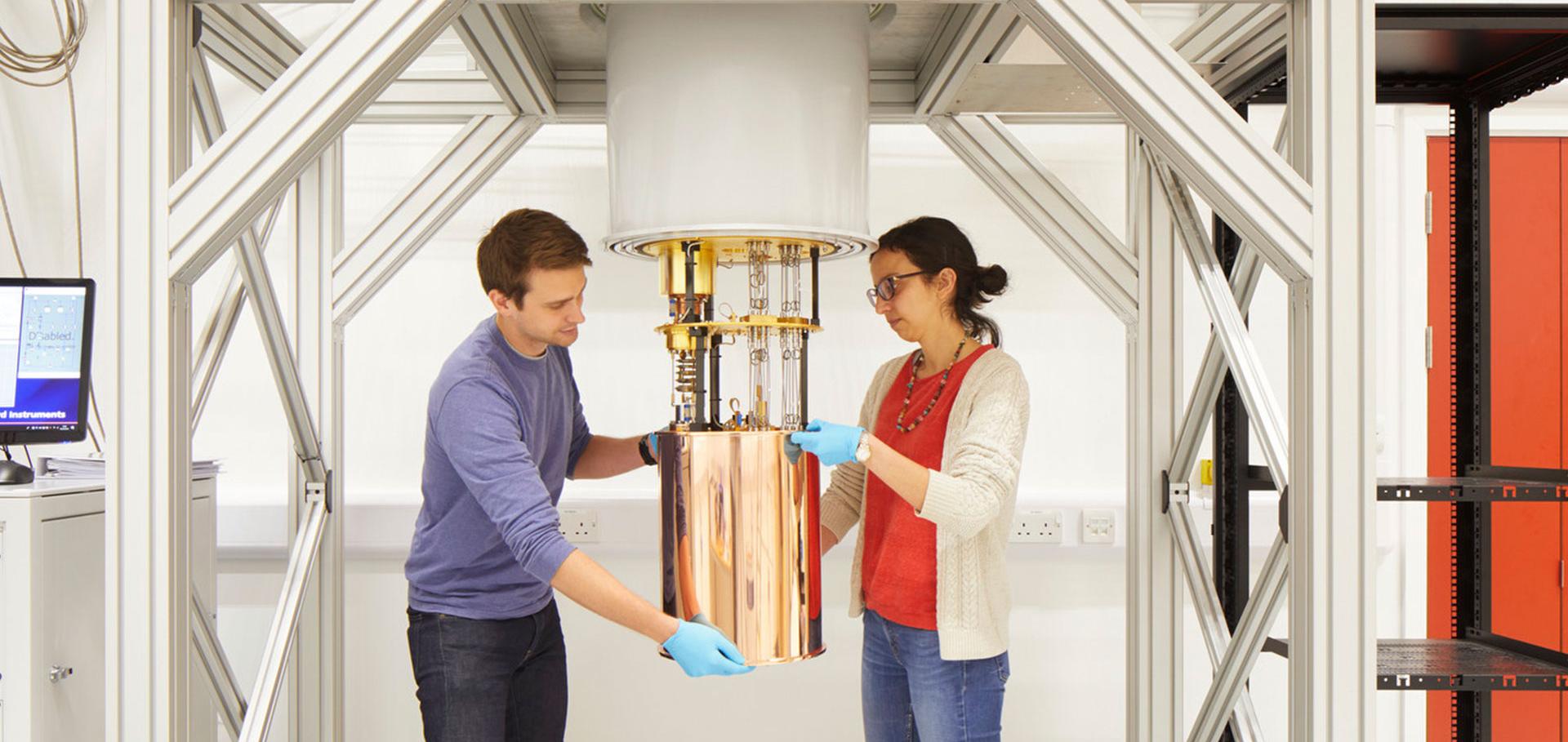
Credit: Jack Hobhouse

Prof Henry Snaith FRS

Professor of Physics

Sub department

  • Condensed Matter Physics

Research groups

  • Photovoltaic & Optoelectronic Device Group
Henry.Snaith@physics.ox.ac.uk
Clarendon Laboratory, room 045,045,044,071.6,071.5,071.4,071.3,G21 (office)
  • About
  • Publications

Spatially resolved studies of the phases and morphology of methylammonium and formamidinium lead tri-halide perovskites.

Nanoscale 9:9 (2017) 3222-3230

Authors:

K Galkowski, AA Mitioglu, A Surrente, Z Yang, DK Maude, P Kossacki, GE Eperon, JT-W Wang, HJ Snaith, P Plochocka, RJ Nicholas

Abstract:

The family of organic-inorganic tri-halide perovskites including MA (MethylAmmonium)PbI3, MAPbI3-xClx, FA (FormAmidinium)PbI3 and FAPbBr3 are having a tremendous impact on the field of photovoltaic cells due to the combination of their ease of deposition and high energy conversion efficiencies. Device performance, however, is known to be still significantly affected by the presence of inhomogeneities. Here we report on a study of temperature dependent micro-photoluminescence which shows a strong spatial inhomogeneity related to the presence of microcrystalline grains, which can be both bright and dark. In all of the tri-iodide based materials there is evidence that the tetragonal to orthorhombic phase transition observed around 160 K does not occur uniformly across the sample with domain formation related to the underlying microcrystallite grains, some of which remain in the high temperature, tetragonal, phase even at very low temperatures. At low temperature the tetragonal domains can be significantly influenced by local defects in the layers or the introduction of residual levels of chlorine in mixed halide layers or dopant atoms such as aluminium. We see that improvements in room temperature energy conversion efficiency appear to be directly related to reductions in the proportions of the layer which remain in the tetragonal phase at low temperature. In FAPbBr3 a more macroscopic domain structure is observed with large numbers of grains forming phase correlated regions.
More details from the publisher
Details from ORA
More details
More details

Microseconds, milliseconds and seconds: deconvoluting the dynamic behaviour of planar perovskite solar cells

Physical Chemistry Chemical Physics Royal Society of Chemistry (RSC) 19:8 (2017) 5959-5970

Authors:

Adam Pockett, Giles E Eperon, Nobuya Sakai, Henry J Snaith, Laurence M Peter, Petra J Cameron
More details from the publisher
More details
More details

23.6%-efficient monolithic perovskite/silicon tandem solar cells with improved stability

Nature Energy Springer Nature 2:4 (2017) 17009

Authors:

Kevin A Bush, Axel F Palmstrom, Zhengshan J Yu, Mathieu Boccard, Rongrong Cheacharoen, Jonathan P Mailoa, David P McMeekin, Robert LZ Hoye, Colin D Bailie, Tomas Leijtens, Ian Marius Peters, Maxmillian C Minichetti, Nicholas Rolston, Rohit Prasanna, Sarah Sofia, Duncan Harwood, Wen Ma, Farhad Moghadam, Henry J Snaith, Tonio Buonassisi, Zachary C Holman, Stacey F Bent, Michael D McGehee
More details from the publisher

Dopant-free planar n-i-p perovskite solar cells with steady-state efficiencies exceeding 18%

ACS Energy Letters American Chemical Society 2:3 (2017) 622-628

Authors:

Severin Habisreutinger, Bernard Wenger, Henry J Snaith, Robin J Nicholas

Abstract:

In this Letter, we demonstrate a planar n–i–p perovskite solar cell design with a steady-state efficiency of up to 18.8% in the absence of any electronic dopants. In the device stack, solution-processed SnO2 is used as an electron-accepting n-type layer. The absorber layer is a perovskite with both mixed organic A-site cations and mixed halides (FA0.83MA0.17Pb(I0.83Br0.17)3). The hole-transporting p-type layer is a double-layer structure of polymer-wrapped single-walled carbon nanotubes and undoped spiro-OMeTAD. We show that this approach can deliver steady-state efficiencies as high as and even higher than those of traditionally doped spiro-OMeTAD, providing a pathway for dopant-free perovskite solar cells crucial for long-term stability.
More details from the publisher
Details from ORA
More details

Efficient and Air-Stable Mixed-Cation Lead Mixed-Halide Perovskite Solar Cells with n-Doped Organic Electron Extraction Layers.

Advanced materials (Deerfield Beach, Fla.) 29:5 (2017)

Authors:

Z Wang, DP McMeekin, N Sakai, S van Reenen, K Wojciechowski, JB Patel, MB Johnston, HJ Snaith

Abstract:

Air-stable doping of the n-type fullerene layer in an n-i-p planar heterojunction perovskite device is capable of enhancing device efficiency and improving device stability. Employing a (HC(NH2 )2 )0.83 Cs0.17 Pb(I0.6 Br0.4 )3 perovskite as the photoactive layer, glass-glass laminated devices are reported, which sustain 80% of their "post burn-in" efficiency over 3400 h under full sun illumination in ambient conditions.
More details from the publisher
Details from ORA
More details
More details

Pagination

  • First page First
  • Previous page Prev
  • …
  • Page 76
  • Page 77
  • Page 78
  • Page 79
  • Current page 80
  • Page 81
  • Page 82
  • Page 83
  • Page 84
  • …
  • Next page Next
  • Last page Last

Footer Menu

  • Contact us
  • Giving to the Dept of Physics
  • Work with us
  • Media

User account menu

  • Log in

Follow us

FIND US

Clarendon Laboratory,

Parks Road,

Oxford,

OX1 3PU

CONTACT US

Tel: +44(0)1865272200

University of Oxfrod logo Department Of Physics text logo
IOP Juno Champion logo Athena Swan Silver Award logo

© University of Oxford - Department of Physics

Cookies | Privacy policy | Accessibility statement

Built by: Versantus

  • Home
  • Research
  • Study
  • Engage
  • Our people
  • News & Comment
  • Events
  • Our facilities & services
  • About us
  • Giving to Physics
  • Current students
  • Staff intranet