Home
Department Of Physics text logo
  • Research
    • Our research
    • Our research groups
    • Our research in action
    • Research funding support
    • Summer internships for undergraduates
  • Study
    • Undergraduates
    • Postgraduates
  • Engage
    • For young people
    • For teachers
    • For the public
    • For alumni
    • For business
  • Support
Menu
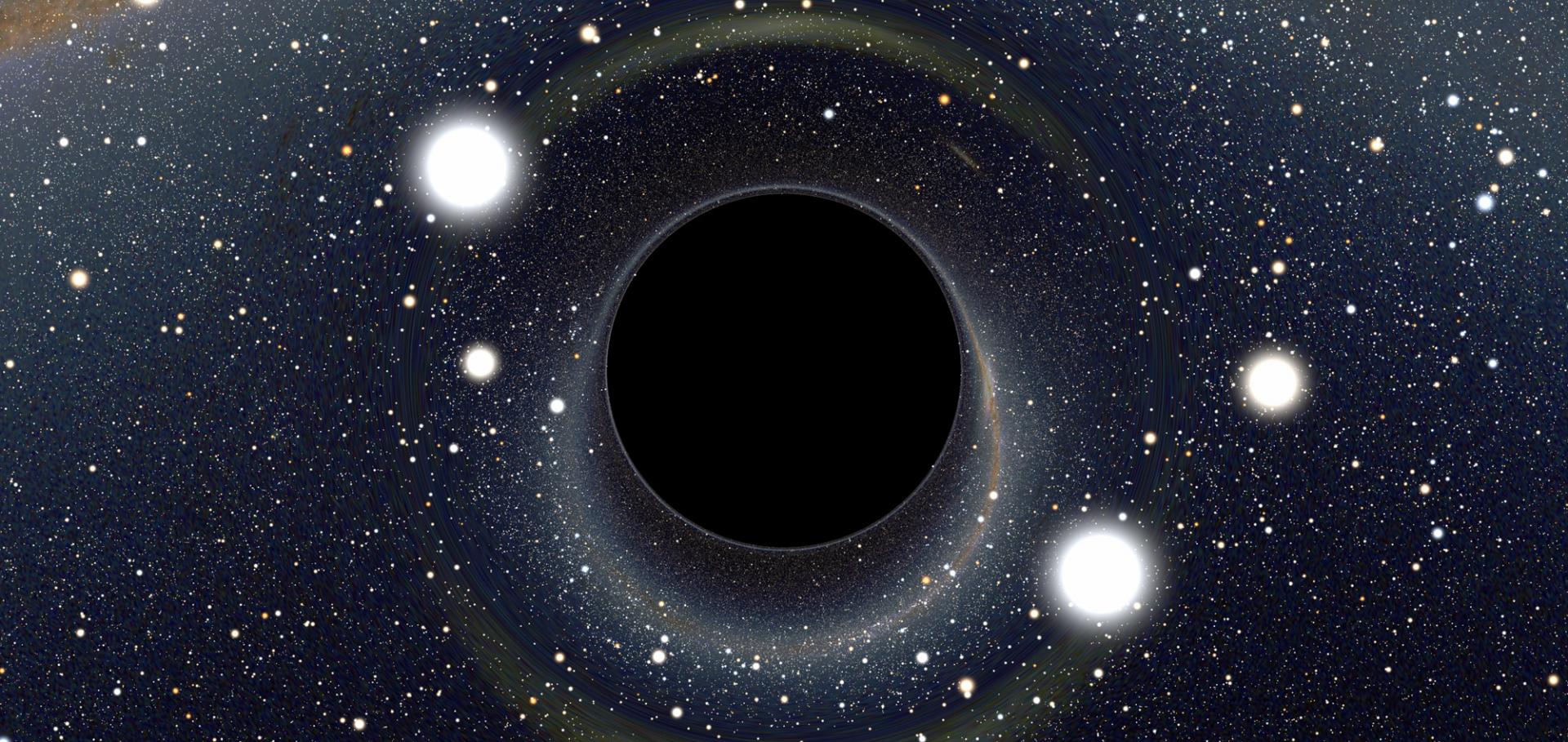
Black Hole

Lensing of space time around a black hole. At Oxford we study black holes observationally and theoretically on all size and time scales - it is some of our core work.

Credit: ALAIN RIAZUELO, IAP/UPMC/CNRS. CLICK HERE TO VIEW MORE IMAGES.

Aprajita Verma

Associate Professor

Research theme

  • Astronomy and astrophysics

Sub department

  • Astrophysics

Research groups

  • Zooniverse
  • Astronomical instrumentation
  • Galaxy formation and evolution
  • Hintze Centre for Astrophysical Surveys
  • MeerKAT
  • Rubin-LSST
  • Extremely Large Telescope
aprajita.verma@physics.ox.ac.uk
Telephone: 01865 (2)73374
Denys Wilkinson Building, room 760
  • About
  • Outreach
  • Teaching
  • Publications

MID-FIR properties of ELAIS sources

European Space Agency Special Publication ESA SP (2001) 147-150

Authors:

I Márquez, J Masegosa, T Morel, A Efstathiou, A Verma, P Vaisanen, D Alexander, P Héraudeau, C Surace, I Pérez-Fournón, F Cabrera-Guerra, JI González-Serrano, EA González-Solares, S Serjeant, S Oliver, M Rowan-Robinson

Abstract:

We present the properties of all the galaxies detected by ISO at 7, 15 and 90μm in ELAIS northern fields. The spectral energy distribution (SED) of those 20 galaxies with IRAS detections can generally be well fitted by a predominant cirrus component plus a modest starburst contribution. Follow-up spectroscopy has shown that all the objects are emission-line galaxies but without a very intense star formation event. Most of the galaxies analyzed by means of optical R band photometry result to host an important exponential disk component, in good agreement with the SED IR modelling. We note that galaxies with morphological signs of perturbations seem to show slightly higher f15/f6.7 ratios, indicating that star formation could be more important in them. One of the objects is a broad-line, radio-quiet quasar at z=1.099; its spectral energy distribution indicates that it is a hyperluminous infrared galaxy (HLIG), the first HLIG detected in the ELAIS areas.

Spectroscopic properties of new IR galaxies detected in the european large area ISO survey

European Space Agency Special Publication ESA SP (2001) 369-372

Authors:

F Cabrera-Guerra, I Pérez-Fournon, EA González-Solares, D Fadda, I González-Serrano, M Rowan-Robinson, S Serjeant, A Verma, D Farrah, A Efstathiou, T Morel, C Surace, S Oliver, P Ciliegi, F Pozzi, C Lari, R McMahon, C Willott, B Vila-Vilaró, I Mature, F LaFranca, P Héraudeau, J Masegosa, I Márquez, C Gruppioni, A Franceschini, H Flores

Abstract:

We present preliminary results of multi-object spectroscopy of new mid-, and far-infrared selected galaxies detected in the European Large Area ISO Survey (ELAIS). The data have been obtained with the fibre spectrographs WYFFOS at the William Herschel Telescope (Observatorio del Roque de los Muchachos, ORM, Canary Islands) and Hydra at the WIYN Telescope (Kitt Peak Observatory, Arizona). The sample includes ISO sources detected at 7, 15 and 90 μm and radio sources from our deep VLA survey in the ELAIS areas.

Deep Optical and Near-IR Observations of the XMM/Chandra Regions in ELAIS

Chapter in Deep Fields, Springer Nature (2001) 298-298

Authors:

Eduardo A González-Solares, I Pérez-Fournon, R McMahon, C Sabbey, O Almaini, C Willott, F Cabrera-Guerra, P Ciliegi, A Lawrence, B Mann, S Oliver, M Rowan-Robinson, S Serjeant, A Verma
More details from the publisher

The European Large Area ISO Survey - VI. Discovery of a new hyperluminous infrared galaxy

MONTHLY NOTICES OF THE ROYAL ASTRONOMICAL SOCIETY 327:4 (2001) 1187-1192

Authors:

T Morel, A Efstathiou, S Serjeant, I Márquez, J Masegosa, P Héraudeau, C Surace, A Verma, S Oliver, M Rowan-Robinson, I Georgantopoulos, D Farrah, DM Alexander, I Pérez-Fournon, CJ Willott, F Cabrera-Guerra, EA Gonzalez-Solares, A Cabrera-Lavers, JI Gonzalez-Serrano, P Ciliegi, F Pozzi, I Matute, H Flores
More details from the publisher

The European Large Area ISO Survey - I. Goals, definition and observations

MONTHLY NOTICES OF THE ROYAL ASTRONOMICAL SOCIETY 316:4 (2000) 749-767

Authors:

S Oliver, M Rowan-Robinson, DM Alexander, O Almaini, M Balcells, AC Baker, X Barcons, M Barden, I Bellas-Velidis, F Cabrera-Guerra, R Carballo, CJ Cesarsky, P Ciliegi, DL Clements, H Crockett, L Danese, A Dapergolas, B Drolias, N Eaton, A Efstathiou, E Egami, D Elbaz, D Fadda, M Fox, A Franceschini, R Genzel, P Goldschmidt, M Graham, JI Gonzalez-Serrano, EA Gonzalez-Solares, GL Granato, C Gruppioni, U Herbstmeier, P Héraudeau, M Joshi, E Kontizas, M Kontizas, JK Kotilainen, D Kunze, F La Franca, C Lari, A Lawrence, D Lemke, MJD Linden-Vornle, RG Mann, I Márquez, J Masegosa, K Mattila, RG McMahon, G Miley, V Missoulis, B Mobasher, T Morel, H Norgaard-Nielsen, A Omont, P Papadopoulos, I Perez-Fournon, JL Puget, D Rigopoulou, B Rocca-Volmerange, S Serjeant, L Silva, T Sumner, C Surace, P Vaisanen, PP van der Werf, A Verma, L Vigroux, M Villar-Martin, CJ Willott
More details from the publisher

Pagination

  • First page First
  • Previous page Prev
  • …
  • Page 31
  • Page 32
  • Page 33
  • Page 34
  • Page 35
  • Page 36
  • Page 37
  • Current page 38
  • Page 39
  • Next page Next
  • Last page Last

Footer Menu

  • Contact us
  • Giving to the Dept of Physics
  • Work with us
  • Media

User account menu

  • Log in

Follow us

FIND US

Clarendon Laboratory,

Parks Road,

Oxford,

OX1 3PU

CONTACT US

Tel: +44(0)1865272200

University of Oxfrod logo Department Of Physics text logo
IOP Juno Champion logo Athena Swan Silver Award logo

© University of Oxford - Department of Physics

Cookies | Privacy policy | Accessibility statement

Built by: Versantus

  • Home
  • Research
  • Study
  • Engage
  • Our people
  • News & Comment
  • Events
  • Our facilities & services
  • About us
  • Giving to Physics
  • Current students
  • Staff intranet