Home
Department Of Physics text logo
  • Research
    • Our research
    • Our research groups
    • Our research in action
    • Research funding support
    • Summer internships for undergraduates
  • Study
    • Undergraduates
    • Postgraduates
  • Engage
    • For young people
    • For teachers
    • For the public
    • For alumni
    • For business
  • Support
Menu
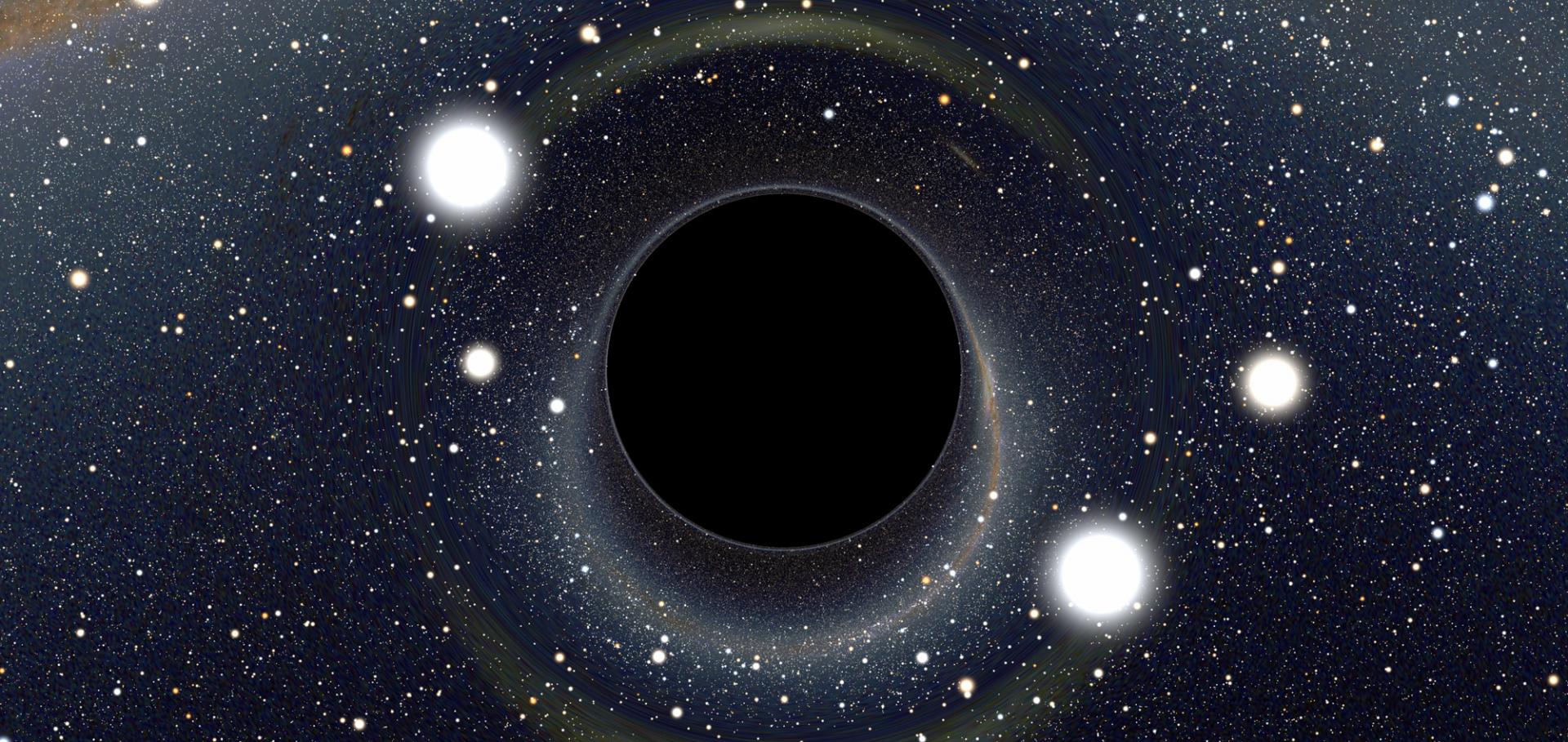
Black Hole

Lensing of space time around a black hole. At Oxford we study black holes observationally and theoretically on all size and time scales - it is some of our core work.

Credit: ALAIN RIAZUELO, IAP/UPMC/CNRS. CLICK HERE TO VIEW MORE IMAGES.

Aprajita Verma

Associate Professor

Research theme

  • Astronomy and astrophysics

Sub department

  • Astrophysics

Research groups

  • Zooniverse
  • Astronomical instrumentation
  • Galaxy formation and evolution
  • Hintze Centre for Astrophysical Surveys
  • MeerKAT
  • Rubin-LSST
  • Extremely Large Telescope
aprajita.verma@physics.ox.ac.uk
Telephone: 01865 (2)73374
Denys Wilkinson Building, room 760
  • About
  • Outreach
  • Teaching
  • Publications

A low [CII]/[NII] ratio in the center of a massive galaxy at z = 3.7: Evidence for a transition to quiescence at high redshift? (vol 646, A68, 2021)

ASTRONOMY & ASTROPHYSICS 650 (2021) ARTN C2

Authors:

C Schreiber, K Glazebrook, C Papovich, T Diaz-Santos, A Verma, D Elbaz, GG Kacprzak, T Nanayakkara, P Oesch, M Pannella, L Spitler, C Straatman, K-V Tran, T Wang
More details from the publisher
More details

The lens SW05 J143454.4+522850: a fossil group at redshift 0.6?

ArXiv 2104.03324 (2021)

Authors:

Philipp Denzel, Onur Çatmabacak, Jonathan P Coles, Claude Cornen, Robert Feldmann, Ignacio Ferreras, Xanthe Gwyn Palmer, Rafael Küng, Dominik Leier, Prasenjit Saha, Aprajita Verma
Details from ArXiV

A low [CII]/[NII] ratio in the center of a massive galaxy at z=3.7: evidence for a transition to quiescence at high redshift

ASTRONOMY & ASTROPHYSICS 646 (2021) ARTN A68

Authors:

C Schreiber, K Glazebrook, C Papovich, T Diaz-Santos, A Verma, D Elbaz, GG Kacprzak, T Nanayakkara, P Oesch, M Pannella, L Spitler, C Straatman, K-V Tran, T Wang
More details from the publisher
More details

A Spitzer survey of Deep Drilling Fields to be targeted by the Vera C. Rubin Observatory Legacy Survey of Space and Time

Monthly Notices of the Royal Astronomical Society Oxford University Press (OUP) (2020)

Authors:

M Lacy, Ja Surace, D Farrah, K Nyland, J Afonso, Wn Brandt, Dl Clements, Cdp Lagos, C Maraston, J Pforr, A Sajina, M Sako, M Vaccari, G Wilson, Dr Ballantyne, Wa Barkhouse, R Brunner, R Cane, Te Clarke, M Cooper, A Cooray, G Covone, C D'Andrea, Ae Evrard, V Gonzalez-Perez

Abstract:

The Vera C. Rubin Observatory Legacy Survey of Space and Time (LSST) will observe several Deep Drilling Fields (DDFs) to a greater depth and with a more rapid cadence than the main survey. In this paper, we describe the ``DeepDrill'' survey, which used the Spitzer Space Telescope Infrared Array Camera (IRAC) to observe three of the four currently defined DDFs in two bands, centered on 3.6 $\mu$m and 4.5 $\mu$m. These observations expand the area which was covered by an earlier set of observations in these three fields by the Spitzer Extragalactic Representative Volume Survey (SERVS). The combined DeepDrill and SERVS data cover the footprints of the LSST DDFs in the Extended Chandra Deep Field-South field (ECDFS), the ELAIS-S1 field (ES1), and the XMM Large-Scale Structure Survey field (XMM-LSS). The observations reach an approximate $5\sigma$ point-source depth of 2 $\mu$Jy (corresponding to an AB magnitude of 23.1; sufficient to detect a 10$^{11} M_{\odot}$ galaxy out to $z\approx 5$) in each of the two bands over a total area of $\approx 29\,$deg$^2$. The dual-band catalogues contain a total of 2.35 million sources. In this paper we describe the observations and data products from the survey, and an overview of the properties of galaxies in the survey. We compare the source counts to predictions from the SHARK semi-analytic model of galaxy formation. We also identify a population of sources with extremely red ([3.6]$-$[4.5] $>1.2$) colours which we show mostly consists of highly-obscured active galactic nuclei.
More details from the publisher
More details
Details from ArXiV

A Spitzer survey of Deep Drilling Fields to be targeted by the Vera C. Rubin Observatory Legacy Survey of Space and Time

(2020)

Authors:

M Lacy, JA Surace, D Farrah, K Nyland, J Afonso, WN Brandt, DL Clements, CDP Lagos, C Maraston, J Pforr, A Sajina, M Sako, M Vaccari, G Wilson, DR Ballantyne, WA Barkhouse, R Brunner, R Cane, TE Clarke, M Cooper, A Cooray, G Covone, C D'Andrea, AE Evrard, HC Ferguson, J Frieman, V Gonzalez-Perez, R Gupta, E Hatziminaoglou, J Huang, P Jagannathan, MJ Jarvis, KM Jones, A Kimball, C Lidman, L Lubin, L Marchetti, P Martini, RG McMahon, S Mei, H Messias, EJ Murphy, JA Newman, R Nichol, RP Norris, S Oliver, I Perez-Fournon, WM Peters, M Pierre, E Polisensky, GT Richards, SE Ridgway, HJA Röttgering, N Seymour, R Shirley, R Somerville, MA Strauss, N Suntzeff, PA Thorman, E van Kampen, A Verma, R Wechsler, WM Wood-Vasey
More details from the publisher

Pagination

  • First page First
  • Previous page Prev
  • …
  • Page 4
  • Page 5
  • Page 6
  • Page 7
  • Current page 8
  • Page 9
  • Page 10
  • Page 11
  • Page 12
  • …
  • Next page Next
  • Last page Last

Footer Menu

  • Contact us
  • Giving to the Dept of Physics
  • Work with us
  • Media

User account menu

  • Log in

Follow us

FIND US

Clarendon Laboratory,

Parks Road,

Oxford,

OX1 3PU

CONTACT US

Tel: +44(0)1865272200

University of Oxfrod logo Department Of Physics text logo
IOP Juno Champion logo Athena Swan Silver Award logo

© University of Oxford - Department of Physics

Cookies | Privacy policy | Accessibility statement

Built by: Versantus

  • Home
  • Research
  • Study
  • Engage
  • Our people
  • News & Comment
  • Events
  • Our facilities & services
  • About us
  • Giving to Physics
  • Current students
  • Staff intranet