

An old stellar population or diffuse nebular continuum emission discovered in Green Pea galaxies
Astrophysical Journal Letters American Astronomical Society 912:2 (2021) L22
Abstract:
We use new Hubble Space Telescope (HST) images of nine Green Pea galaxies (GPGs) to study their resolved structure and color. The choice of filters, F555W and F850LP, together with the redshift of the galaxies (z ~ 0.25), minimizes the contribution of the nebular [O iii] and Hα emission lines to the broadband images. While these galaxies are typically very blue in color, our analysis reveals that it is only the dominant stellar clusters that are blue. Each GPG does clearly show the presence of at least one bright and compact star-forming region, but these are invariably superimposed on a more extended and lower surface brightness emission. Moreover, the colors of the star-forming regions are on average bluer than those of the diffuse emission, reaching up to 0.6 magnitudes bluer. Assuming that the diffuse and compact components have constant and single-burst star formation histories, respectively, the observed colors imply that the diffuse components (possibly the host galaxy of the star formation episode) have, on average, old stellar ages (>1 Gyr), while the star clusters are younger than 500 Myr. While a redder stellar component is perhaps the most plausible explanation for these results, the limitations of our current data set lead us to examine possible alternative mechanisms, particularly recombination emission processes, which are unusually prominent in systems with such strong line emission. With the available data, however, it is not possible to distinguish between these two interpretations. A substantial presence of old stars would indicate that the mechanisms allowing large escape fractions in these local galaxies may be different from those at play during the reionization epoch.The multiwavelength properties of red QSOs: Evidence for dusty winds as the origin of QSO reddening
Astronomy & Astrophysics EDP Sciences 649 (2021) a102
Inertial spontaneous symmetry breaking and quantum scale invariance
Physical Review D: Particles, Fields, Gravitation and Cosmology American Physical Society (2021)
Abstract:
Weyl invariant theories of scalars and gravity can generate all mass scales spontaneously, initiated by a dynamical process of "inertial spontaneous symmetry breaking" that does not involve a potential. This is dictated by the structure of the Weyl current, $K_\mu$, and a cosmological phase during which the universe expands and the Einstein-Hilbert effective action is formed. Maintaining exact Weyl invariance in the renormalised quantum theory is straightforward when renormalisation conditions are referred back to the VEV's of fields in the action of the theory, which implies a conserved Weyl current. We do not require scale invariant regulators. We illustrate the computation of a Weyl invariant Coleman-Weinberg potential.A space mission to map the entire observable universe using the CMB as a backlight: Voyage 2050 science white paper
Experimental Astronomy (2021)
Abstract:
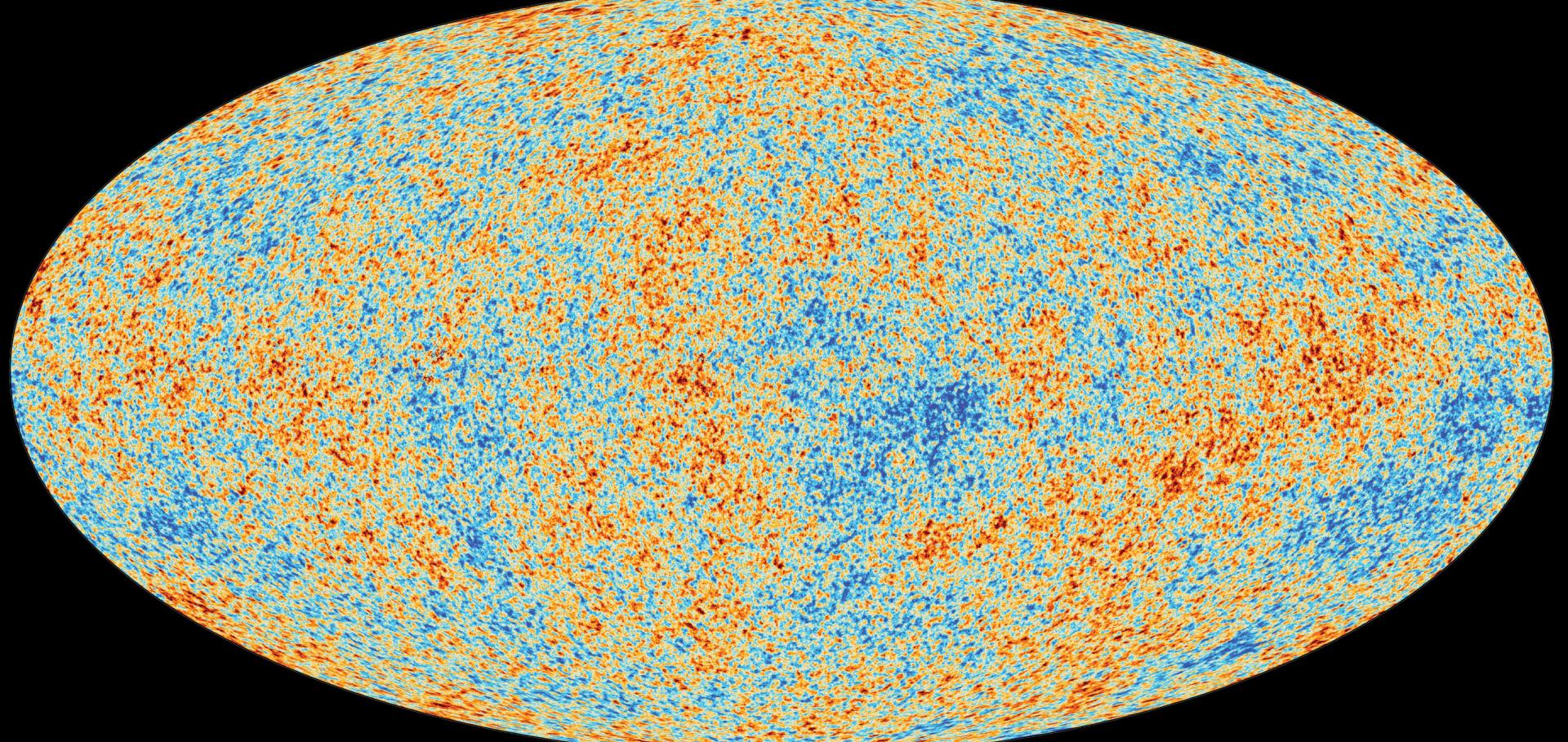
This Science White Paper, prepared in response to the ESA Voyage 2050 call for long-term mission planning, aims to describe the various science possibilities that can be realized with an L-class space observatory that is dedicated to the study of the interactions of cosmic microwave background (CMB) photons with the cosmic web. Our aim is specifically to use the CMB as a backlight – and survey the gas, total mass, and stellar content of the entire observable Universe by means of analyzing the spatial and spectral distortions imprinted on it. These distortions result from two major processes that impact on CMB photons: scattering by free electrons and atoms (Sunyaev-Zeldovich effect in diverse forms, Rayleigh scattering, resonant scattering) and deflection by gravitational potential (lensing effect). Even though the list of topics collected in this White Paper is not exhaustive, it helps to illustrate the exceptional diversity of major scientific questions that can be addressed by a space mission that will reach an angular resolution of 1.5 arcmin (goal 1 arcmin), have an average sensitivity better than 1 μK-arcmin, and span the microwave frequency range from roughly 50 GHz to 1 THz. The current paper also highlights the synergy of our Backlight mission concept with several upcoming and proposed ground-based CMB experiments.Exploring the origin of thick disks using the NewHorizon and Galactica simulations
Astrophysical Journal Supplement Series American Astronomical Society (2021)