The LiteBIRD Satellite Mission: Sub-Kelvin Instrument
Journal of Low Temperature Physics (2018) 1-9
Authors:
A Suzuki, PAR Ade, Y Akiba, D Alonso, K Arnold, J Aumont, C Baccigalupi, D Barron, S Basak, S Beckman, J Borrill, F Boulanger, M Bucher, E Calabrese, Y Chinone, S Cho, B Crill, A Cukierman, DW Curtis, T de Haan, M Dobbs, A Dominjon, T Dotani, L Duband, A Ducout, J Dunkley, JM Duval, T Elleflot, HK Eriksen, J Errard, J Fischer, T Fujino, T Funaki, U Fuskeland, K Ganga, N Goeckner-Wald, J Grain, NW Halverson, T Hamada, T Hasebe, M Hasegawa, K Hattori, M Hattori, L Hayes, M Hazumi, N Hidehira, CA Hill, G Hilton, J Hubmayr, K Ichiki, T Iida, H Imada, M Inoue, Y Inoue, KD Irwin, H Ishino, O Jeong, H Kanai, D Kaneko, S Kashima, N Katayama, T Kawasaki, SA Kernasovskiy, R Keskitalo, A Kibayashi, Y Kida, K Kimura, T Kisner, K Kohri, E Komatsu, K Komatsu, CL Kuo, NA Kurinsky, A Kusaka, A Lazarian, AT Lee, D Li, E Linder
Abstract:
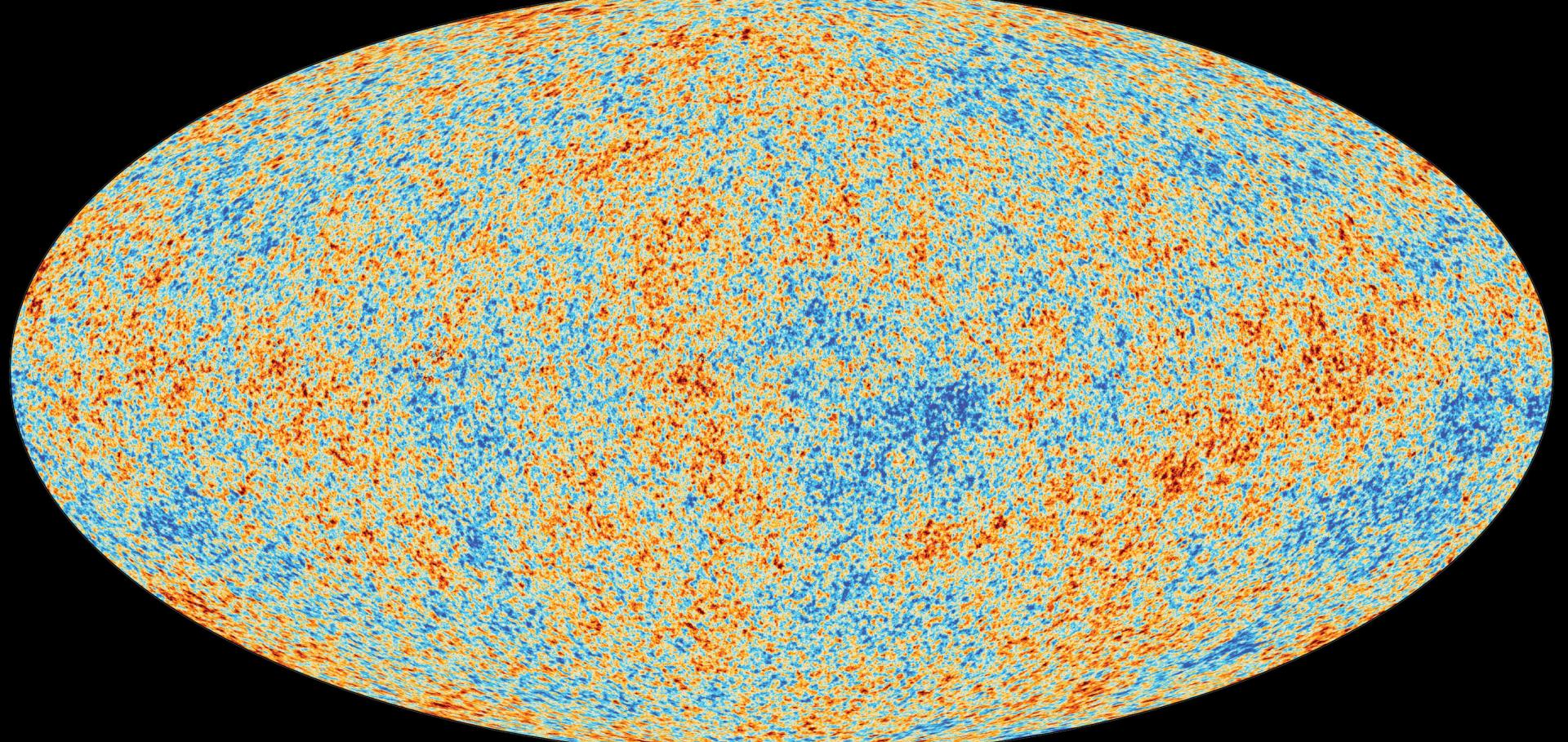
© 2018 Springer Science+Business Media, LLC, part of Springer Nature Inflation is the leading theory of the first instant of the universe. Inflation, which postulates that the universe underwent a period of rapid expansion an instant after its birth, provides convincing explanation for cosmological observations. Recent advancements in detector technology have opened opportunities to explore primordial gravitational waves generated by the inflation through “B-mode” (divergent-free) polarization pattern embedded in the cosmic microwave background anisotropies. If detected, these signals would provide strong evidence for inflation, point to the correct model for inflation, and open a window to physics at ultra-high energies. LiteBIRD is a satellite mission with a goal of detecting degree-and-larger-angular-scale B-mode polarization. LiteBIRD will observe at the second Lagrange point with a 400 mm diameter telescope and 2622 detectors. It will survey the entire sky with 15 frequency bands from 40 to 400 GHz to measure and subtract foregrounds. The US LiteBIRD team is proposing to deliver sub-Kelvin instruments that include detectors and readout electronics. A lenslet-coupled sinuous antenna array will cover low-frequency bands (40–235 GHz) with four frequency arrangements of trichroic pixels. An orthomode-transducer-coupled corrugated horn array will cover high-frequency bands (280–402 GHz) with three types of single frequency detectors. The detectors will be made with transition edge sensor (TES) bolometers cooled to a 100 milli-Kelvin base temperature by an adiabatic demagnetization refrigerator. The TES bolometers will be read out using digital frequency multiplexing with Superconducting QUantum Interference Device (SQUID) amplifiers. Up to 78 bolometers will be multiplexed with a single SQUID amplifier. We report on the sub-Kelvin instrument design and ongoing developments for the LiteBIRD mission.