Home
Department Of Physics text logo
  • Research
    • Our research
    • Our research groups
    • Our research in action
    • Research funding support
    • Summer internships for undergraduates
  • Study
    • Undergraduates
    • Postgraduates
  • Engage
    • For young people
    • For teachers
    • For the public
    • For alumni
    • For business
  • Support
Menu
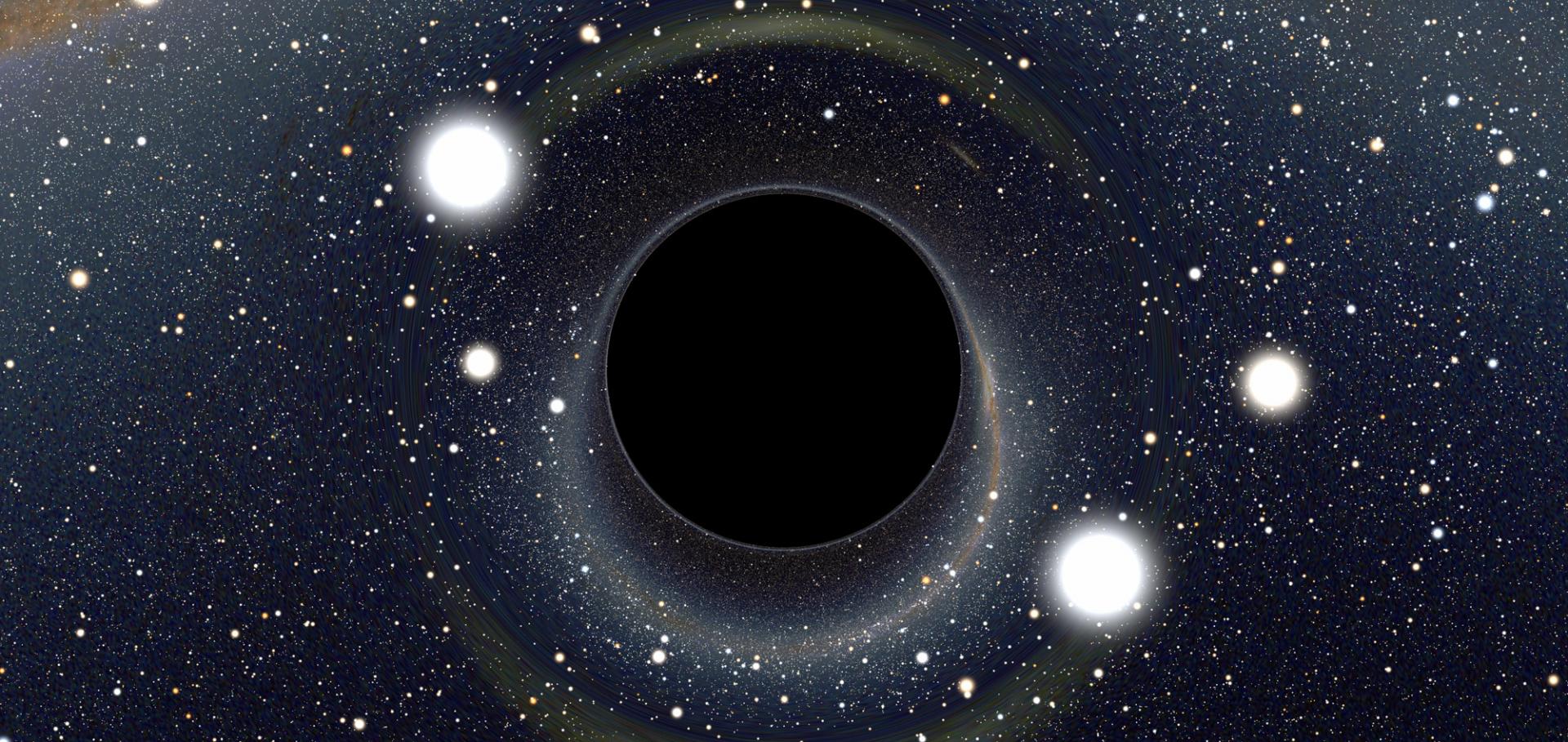
Black Hole

Lensing of space time around a black hole. At Oxford we study black holes observationally and theoretically on all size and time scales - it is some of our core work.

Credit: ALAIN RIAZUELO, IAP/UPMC/CNRS. CLICK HERE TO VIEW MORE IMAGES.

Martin Bureau

Professor of Astrophysics

Research theme

  • Astronomy and astrophysics

Sub department

  • Astrophysics

Research groups

  • Galaxy formation and evolution
  • Hintze Centre for Astrophysical Surveys
martin.bureau@physics.ox.ac.uk
Telephone: 01865 (2)73377
Denys Wilkinson Building, room 701
Home page
ORCID
  • About
  • Publications

The SAURON project - II. Sample and early results

MONTHLY NOTICES OF THE ROYAL ASTRONOMICAL SOCIETY 329:3 (2002) 513-530

Authors:

PT de Zeeuw, M Bureau, E Emsellem, R Bacon, CM Carollo, Y Copin, RL Davies, H Kuntschner, BW Miller, G Monnet, RF Peletier, EK Verolme
More details
More details from the publisher

Two-dimensional kinematics and stellar populations of early-type galaxies: First results from the SAURON survey

ASTR SOC P 282 (2002) 179-188

Authors:

R Bacon, M Bureau, M Cappellari, Y Copin, R Davies, E Emsellem, H Kuntschner, R McDermid, B Miller, R Peletier, E Verolme, T de Zeeuw

Abstract:

We present the SAURON project, which is aimed at studying the morphology, two-dimensional kinematics and stellar populations of a representative sample of elliptical galaxies and spiral bulges.SAURON, a dedicated integral-field spectrograph that is optimized for observations and has high throughput, was built in Lyon and is now operated at the WHT 4.2m telescope. At present, we have ob served approximately two thirds of the seventy-two sample galaxies with SAURON. A comparison with published long-slit measurements demonstrates that the SAURON-data are of equal or better quality, and provides full two-dimensional coverage. The velocity and velocity dispersion fields exhibit a large variety of morphologies: from simple rotating systems to cylindrical, disky and triaxial velocity fields, bars and decoupled cores. Most of these kinematical signatures do not have counterparts in the light distribution. While some galaxies are consistent with axisymmetry, most Are more complex systems than assumed previously. This suggests that the kinematical properties of nearby E/S0 galaxies do not agree with the often assumed simplistic two-family model, in which the giant non-rotating triaxial ellipticals are opposed to the fast-rotating axisymmetric faint ellipticals and S0s.
More details

Environment, Ram Pressure, and Shell Formation in HoII

(2001)

Authors:

M Bureau, C Carignan
More details from the publisher

Ram Pressure and Anomalous Shell Formation in HoII

(2001)

Authors:

M Bureau, C Carignan
More details from the publisher

The SAURON project. II. Sample and early results

(2001)

Authors:

PT de Zeeuw, M Bureau, E Emsellem, R Bacon, CM Carollo, Y Copin, RL Davies, H Kuntschner, BW Miller, G Monnet, RF Peletier, EK Verolme
More details from the publisher

Pagination

  • First page First
  • Previous page Prev
  • …
  • Page 85
  • Page 86
  • Page 87
  • Page 88
  • Current page 89
  • Page 90
  • Page 91
  • Page 92
  • Page 93
  • …
  • Next page Next
  • Last page Last

Footer Menu

  • Contact us
  • Giving to the Dept of Physics
  • Work with us
  • Media

User account menu

  • Log in

Follow us

FIND US

Clarendon Laboratory,

Parks Road,

Oxford,

OX1 3PU

CONTACT US

Tel: +44(0)1865272200

University of Oxfrod logo Department Of Physics text logo
IOP Juno Champion logo Athena Swan Silver Award logo

© University of Oxford - Department of Physics

Cookies | Privacy policy | Accessibility statement

Built by: Versantus

  • Home
  • Research
  • Study
  • Engage
  • Our people
  • News & Comment
  • Events
  • Our facilities & services
  • About us
  • Giving to Physics
  • Current students
  • Staff intranet