Home
Department Of Physics text logo
  • Research
    • Our research
    • Our research groups
    • Our research in action
    • Research funding support
    • Summer internships for undergraduates
  • Study
    • Undergraduates
    • Postgraduates
  • Engage
    • For young people
    • For teachers
    • For the public
    • For alumni
    • For business
  • Support
Menu
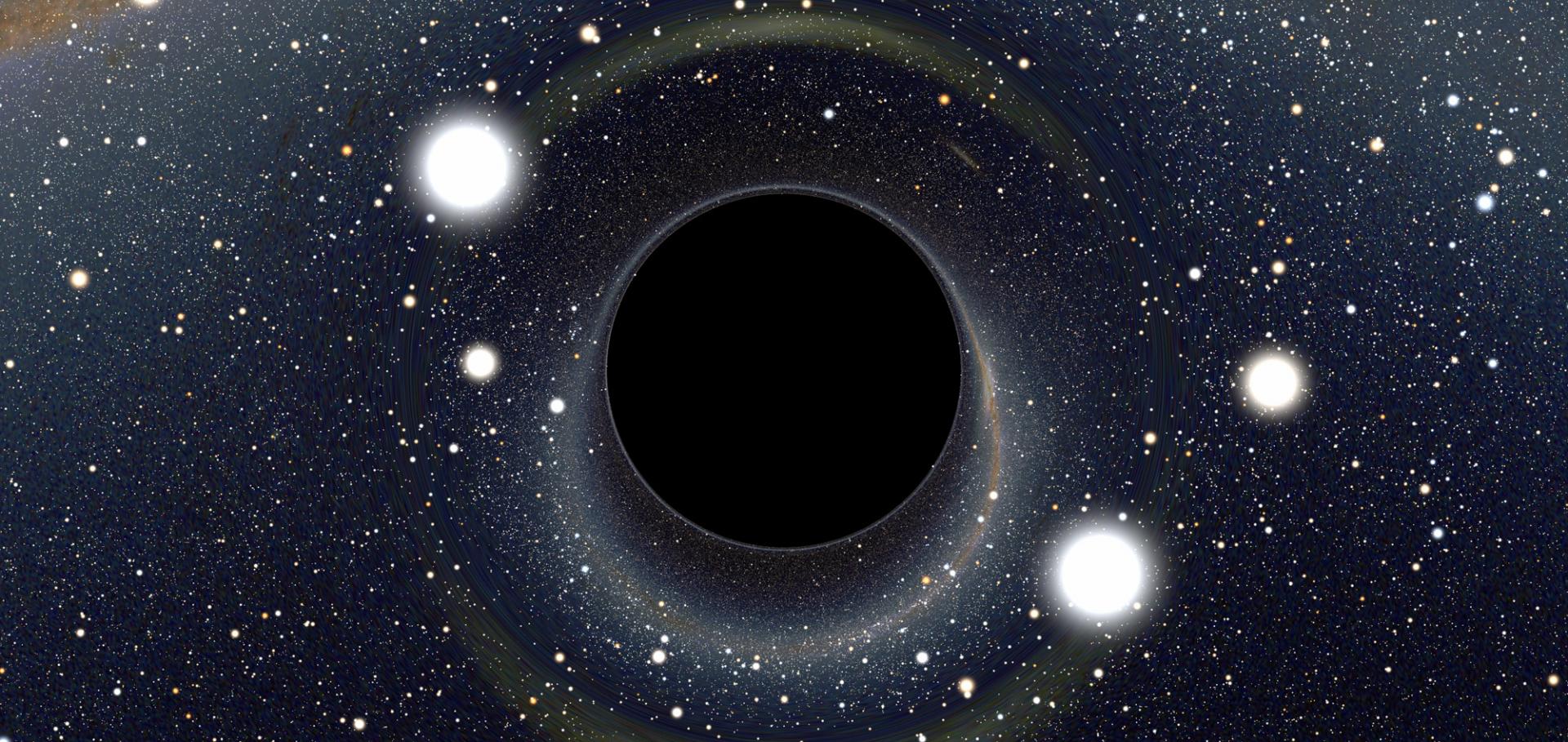
Black Hole

Lensing of space time around a black hole. At Oxford we study black holes observationally and theoretically on all size and time scales - it is some of our core work.

Credit: ALAIN RIAZUELO, IAP/UPMC/CNRS. CLICK HERE TO VIEW MORE IMAGES.

Prof. Matt Jarvis

Professor of Astrophysics

Research theme

  • Astronomy and astrophysics

Sub department

  • Astrophysics

Research groups

  • Cosmology
  • Galaxy formation and evolution
  • Hintze Centre for Astrophysical Surveys
  • MeerKAT
  • Rubin-LSST
  • The Square Kilometre Array (SKA)
Matt.Jarvis@physics.ox.ac.uk
Telephone: 01865 (2)83654
Denys Wilkinson Building, room 703
  • About
  • Publications

LOFAR 150-MHz observations of the Bootes field: catalogue and source counts

MONTHLY NOTICES OF THE ROYAL ASTRONOMICAL SOCIETY 460:3 (2016) 2385-2412

Authors:

WL Williams, RJ van Weeren, HJA Rottgering, P Best, TJ Dijkema, F de Gasperin, MJ Hardcastle, G Heald, I Prandoni, J Sabater, TW Shimwell, C Tasse, IM van Bemmel, M Bruggen, G Brunetti, JE Conway, T Ensslin, D Engels, H Falcke, C Ferrari, M Haverkorn, N Jackson, MJ Jarvis, AD Kapinska, EK Mahony, GK Miley, LK Morabito, R Morganti, E Orru, E Retana-Montenegro, SS Sridhar, MC Toribio, GJ White, MW Wise, JTL Zwart
More details from the publisher
Details from ORA
More details
Details from ArXiV

GAMA/WiggleZ: The 1.4GHz radio luminosity functions of high- and low-excitation radio galaxies and their redshift evolution to z=0.75

Monthly Notices of the Royal Astronomical Society Oxford University Press 460:1 (2016) 2-17

Authors:

Michael B Pracy, John HY Ching, Elaine M Sadler, Scott M Croom, IK Baldry, Joss Bland-Hawthorn, S Brough, MJI Brown, Warwick Couch, Tamara M Davis, Michael J Drinkwater, Matthew Jarvis, Ben Jelliffe, Russell J Jurek, J Loveday, KA Pimbblet, M Prescott, Emily Wisnioski, David Woods

Abstract:

We present radio active galactic nuclei (AGN) luminosity functions over the redshift range 0.005 < z < 0.75. The sample from which the luminosity functions are constructed is an optical spectroscopic survey of radio galaxies, identified from matched Faint Images of the Radio Sky at Twenty-cm survey (FIRST) sources and Sloan Digital Sky Survey images. The radio AGN are separated into low-excitation radio galaxies (LERGs) and high-excitation radio galaxies (HERGs) using the optical spectra. We derive radio luminosity functions for LERGs and HERGs separately in the three redshift bins (0.005 < z < 0.3, 0.3 < z < 0.5 and 0.5 < z < 0.75). The radio luminosity functions can be well described by a double power law. Assuming this double power-law shape the LERG population displays little or no evolution over this redshift range evolving as ∼(1+z)0.06+0.17−0.18 assuming pure density evolution or ∼(1+z)0.46+0.22−0.24 assuming pure luminosity evolution. In contrast, the HERG population evolves more rapidly, best fitted by ∼(1+z)2.93+0.46−0.47 assuming a double power-law shape and pure density evolution. If a pure luminosity model is assumed, the best-fitting HERG evolution is parametrized by ∼(1+z)7.41+0.79−1.33 . The characteristic break in the radio luminosity function occurs at a significantly higher power (≳1 dex) for the HERG population in comparison to the LERGs. This is consistent with the two populations representing fundamentally different accretion modes.
More details from the publisher
Details from ORA
More details
Details from ArXiV

The KMOS Redshift One Spectroscopic Survey (KROSS): the Tully-Fisher relation at z similar to 1

MONTHLY NOTICES OF THE ROYAL ASTRONOMICAL SOCIETY 460:1 (2016) 103-129

Authors:

AL Tiley, JP Stott, AM Swinbank, M Bureau, CM Harrison, R Bower, HL Johnson, AJ Bunker, MJ Jarvis, G Magdis, R Sharples, I Smail, D Sobral, P Best
More details from the publisher
Details from ORA
More details
Details from ArXiV

The galaxy-halo connection in the VIDEO survey at 0.5 < z < 1.7

MONTHLY NOTICES OF THE ROYAL ASTRONOMICAL SOCIETY 459:3 (2016) 2618-2631

Authors:

PW Hatfield, SN Lindsay, MJ Jarvis, B Haussler, M Vaccari, A Verma
More details from the publisher
Details from ORA
More details
Details from ArXiV

A deep/wide 1-2 GHz snapshot survey of SDSS Stripe 82 using the Karl G. Jansky Very Large Array in a compact hybrid configuration

MONTHLY NOTICES OF THE ROYAL ASTRONOMICAL SOCIETY 460:4 (2016) 4433-4452

Authors:

I Heywood, MJ Jarvis, AJ Baker, KW Bannister, CS Carvalho, M Hardcastle, M Hilton, K Moodley, OM Smirnov, DJB Smith, SV White, EJ Wollack
More details from the publisher
Details from ORA
More details
Details from ArXiV

Pagination

  • First page First
  • Previous page Prev
  • …
  • Page 40
  • Page 41
  • Page 42
  • Page 43
  • Current page 44
  • Page 45
  • Page 46
  • Page 47
  • Page 48
  • …
  • Next page Next
  • Last page Last

Footer Menu

  • Contact us
  • Giving to the Dept of Physics
  • Work with us
  • Media

User account menu

  • Log in

Follow us

FIND US

Clarendon Laboratory,

Parks Road,

Oxford,

OX1 3PU

CONTACT US

Tel: +44(0)1865272200

University of Oxfrod logo Department Of Physics text logo
IOP Juno Champion logo Athena Swan Silver Award logo

© University of Oxford - Department of Physics

Cookies | Privacy policy | Accessibility statement

Built by: Versantus

  • Home
  • Research
  • Study
  • Engage
  • Our people
  • News & Comment
  • Events
  • Our facilities & services
  • About us
  • Giving to Physics
  • Current students
  • Staff intranet