Home
Department Of Physics text logo
  • Research
    • Our research
    • Our research groups
    • Our research in action
    • Research funding support
    • Summer internships for undergraduates
  • Study
    • Undergraduates
    • Postgraduates
  • Engage
    • For alumni
    • For business
    • For schools
    • For the public
  • Support
Menu
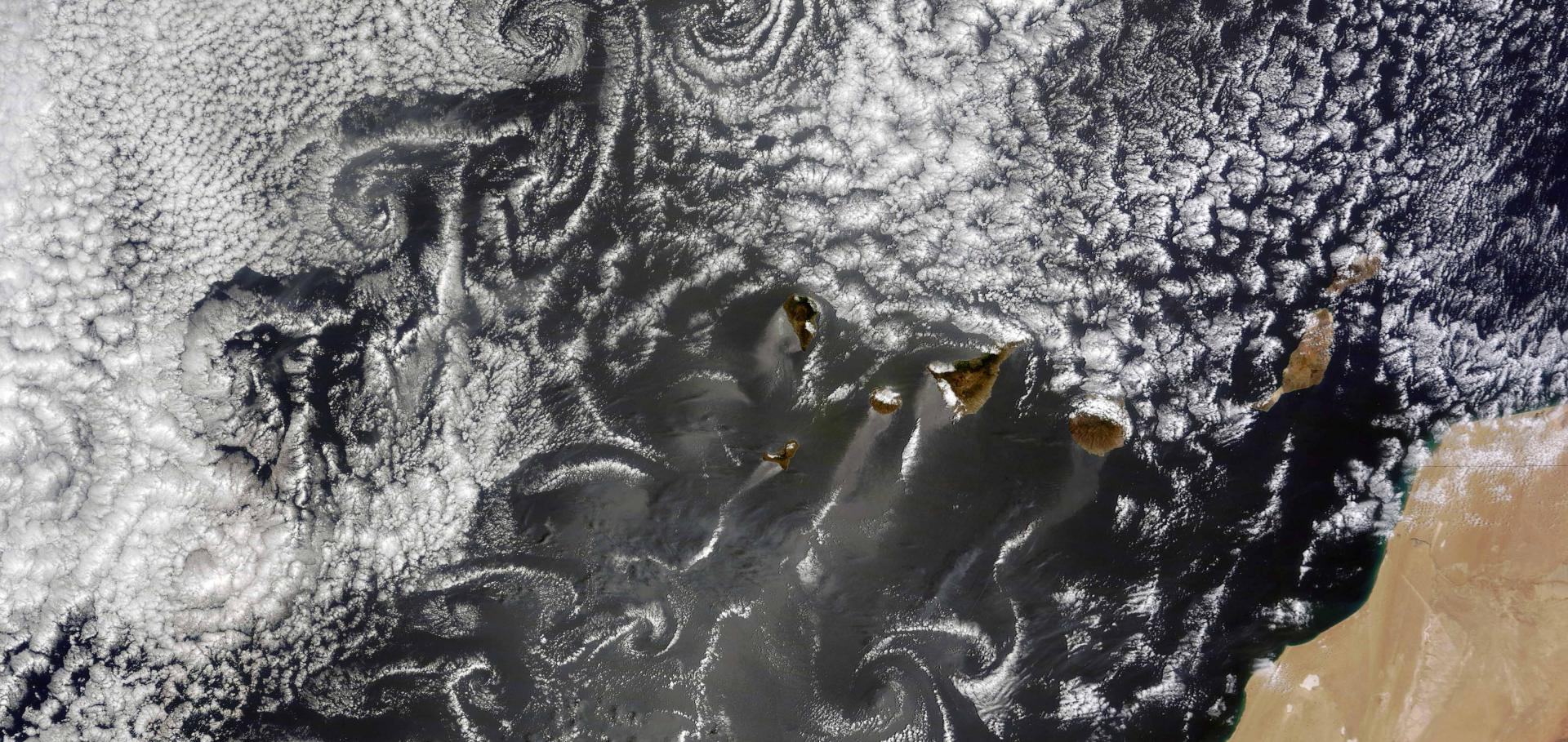
von Kármán vortex street over Canary Islands
Credit: NASA

Philip Stier

Professor of Atmospheric Physics

Research theme

  • Climate physics

Sub department

  • Atmospheric, Oceanic and Planetary Physics

Research groups

  • Climate processes
philip.stier@physics.ox.ac.uk
Telephone: 01865 (2)72887
Atmospheric Physics Clarendon Laboratory, room 103
  • About
  • Research
  • Teaching
  • CV
  • Publications

Linking the properties of deep convective cores and their associated anvil clouds observed over North America

(2025)

Authors:

William Kenneth Jones, Philip Stier
More details from the publisher

Lossy Neural Compression for Geospatial Analytics: A Review

(2025)

Authors:

Carlos Gomes, Isabelle Wittmann, Damien Robert, Johannes Jakubik, Tim Reichelt, Michele Martone, Stefano Maurogiovanni, Rikard Vinge, Jonas Hurst, Erik Scheurer, Rocco Sedona, Thomas Brunschwiler, Stefan Kesselheim, Matej Batic, Philip Stier, Jan Dirk Wegner, Gabriele Cavallaro, Edzer Pebesma, Michael Marszalek, Miguel A Belenguer-Plomer, Kennedy Adriko, Paolo Fraccaro, Romeo Kienzler, Rania Briq, Sabrina Benassou, Michele Lazzarini, Conrad M Albrecht
More details from the publisher

Model intercomparison of the impacts of varying cloud droplet nucleating aerosols on the lifecycle and microphysics of isolated deep convection

Journal of the Atmospheric Sciences American Meteorological Society 82:10 (2025) 2197-2217

Authors:

Stephen M Saleeby, Susan C van den Heever, Peter J Marinescu, Mariko Oue, Andrew I Barrett, Christian Barthlott, Ribu Cherian, Jiwen Fan, Ann M Fridlind, Max Heikenfeld, Corinna Hoose, Toshi Matsui, Annette K Miltenberger, Johannes Quaas, Jacob Shpund, Philip Stier, Benoit Vie, Bethan A White, Yuwei Zhang

Abstract:

The microphysical impacts of aerosol particles on scattered isolated deep convective cells near Houston, Texas, on 19 June 2013, are examined using multiple cloud-resolving model (CRM) simulations initialized with vertical profiles of low and high concentrations of cloud droplet–nucleating aerosols. These simulations formed part of the Model Intercomparison Project (MIP) conducted by the Deep Convective Working Group of the Aerosol, Cloud, Precipitation and Climate (ACPC) initiative. Each CRM generated a field of convective cells representing those observed during the case study with varying degrees of accuracy. The Tracking and Object-Based Analysis of Clouds (tobac) cell-tracking algorithm was applied to each MIP CRM simulation to track relatively long-lived convective cells (20–60 min). Most of the CRMs produced similar aerosol loading impacts on the warm phase of tracked cell properties with reduced autoconversion and accretion growth of rain, increased cloud water, reduced rainfall, and reduced near-surface evaporation of rain. The sign of aerosol impacts on the warm-phase properties of the convective cells was also quite consistent over cell lifetimes with the greatest magnitude of influence in the first half of the life cycle in most CRMs. In contrast, the ice-phase response to aerosol loading was highly variable among CRMs and included increases or decreases in ice amounts at inconsistent stages of the cell life cycle and midlevel versus upper-level changes in ice. This intermodel variability in ice is indicative both of the complex indirect interactions between aerosols and ice-phase processes in deep convection and their associated parameterizations.

More details from the publisher
Details from ORA
More details

A physics-informed machine learning parameterization for cloud microphysics in ICON

Environmental Data Science Cambridge University Press 4 (2025) e40

Authors:

Ellen Sarauer, Mierk Schwabe, Philipp Weiss, Axel Lauer, Philip Stier, Veronika Eyring

Abstract:

We developed a cloud microphysics parameterization for the icosahedral nonhydrostatic modeling framework (ICON) model based on physics-informed machine learning (ML). By training our ML model on high-resolution simulation data, we enhance the representation of cloud microphysics in Earth system models (ESMs) compared to traditional parameterization schemes, in particular by considering the influence of high-resolution dynamics that are not resolved in coarse ESMs. We run a global, kilometer-scale ICON simulation with a one-moment cloud microphysics scheme, the complex graupel scheme, to generate 12 days of training data. Our ML approach combines a microphysics trigger classifier and a regression model. The microphysics trigger classifier identifies the grid cells where changes due to the cloud microphysical parameterization are expected. In those, the workflow continues by calling the regression model and additionally includes physical constraints for mass positivity and water mass conservation to ensure physical consistency. The microphysics trigger classifier achieves an F1 score of 0.93 on classifying unseen grid cells. The regression model reaches an score of 0.72 averaged over all seven microphysical tendencies on simulated days used for validation only. This results in a combined offline performance of 0.78. Using explainability techniques, we explored the correlations between input and output features, finding a strong alignment with the graupel scheme and, hence, physical understanding of cloud microphysical processes. This parameterization provides the foundation to advance the representation of cloud microphysical processes in climate models with ML, leading to more accurate climate projections and improved comprehension of the Earth’s climate system.
More details from the publisher
Details from ORA
More details

Studying aerosol, clouds, and air quality in the coastal urban environment of Southeastern Texas

Bulletin of the American Meteorological Society American Meteorological Society (2025)

Authors:

Michael P Jensen, James H Flynn, Jorge E Gonzalez-Cruz, Laura M Judd, Pavlos Kollias, Chongai Kuang, Greg M McFarquhar, Heath Powers, Prathap Ramamurthy, John Sullivan, Allison C Aiken, Sergio L Alvarez, Peter Argay, Brian Argrow, Tyler M Bell, Doug Boyer, Sarah D Brooks, Eric C Bruning, Kelcy Brunner, Brian Butterworth, Radiance Calmer, Christopher D Cappa, Rajan K Chakrabarty, V Chandrasekar, Chun-Ying Chao, Bo Chen, Swarup China, Don R Collins, Scott M Collis, Sean Crowell, Rachael Dal Porto, Gijs de Boer, Min Deng, Darielle Dexheimer, Aryeh J Drager, Xuanlin Du, Manvendra K Dubey, Andrew M Dzambo, Montana Etten-Bohm, Jiwen Fan, Ryan Farley, Ya-Chien Feng, Yan Feng, Marta Fenn, Richard E Ferrare, Samuel Flusche, Ann M Fridlind, Joseph Galewsky, Harold Gamarro, Samuel Gardner

Abstract:

A multi-agency succession of field campaigns was conducted in southeastern Texas during July 2021 through October 2022 to study the complex interactions of aerosols, clouds and air pollution in the coastal urban environment. As part of the Tracking Aerosol Convection interactions Experiment (TRACER), the TRACER- Air Quality (TAQ) campaign the Experiment of Sea Breeze Convection, Aerosols, Precipitation and Environment (ESCAPE) and the Convective Cloud Urban Boundary Layer Experiment (CUBE), a combination of ground-based supersites and mobile laboratories, shipborne measurements and aircraft-based instrumentation were deployed. These diverse platforms collected high-resolution data to characterize the aerosol microphysics and chemistry, cloud and precipitation micro- and macro-physical properties, environmental thermodynamics and air quality-relevant constituents that are being used in follow-on analysis and modeling activities. We present the overall deployment setups, a summary of the campaign conditions and a sampling of early research results related to: (a) aerosol precursors in the urban environment, (b) influences of local meteorology on air pollution, (c) detailed observations of the sea breeze circulation, (d) retrieved supersaturation in convective updrafts, (e) characterizing the convective updraft lifecycle, (f) variability in lightning characteristics of convective storms and (g) urban influences on surface energy fluxes. The work concludes with discussion of future research activities highlighted by the TRACER model-intercomparison project to explore the representation of aerosol-convective interactions in high-resolution simulations.
More details from the publisher
Details from ORA

Pagination

  • First page First
  • Previous page Prev
  • …
  • Page 2
  • Page 3
  • Page 4
  • Page 5
  • Current page 6
  • Page 7
  • Page 8
  • Page 9
  • Page 10
  • …
  • Next page Next
  • Last page Last

Footer Menu

  • Contact us
  • Giving to the Dept of Physics
  • Work with us
  • Media

User account menu

  • Log in

Follow us

FIND US

Clarendon Laboratory,

Parks Road,

Oxford,

OX1 3PU

CONTACT US

Tel: +44(0)1865272200

University of Oxfrod logo Department Of Physics text logo
IOP Juno Champion logo Athena Swan Silver Award logo

© University of Oxford - Department of Physics

Cookies | Privacy policy | Accessibility statement

Built by: Versantus

  • Home
  • Research
  • Study
  • Engage
  • Our people
  • News & Comment
  • Events
  • Our facilities & services
  • About us
  • Giving to Physics
  • Current students
  • Staff intranet