Home
Department Of Physics text logo
  • Research
    • Our research
    • Our research groups
    • Our research in action
    • Research funding support
    • Summer internships for undergraduates
  • Study
    • Undergraduates
    • Postgraduates
  • Engage
    • For alumni
    • For business
    • For schools
    • For the public
  • Support
Menu
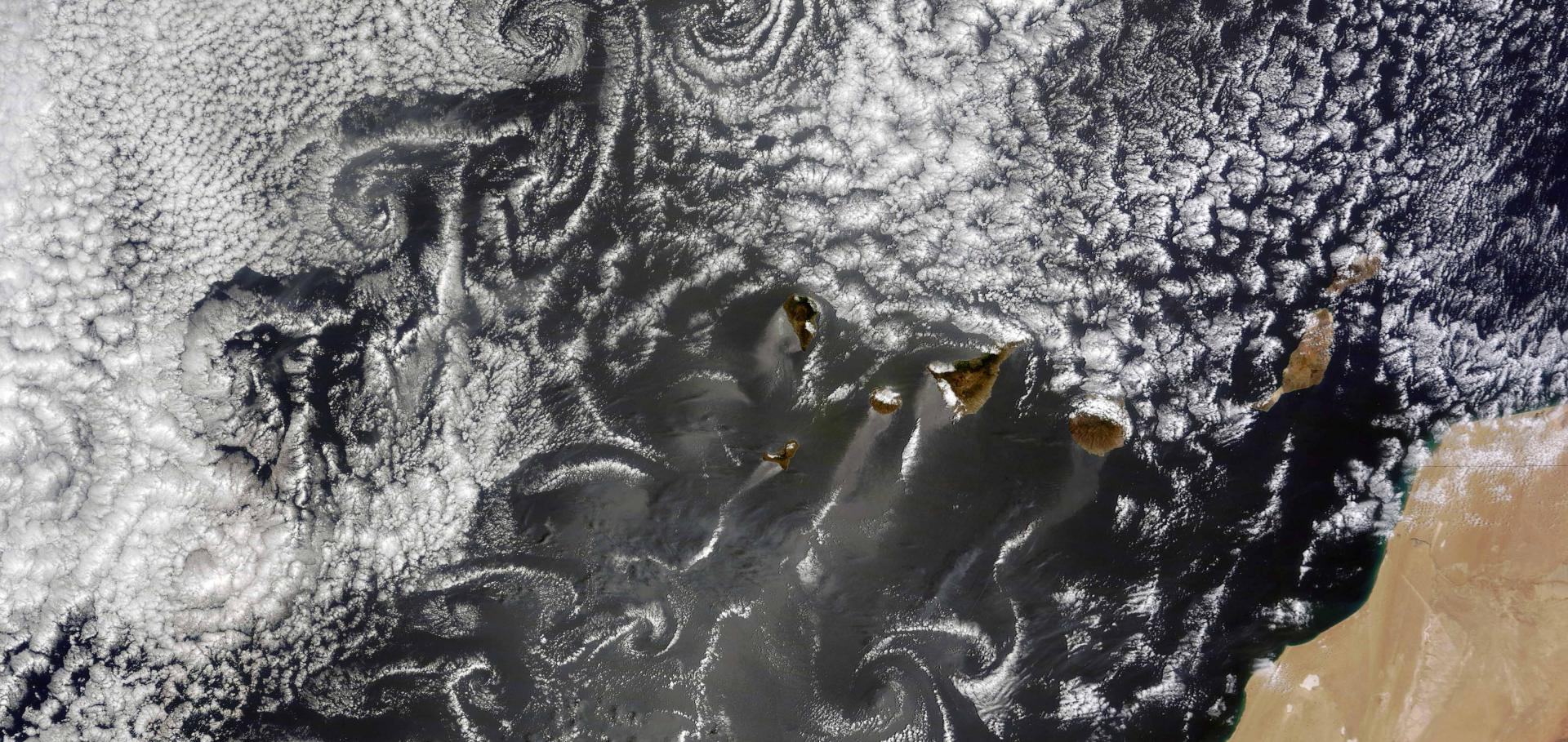
von Kármán vortex street over Canary Islands
Credit: NASA

Philip Stier

Professor of Atmospheric Physics

Research theme

  • Climate physics

Sub department

  • Atmospheric, Oceanic and Planetary Physics

Research groups

  • Climate processes
philip.stier@physics.ox.ac.uk
Telephone: 01865 (2)72887
Atmospheric Physics Clarendon Laboratory, room 103
  • About
  • Research
  • Teaching
  • CV
  • Publications

What controls the vertical distribution of aerosol? Relationships between process sensitivity in HadGEM3–UKCA and inter-model variation from AeroCom Phase II

Atmospheric Chemistry and Physics Copernicus GmbH 16:4 (2016) 2221-2241

Authors:

Zak Kipling, Philip Stier, Colin E Johnson, Graham W Mann, Nicolas Bellouin, Susanne E Bauer, Tommi Bergman, Mian Chin, Thomas Diehl, Steven J Ghan, Trond Iversen, Alf Kirkevåg, Harri Kokkola, Xiaohong Liu, Gan Luo, Twan van Noije, Kirsty J Pringle, Knut von Salzen, Michael Schulz, Øyvind Seland, Ragnhild B Skeie, Toshihiko Takemura, Kostas Tsigaridis, Kai Zhang

Abstract:

Abstract. The vertical profile of aerosol is important for its radiative effects, but weakly constrained by observations on the global scale, and highly variable among different models. To investigate the controlling factors in one particular model, we investigate the effects of individual processes in HadGEM3–UKCA and compare the resulting diversity of aerosol vertical profiles with the inter-model diversity from the AeroCom Phase II control experiment. In this way we show that (in this model at least) the vertical profile is controlled by a relatively small number of processes, although these vary among aerosol components and particle sizes. We also show that sufficiently coarse variations in these processes can produce a similar diversity to that among different models in terms of the global-mean profile and, to a lesser extent, the zonal-mean vertical position. However, there are features of certain models' profiles that cannot be reproduced, suggesting the influence of further structural differences between models. In HadGEM3–UKCA, convective transport is found to be very important in controlling the vertical profile of all aerosol components by mass. In-cloud scavenging is very important for all except mineral dust. Growth by condensation is important for sulfate and carbonaceous aerosol (along with aqueous oxidation for the former and ageing by soluble material for the latter). The vertical extent of biomass-burning emissions into the free troposphere is also important for the profile of carbonaceous aerosol. Boundary-layer mixing plays a dominant role for sea salt and mineral dust, which are emitted only from the surface. Dry deposition and below-cloud scavenging are important for the profile of mineral dust only. In this model, the microphysical processes of nucleation, condensation and coagulation dominate the vertical profile of the smallest particles by number (e.g. total CN  >  3 nm), while the profiles of larger particles (e.g. CN  >  100 nm) are controlled by the same processes as the component mass profiles, plus the size distribution of primary emissions. We also show that the processes that affect the AOD-normalised radiative forcing in the model are predominantly those that affect the vertical mass distribution, in particular convective transport, in-cloud scavenging, aqueous oxidation, ageing and the vertical extent of biomass-burning emissions.
More details from the publisher

What controls the vertical distribution of aerosol? Relationships between process sensitivity in HadGEM3–UKCA and inter-model variation from AeroCom Phase II

Atmospheric Chemistry and Physics 16 (2016) 2221-2241

Authors:

Z Kipling, P Stier, CE Johnson, GW Mann, N Bellouin, SE Bauer, T Bergman, M Chin, T Diehl, SJ Ghan, T Iversen, A Kirkevåg, H Kokkola, X Liu, G Luo, T van Noije, KJ Pringle, K von Salzen, M Schulz, Ø Seland, RB Skeie, T Takemura, K Tsigaridis, K Zhang
More details from the publisher
Details from ORA
More details

The importance of temporal collocation for the evaluation of aerosol models with observations

Atmospheric Chemistry and Physics European Geosciences Union 16:2 (2016) 1065-1079

Authors:

Nick AJ Schutgens, Dan G Partridge, Philip Stier

Abstract:

It is often implicitly assumed that over suitably long periods the mean of observations and models should be comparable, even if they have different temporal sampling. We assess the errors incurred due to ignoring temporal sampling and show that they are of similar magnitude as (but smaller than) actual model errors (20–60 %).

Using temporal sampling from remote-sensing data sets, the satellite imager MODIS (MODerate resolution Imaging Spectroradiometer) and the ground-based sun photometer network AERONET (AErosol Robotic NETwork), and three different global aerosol models, we compare annual and monthly averages of full model data to sampled model data. Our results show that sampling errors as large as 100 % in AOT (aerosol optical thickness), 0.4 in AE (Ångström Exponent) and 0.05 in SSA (single scattering albedo) are possible. Even in daily averages, sampling errors can be significant. Moreover these sampling errors are often correlated over long distances giving rise to artificial contrasts between pristine and polluted events and regions. Additionally, we provide evidence that suggests that models will underestimate these errors. To prevent sampling errors, model data should be temporally collocated to the observations before any analysis is made.

We also discuss how this work has consequences for in situ measurements (e.g. aircraft campaigns or surface measurements) in model evaluation.

Although this study is framed in the context of model evaluation, it has a clear and direct relevance to climatologies derived from observational data sets.

More details from the publisher
Details from ORA
More details

Will a perfect model agree with perfect observations? The impact of spatial sampling

Copernicus Publications (2016)

Authors:

NAJ Schutgens, E Gryspeerdt, N Weigum, S Tsyro, D Goto, M Schulz, P Stier
More details from the publisher

Limitations of passive satellite remote sensing to constrain global cloud condensation nuclei

Atmospheric Chemistry and Physics European Geosciences Union 15:22 (2015) 32607-32637

Abstract:

Aerosol–cloud interactions are considered a key uncertainty in our understanding of climate change (Boucher et al., 2013). Knowledge of the global abundance of aerosols suitable to act as cloud condensation nuclei (CCN) is fundamental to determine the strength of the anthropogenic climate perturbation. Direct measurements are limited and sample only a very small fraction of the globe so that remote sensing from satellites and ground based instruments is widely used as a proxy for cloud condensation nuclei (Nakajima et al., 2001; Andreae, 2009; Clarke and Kapustin, 2010; Boucher et al., 2013). However, the underlying assumptions cannot be robustly tested with the small number of measurements available so that no reliable global estimate of cloud condensation nuclei exists. This study overcomes this limitation using a fully self-consistent global model (ECHAM-HAM) of aerosol radiative properties and cloud condensation nuclei. An analysis of the correlation of simulated aerosol radiative properties and cloud condensation nuclei reveals that common assumptions about their relationships are violated for a significant fraction of the globe: 71 % of the area of the globe shows correlation coefficients between CCN0.2% at cloud base and aerosol optical depth (AOD) below 0.5, i.e. AOD variability explains only 25 % of the CCN variance. This has significant implications for satellite based studies of aerosol–cloud interactions. The findings also suggest that vertically resolved remote sensing techniques, such as satellite-based high spectral resolution lidars, have a large potential for global monitoring of cloud condensation nuclei.
More details from the publisher
Details from ORA

Pagination

  • First page First
  • Previous page Prev
  • …
  • Page 47
  • Page 48
  • Page 49
  • Page 50
  • Current page 51
  • Page 52
  • Page 53
  • Page 54
  • Page 55
  • …
  • Next page Next
  • Last page Last

Footer Menu

  • Contact us
  • Giving to the Dept of Physics
  • Work with us
  • Media

User account menu

  • Log in

Follow us

FIND US

Clarendon Laboratory,

Parks Road,

Oxford,

OX1 3PU

CONTACT US

Tel: +44(0)1865272200

University of Oxfrod logo Department Of Physics text logo
IOP Juno Champion logo Athena Swan Silver Award logo

© University of Oxford - Department of Physics

Cookies | Privacy policy | Accessibility statement

Built by: Versantus

  • Home
  • Research
  • Study
  • Engage
  • Our people
  • News & Comment
  • Events
  • Our facilities & services
  • About us
  • Giving to Physics
  • Current students
  • Staff intranet