Home
Department Of Physics text logo
  • Research
    • Our research
    • Our research groups
    • Our research in action
    • Research funding support
    • Summer internships for undergraduates
  • Study
    • Undergraduates
    • Postgraduates
  • Engage
    • For young people
    • For teachers
    • For the public
    • For alumni
    • For business
  • Support
Menu
SNO+

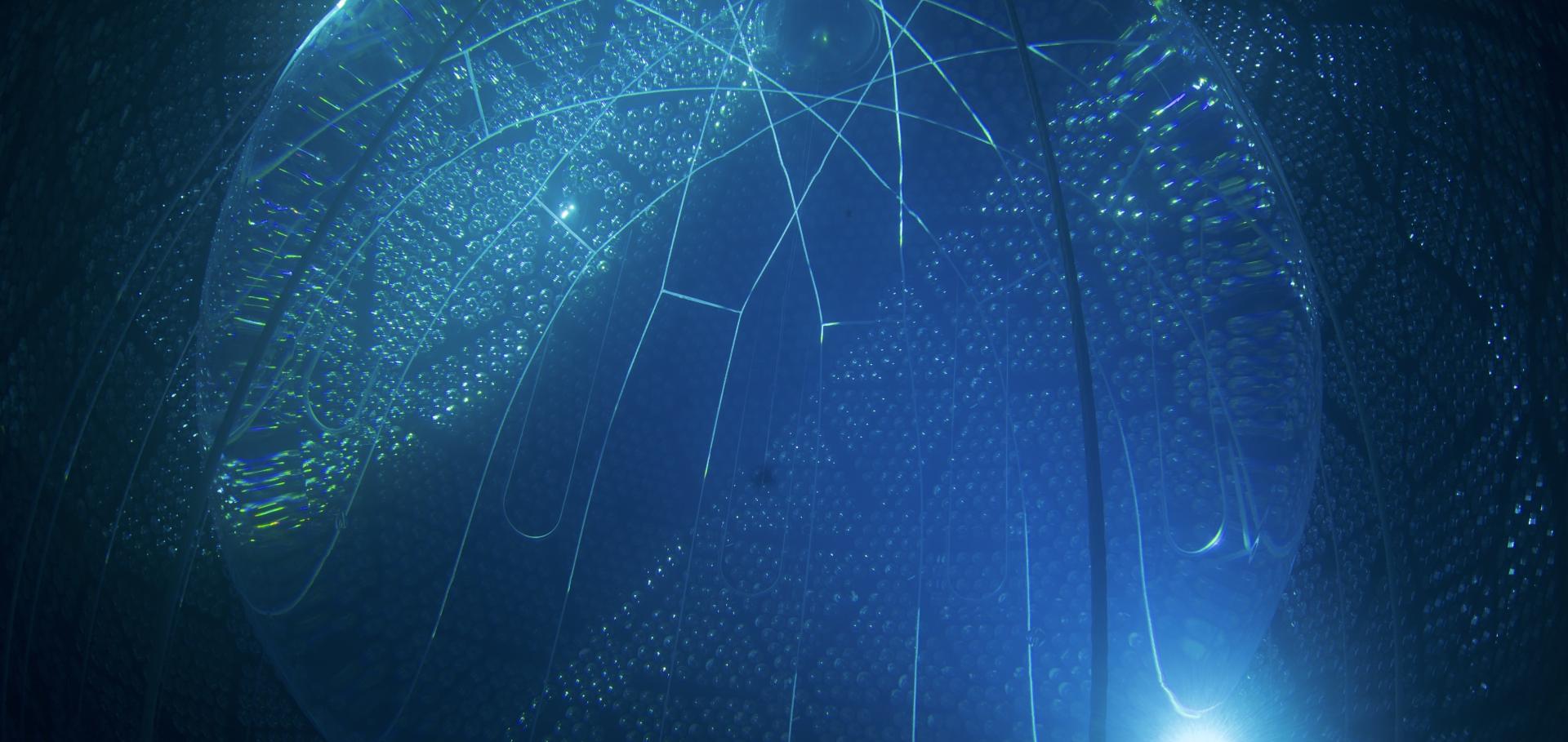
SNO+ detector. The inner vessel is filled with 780T of liquid scintillator and surrounded by a geodesic sphere of photomultiplier tubes immersed in ultra-pure water. The detector is located 2.1km underground at Canada's SNOLAB, outside of Sudbury, Western Ontario.

Credit: SNOLAB

Jeff Tseng

Professor of Physics

Research theme

  • Particle astrophysics & cosmology
  • Fundamental particles and interactions

Sub department

  • Particle Physics

Research groups

  • Rubin-LSST
  • SNO+
Jeff.Tseng@physics.ox.ac.uk
Telephone: 01865 (2)73398
Denys Wilkinson Building, room 674
Home page
  • About
  • Publications

A study of the material in the ATLAS inner detector using secondary hadronic interactions

Journal of Instrumentation 7:1 (2012)

Authors:

G Aad, B Abbott, J Abdallah, AA Abdelalim, A Abdesselam, O Abdinov, B Abi, M Abolins, H Abramowicz, H Abreu, E Acerbi, BS Acharya, DL Adams, TN Addy, J Adelman, M Aderholz, S Adomeit, P Adragna, T Adye, S Aefsky, JA Aguilar-Saavedra, M Aharrouche, SP Ahlen, F Ahles, A Ahmad, M Ahsan, G Aielli, T Akdogan, TPA Åkesson, G Akimoto, AV Akimov, A Akiyama, MS Alam, MA Alam, J Albert, S Albrand, M Aleksa, IN Aleksandrov, F Alessandria, C Alexa, G Alexander, G Alexandre, T Alexopoulos, M Alhroob, M Aliev, G Alimonti, J Alison, M Aliyev, PP Allport, SE Allwood-Spiers, J Almond, A Aloisio, R Alon, A Alonso, MG Alviggi, K Amako, P Amaral, C Amelung, VV Ammosov, A Amorim, G Amorós, N Amram, C Anastopoulos, LS Ancu, N Andari, T Andeen, CF Anders, G Anders, KJ Anderson, A Andreazza, V Andrei, ML Andrieux, XS Anduaga, A Angerami, F Anghinolfi, N Anjos, A Annovi, A Antonaki, M Antonelli, A Antonov, J Antos, F Anulli, S Aoun, L Aperio Bella, R Apolle, G Arabidze, I Aracena, Y Arai, ATH Arce, JP Archambault, S Arfaoui, JF Arguin, E Arik, M Arik, AJ Armbruster, O Arnaez, C Arnault, A Artamonov, G Artoni, D Arutinov

Abstract:

The ATLAS inner detector is used to reconstruct secondary vertices due to hadronic interactions of primary collision products, so probing the location and amount of material in the inner region of ATLAS. Data collected in 7 TeV pp collisions at the LHC, with a minimum bias trigger, are used for comparisons with simulated events. The reconstructed secondary vertices have spatial resolutions ranging from ∼ 200μm to 1 mm. The overall material description in the simulation is validated to within an experimental uncertainty of about 7%. This will lead to a better understanding of the reconstruction of various objects such as tracks, leptons, jets, and missing transverse momentum. © 2012 CERN.
More details from the publisher
More details

ATLAS search for a heavy gauge boson decaying to a charged lepton and a neutrino in pp collisions at √s =7 TeV

European Physical Journal C 72:12 (2012)

Authors:

G Aad, T Abajyan, B Abbott, J Abdallah, S Abdel Khalek, AA Abdelalim, O Abdinov, R Aben, B Abi, M Abolins, OS Abouzeid, H Abramowicz, H Abreu, BS Acharya, L Adamczyk, DL Adams, TN Addy, J Adelman, S Adomeit, P Adragna, T Adye, S Aefsky, JA Aguilar-Saavedra, M Agustoni, M Aharrouche, SP Ahlen, F Ahles, A Ahmad, M Ahsan, G Aielli, T Akdogan, TPA Åkesson, G Akimoto, AV Akimov, MS Alam, MA Alam, J Albert, S Albrand, M Aleksa, IN Aleksandrov, F Alessandria, C Alexa, G Alexander, G Alexandre, T Alexopoulos, M Alhroob, M Aliev, G Alimonti, J Alison, BMM Allbrooke, PP Allport, SE Allwood-Spiers, J Almond, A Aloisio, R Alon, A Alonso, F Alonso, A Altheimer, B Alvarez Gonzalez, MG Alviggi, K Amako, C Amelung, VV Ammosov, SP Amor Dos Santos, A Amorim, N Amram, C Anastopoulos, LS Ancu, N Andari, T Andeen, CF Anders, G Anders, KJ Anderson, A Andreazza, V Andrei, ML Andrieux, XS Anduaga, P Anger, A Angerami, F Anghinolfi, A Anisenkov, N Anjos, A Annovi, A Antonaki, M Antonelli, A Antonov, J Antos, F Anulli, M Aoki, S Aoun, L Aperio Bella, R Apolle, G Arabidze, I Aracena, Y Arai, ATH Arce, S Arfaoui, JF Arguin, E Arik, M Arik

Abstract:

The ATLAS detector at the LHC is used to search for high-mass states, such as heavy charged gauge bosons (Wʹ), decaying to a charged lepton (electron or muon) and a neutrino. Results are presented based on the analysis of pp collisions at a center-of-mass energy of 7 TeV corresponding to an integrated luminosity of 4.7 fb−1. No excess beyond Standard Model expectations is observed. AWʹ with Sequential Standard Model couplings is excluded at the 95% credibility level for masses up to 2.55 TeV. Excited chiral bosons (W*) with equivalent coupling strength are excluded for masses up to 2.42 TeV.
More details from the publisher
More details

Conditions and configuration metadata for the ATLAS experiment

Journal of Physics: Conference Series 396:PART 5 (2012)

Authors:

EJ Gallas, S Albrand, J Fulachier, F Lambert, KE Pachal, JCL Tseng, Q Zhang

Abstract:

In the ATLAS experiment, a system called COMA (Conditions/Configuration Metadata for ATLAS), has been developed to make globally important run-level metadata more readily accessible. It is based on a relational database storing directly extracted, refined, reduced, and derived information from system-specific database sources as well as information from non-database sources. This information facilitates a variety of unique dynamic interfaces and provides information to enhance the functionality of other systems. This presentation will give an overview of the components of the COMA system, enumerate its diverse data sources, and give examples of some of the interfaces it facilitates. We list important principles behind COMA schema and interface design, and how features of these principles create coherence and eliminate redundancy among the components of the overall system. In addition, we elucidate how interface logging data has been used to refine COMA content and improve the value and performance of end-user reports and browsers..
More details from the publisher
More details

Measurement of the W boson polarization in top quark decays with the ATLAS detector

Journal of High Energy Physics 2012:6 (2012)

Authors:

G Aad, B Abbott, J Abdallah, S Abdel Khalek, AA Abdelalim, O Abdinov, B Abi, M Abolins, OS AbouZeid, H Abramowicz, H Abreu, E Acerbi, BS Acharya, L Adamczyk, DL Adams, TN Addy, J Adelman, S Adomeit, P Adragna, T Adye, S Aefsky, JA Aguilar-Saavedra, M Agustoni, M Aharrouche, SP Ahlen, F Ahles, A Ahmad, M Ahsan, G Aielli, T Akdogan, TPA Åkesson, G Akimoto, AV Akimov, A Akiyama, MS Alam, MA Alam, J Albert, S Albrand, M Aleksa, IN Aleksandrov, F Alessandria, C Alexa, G Alexander, G Alexandre, T Alexopoulos, M Alhroob, M Aliev, G Alimonti, J Alison, BMM Allbrooke, PP Allport, SE Allwood-Spiers, J Almond, A Aloisio, R Alon, A Alonso, B Alvarez Gonzalez, MG Alviggi, K Amako, C Amelung, VV Ammosov, A Amorim, N Amram, C Anastopoulos, LS Ancu, N Andari, T Andeen, CF Anders, G Anders, KJ Anderson, A Andreazza, V Andrei, XS Anduaga, P Anger, A Angerami, F Anghinolfi, A Anisenkov, N Anjos, A Annovi, A Antonaki, M Antonelli, A Antonov, J Antos, F Anulli, S Aoun, L Aperio Bella, R Apolle, G Arabidze, I Aracena, Y Arai, ATH Arce, S Arfaoui, JF Arguin, E Arik, M Arik, AJ Armbruster, O Arnaez, V Arnal, C Arnault, A Artamonov

Abstract:

This paper presents measurements of the polarization ofW bosons in top quark decays, derived from tt̄ events with missing transverse momentum, one charged lepton and at least four jets, or two charged leptons and at least two jets. Data from pp collisions at a centre-of-mass energy of 7 TeV were collected with the ATLAS experiment at the LHC and correspond to an integrated luminosity of 1.04 fb-1. The measured fractions of longitudinally, left- and right-handed polarization are F0 = 0.67 ± 0.07, FL = 0.32 ± 0.04 and FR = 0.01 ± 0.05, in agreement with the Standard Model predictions. As the polarization of the W bosons in top quark decays is sensitive to the Wtb vertex Lorentz structure and couplings, the measurements were used to set limits on anomalous contributions to the Wtb couplings. © CERN.
More details from the publisher
More details

Search for the Standard Model Higgs boson in the H → τ+τ- decay mode in √s = 7TeV pp collisions with ATLAS

Journal of High Energy Physics 2012:9 (2012)

Authors:

G Aad, B Abbott, J Abdallah, S Abdel Khalek, AA Abdelalim, O Abdinov, B Abi, M Abolins, OS AbouZeid, H Abramowicz, H Abreu, E Acerbi, BS Acharya, L Adamczyk, DL Adams, TN Addy, J Adelman, S Adomeit, P Adragna, T Adye, S Aefsky, JA Aguilar-Saavedra, M Agustoni, M Aharrouche, SP Ahlen, F Ahles, A Ahmad, M Ahsan, G Aielli, T Akdogan, TPA Åkesson, G Akimoto, AV Akimov, MS Alam, MA Alam, J Albert, S Albrand, M Aleksa, IN Aleksandrov, F Alessandria, C Alexa, G Alexander, G Alexandre, T Alexopoulos, M Alhroob, M Aliev, G Alimonti, J Alison, BMM Allbrooke, PP Allport, SE Allwood-Spiers, J Almond, A Aloisio, R Alon, A Alonso, B Alvarez Gonzalez, MG Alviggi, K Amako, C Amelung, VV Ammosov, A Amorim, N Amram, C Anastopoulos, LS Ancu, N Andari, T Andeen, CF Anders, G Anders, KJ Anderson, A Andreazza, V Andrei, XS Anduaga, P Anger, A Angerami, F Anghinolfi, A Anisenkov, N Anjos, A Annovi, A Antonaki, M Antonelli, A Antonov, J Antos, F Anulli, S Aoun, L Aperio Bella, R Apolle, G Arabidze, I Aracena, Y Arai, ATH Arce, S Arfaoui, Arguin J-F., E Arik, M Arik, AJ Armbruster, O Arnaez, V Arnal, C Arnault, A Artamonov, G Artoni

Abstract:

A search for the Standard Model Higgs boson decaying into a pair of τ leptons is reported. The analysis is based on a data sample of proton-proton collisions collected by the ATLAS experiment at the LHC and corresponding to an integrated luminosity of 4.7fb-1. No significant excess over the expected background is observed in the Higgs boson mass range of 100-150 GeV. The observed (expected) upper limits on the cross section times the branching ratio for H → τ+τ- are found to be between 2.9 (3.4) and 11.7 (8.2) times the Standard Model prediction for this mass range.
More details from the publisher
More details

Pagination

  • First page First
  • Previous page Prev
  • …
  • Page 189
  • Page 190
  • Page 191
  • Page 192
  • Current page 193
  • Page 194
  • Page 195
  • Page 196
  • Page 197
  • …
  • Next page Next
  • Last page Last

Footer Menu

  • Contact us
  • Giving to the Dept of Physics
  • Work with us
  • Media

User account menu

  • Log in

Follow us

FIND US

Clarendon Laboratory,

Parks Road,

Oxford,

OX1 3PU

CONTACT US

Tel: +44(0)1865272200

University of Oxfrod logo Department Of Physics text logo
IOP Juno Champion logo Athena Swan Silver Award logo

© University of Oxford - Department of Physics

Cookies | Privacy policy | Accessibility statement

Built by: Versantus

  • Home
  • Research
  • Study
  • Engage
  • Our people
  • News & Comment
  • Events
  • Our facilities & services
  • About us
  • Giving to Physics
  • Current students
  • Staff intranet