

Big Data: ATLAS, a collaborative outreach project led by the University of Oxford's Department of Physics in partnership with the Institute for Research in Schools (IRIS) and the Rutherford Appleton Laboratory (RAL), has been awarded an extension to continue its work connecting secondary school students with authentic particle physics research.
Big Data: ATLAS is a free programme for UK state schools and colleges, open to students aged 16 and over with no prior knowledge of particle physics or programming required. The programme is structured across four phases: preparation, background research and skills development, independent student research, and the production of academic artefacts for presentation at the IRIS annual conference.
The project introduces post-16 students to the techniques used by physicists analysing data from the ATLAS detector at CERN's Large Hadron Collider (LHC) in Geneva — the world's most powerful particle collider. Working with open-source data from ATLAS, students develop skills in statistical analysis, Python programming, and scientific data interpretation, including searching for evidence of the Higgs boson.
Since its inception, the project has engaged more than 800 students across the UK, the vast majority of them at sixth form level. Evaluation data collected over four academic years consistently shows strong outcomes: 87% of participating students reported developing skills that will help them in the future, while 96% said they came to understand areas of STEM that go beyond the school curriculum. Teachers, too, have found the programme transformative — 97% reported that it enriched their working relationships with students.
The extension will allow the project to reach new schools and build on the infrastructure already developed with IRIS and RAL. The next stage of the programme will run over three years, with the goal of internationalising the project.
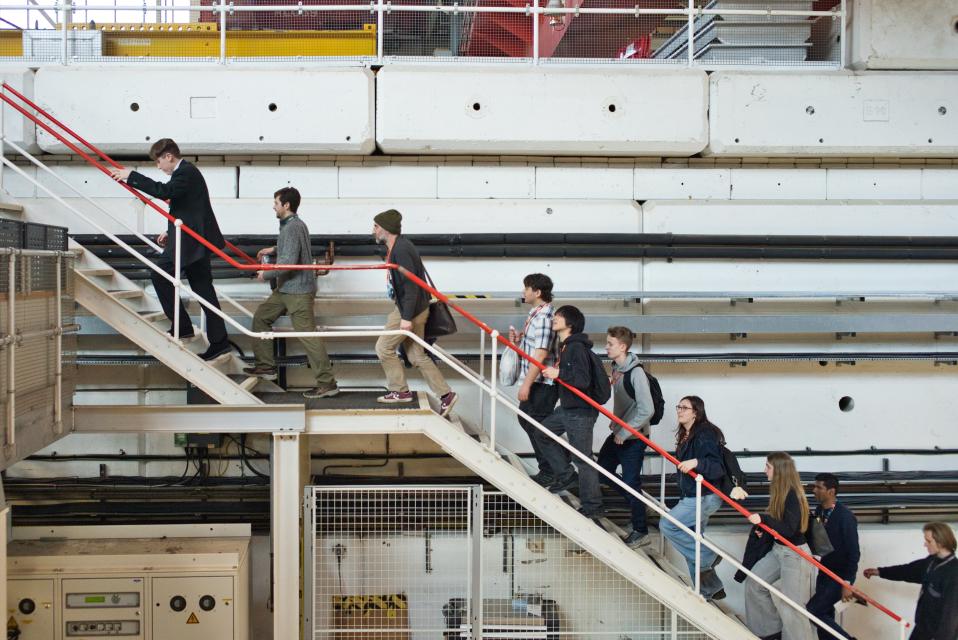
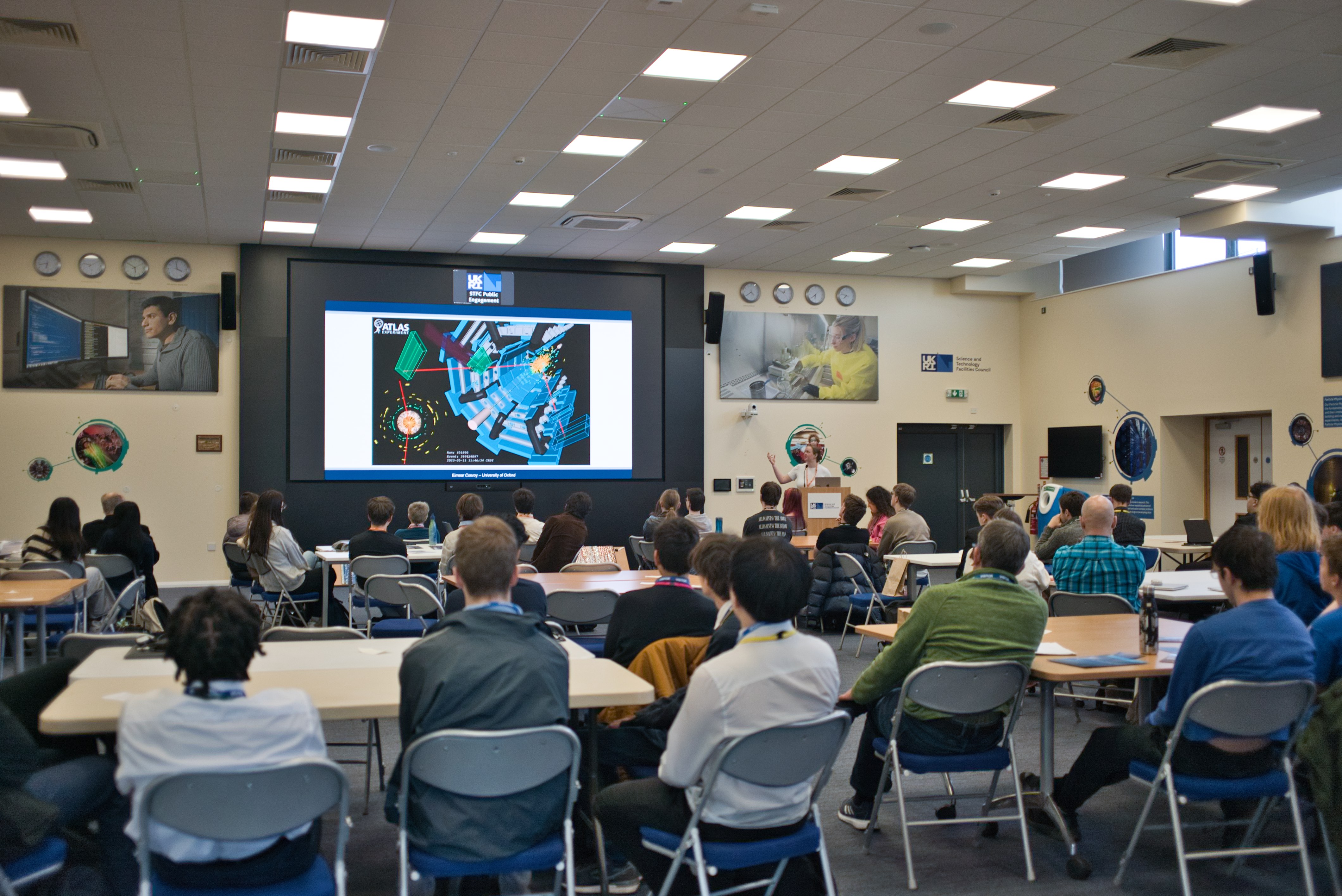
Last month, the project marked the extension with a masterclass at RAL, where students from participating schools joined Oxford physicists and IRIS researchers for a day of talks and tours. Alongside a coding support workshop on their ATLAS data analysis, students toured RAL's ISIS Neutron and Muon Source, its scientific computing facilities, and particle physics exhibits, before taking part in a careers panel with scientists and researchers working across the site.
Dr Sian Tedaldi, Outreach Programmes Manager at the Department of Physics, commented: ‘It was a pleasure to meet the students at the masterclass and hear about their work. It was clear that they were enjoying the challenge of learning to code and analysing real particle physics data. I look forward to seeing what they go on to do within the project.’
Students who have taken part describe an experience that goes well beyond the standard curriculum. ‘It was one of the most interesting projects I’ve ever undertaken and even sparked my passion into physics,’ said one Year 12 student. Another reflected: ‘You get a real taster into what doing academic research is like, which you don’t really get anywhere else.’
The ATLAS detector forms part of CERN’s flagship LHC programme and is used by thousands of physicists worldwide to study the fundamental constituents of matter. By opening access to its data for school students, Big Data: ATLAS offers a rare opportunity for young people to engage with frontier science on the same footing as professional researchers.