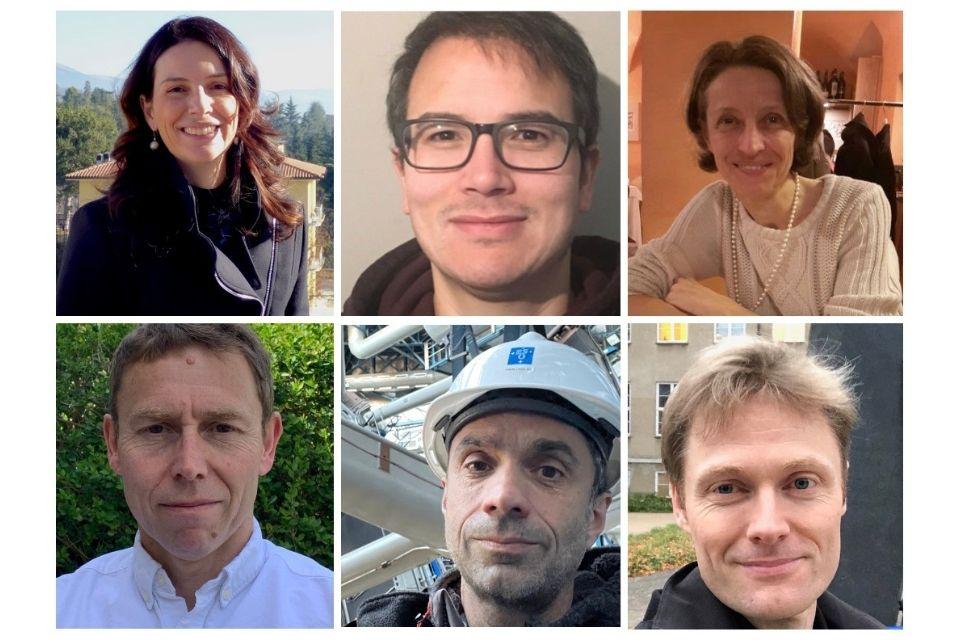
Top to bottom, left to right: Marica Branchesi (GSSI), Andrew Levan (Radboud), Elena Pian (INAF), Stephen Smartt (Oxford), Nial Tnavir (Leicester), Darach Watson (NBI)
An international collaboration, including Professor Stephen Smartt FRS MRIA, has been recognised with an Into Change Award by the Danish Ministry of Higher Education and Science. The awards honour outstanding European research groups whose work drives scientific breakthroughs, benefits society and reflects core values like curiosity, collaboration and openness.
The award recognises the achievements of the ENGRAVE (Electromagnetic counterparts of gravitational wave sources at the Very Large Telescope) collaboration in tracing the origins of the universe’s heaviest elements, forged in the aftermath of supernova explosions. In doing so, it has helped uncover the very building blocks of our existence.
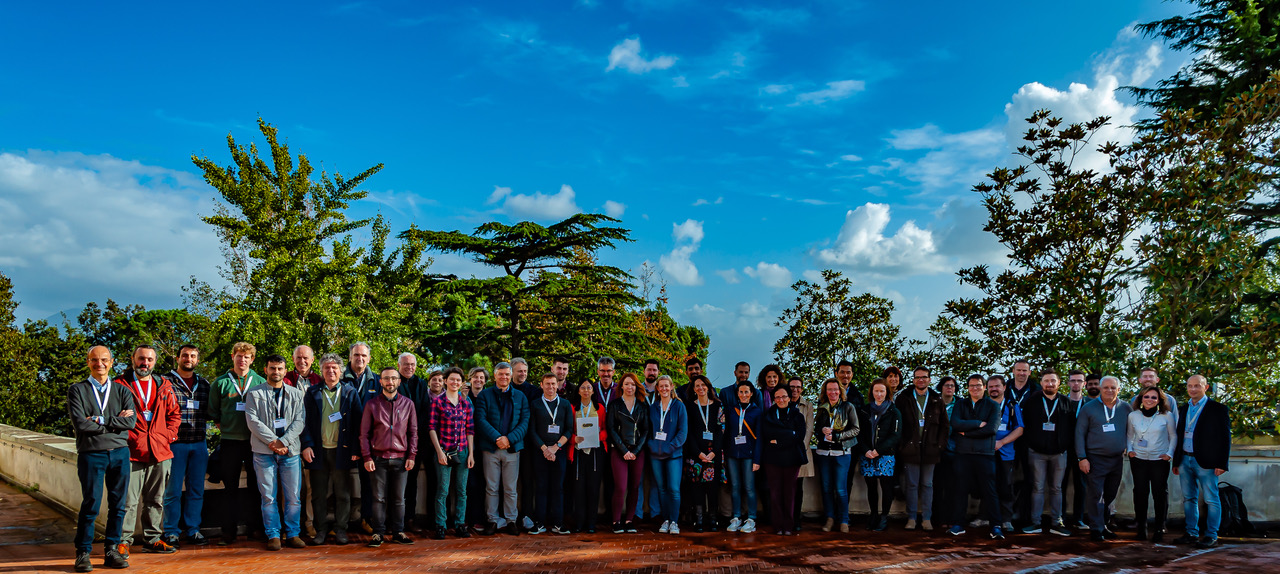
The ENGRAVE collaboration was founded in 2017 following an historic breakthrough; an international effort, led by a network of researchers and observatories across 13 European countries, showed how heavy elements such as gold, platinum and uranium were formed – during the merger of two neutron stars (GW170817). Professor Smartt is one of the founding members of the collaboration and was the first Chair of the Governing Council. He is one of six leaders of this new field of multi-messenger astronomy to be recognised with the award.
ENGRAVE brings together astronomers, physicists, and cosmologists in the search for these rare cosmic mergers that have been shown to be the factories of the heavy elements that make up two-thirds of the periodic table – including the precious metals, rare earths, and the fundamental elements that form our planet and our bodies. The elements are created through the so-called r-process, a rapid neutron-capture synthesis that occurs when a star collapses in a supernova explosion. ENGRAVE went on to work with the Hubble Space Telescope, the James Webb Space Telescope and radio facilities such as ALMA alongside ESO's Very Large Telescope.
‘ENGRAVE shows what can be achieved when researchers across countries and institutions work together to solve the universe’s greatest mysteries,’ comments Christina Egelund, Minister for Higher Education and Science. ‘Their discovery of the building blocks that form our planet and ourselves is a brilliant example of European research: curious, open and responsible. At the same time, the group has generously invited young talents to join their journey, ensuring the next generation of researchers who can continue to explore the secrets of the universe. ENGRAVE is a role model for the research culture of the future.’
Professor Smartt comments: ‘It is fantastic to receive this award. I am very proud of the European community coming together in 2018 to combine their talents and deciding to work together on these rare sources – rather than compete for telescope time. It has been wonderful to see the younger scientists in the team enthusiastically work together, constantly sharing ideas and responding to new data in real time. There is real energy and insight from the team whenever we respond to a gravitational wave alert.
‘This is a new era of multi-messenger astronomy, where gravitational waves and light together help us to answer fundamental questions about our universe and who we are; through ENGRAVE, we have demonstrated what we can achieve with European collaboration.’
The Into Change Award has in 2025 been made possible through generous contributions from the Carlsberg Foundation, the Novo Nordisk Foundation and the Villum Foundation. Professor Smartt is also affiliated to Queen's University Belfast.