

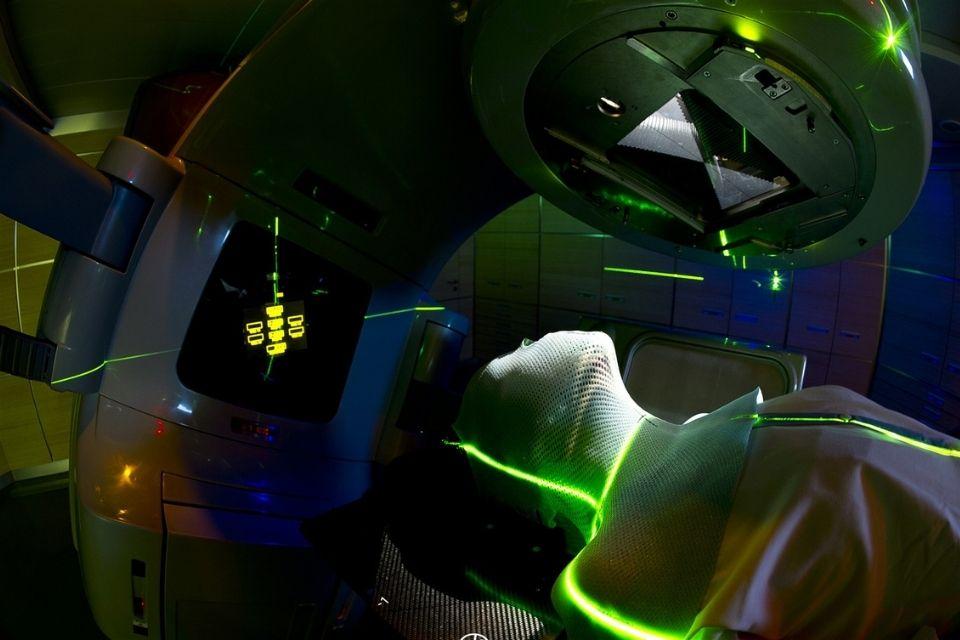
A new EPSRC-funded research project is bringing together the Department of Physics and the Department of Oncology. Project lead Dr Kristoffer Petersson from the Department of Oncology, will be working with Professor Philip Burrows and Professor Manjit Dosanjh, both from the Department of Physics, to advance the clinical implementation of FLASH radiotherapy. This emerging technique delivers radiation in a fraction of a second and may significantly reduce treatment side effects.
Radiotherapy is a cornerstone of modern cancer care, used in more than 50% of patients during the course of their treatment. While highly effective, it remains a double-edged sword: alongside its tumour-killing benefits, patients face a risk of long-term side effects, including secondary cancers and cardiovascular disease caused by damage to surrounding healthy tissues.
The treatment process itself can also be challenging for patients, often requiring prolonged immobilisation, uncomfortable positioning, and breath-hold techniques to minimise movement during delivery. A major new research project, funded by the Engineering and Physical Sciences Research Council (EPSRC), aims to address these challenges by accelerating the development of FLASH radiotherapy, a novel treatment approach that could significantly improve both patient outcomes and treatment experience.
FLASH radiotherapy is an emerging technique that delivers ultra-high dose rates of radiation in milliseconds, compared with the several minutes required for conventional radiotherapy. Preclinical studies have shown that this intense, rapid delivery can reduce the incidence and severity of normal tissue toxicity while maintaining tumour control. This tissue-sparing effect raises the possibility of delivering higher therapeutic doses without increasing side effects. Despite its promise, the biological mechanisms underpinning the FLASH effect remain poorly understood, and no routine clinical delivery systems currently exist.
The newly funded project aims to accelerate the translation of FLASH radiotherapy by developing a clinically viable method of delivery. In collaboration with researchers from the Department of Oncology, Department of Physics and the Radiotherapy Department at Oxford University Hospitals NHS Foundation Trust, and in partnership with Teledyne Healthcare, a world leader in radio frequency (RF) power-solutions for radiotherapy, the team will design and optimise a linear accelerator (linac) capable of producing megavoltage (MV) photon beams at ultra-high dose rates.
‘FLASH has amazing potential to cure more people and significantly reduce side effects,’ said Dr Petersson. ‘But we need to figure out how to deliver it in a clinical setting. That requires a powerful technique capable of generating radiation at dose rates around a thousand times higher than those used today.’
To date, most FLASH research has focused on proton or electron beams. However, proton therapy requires large and costly infrastructure, limiting accessibility, while most electron beams are only suitable for treating superficial tumours. The team is instead focusing on MV photon beams, used today in approximately 95% of conventional radiotherapy treatments worldwide. This approach offers a realistic pathway to scalable and cost-effective implementation.
The Department of Physics will lead the work on improving the electron gun and waveguide which will enhance the ability to inject electrons into the accelerating waveguide structure. This, in turn, will increase the photon dose rate. The team will use advanced simulations to test the best set up, before assembling and testing a full prototype. The resulting platform will enable further preclinical investigations into the FLASH effect and provide critical data to inform future clinical studies.
Beyond biological advantages, FLASH radiotherapy also offers important practical benefits. The ultra-high dose rate substantially reduces treatment times, which could greatly improve patient comfort, reduce the need for complex immobilisation strategies, and minimise the risk of errors due to patient or organ movement.
If successfully translated into the clinic, FLASH radiotherapy has the potential to revolutionise cancer treatment, enabling more effective treatments with fewer side effects, while improving the overall patient experience.
‘The John Adams Institute (JAI) in the Department of Physics is excited to be partnering with the Department of Oncology to study how X-ray radiotherapy machines could be adapted to deliver treatment in FLASH mode’, said Professor Burrows, Director of the JAI. Professor Dosanjh adds: ‘Photon FLASH with fewer and shorter treatments has the potential to reduce cost and therefore expand access to high quality cancer treatment across the globe – life-changing for many but particularly for those in regions of the world where current provision is severely challenged.’