

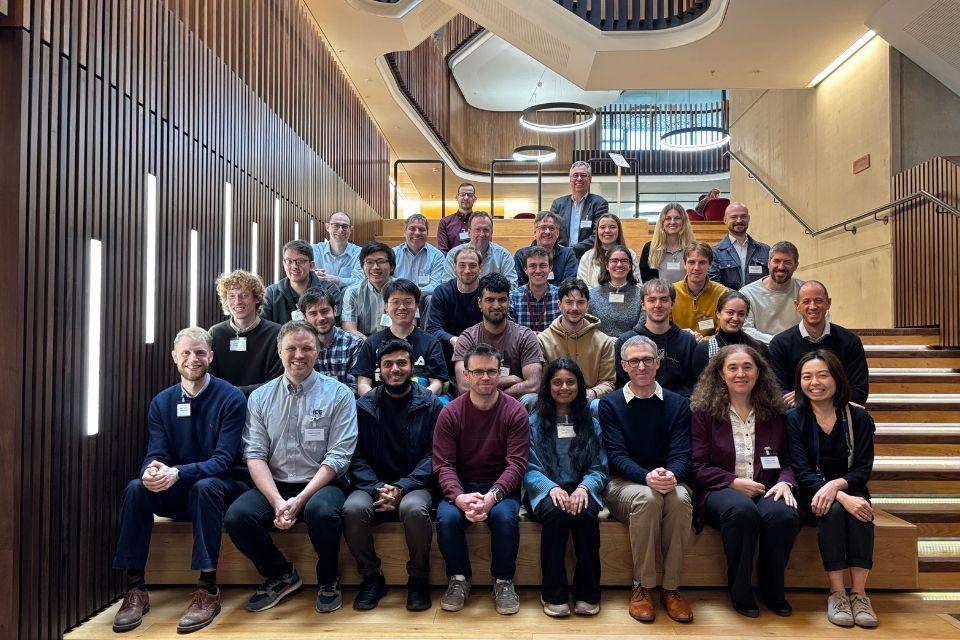
Around 40 students, supervisors and industry partners gathered at the Martin Wood Lecture Theatre in Oxford on 16 April for Partners' Day, part of the Superconductivity Centre for Doctoral Training (CDT) Oxford Residential Week 2026. The event brought together the CDT community for a full day of talks, panel discussions and networking, with a particular focus on strengthening connections between doctoral researchers, academia, industry and research facilities.
The EPSRC Centre for Doctoral Training in Superconductivity: Enabling Transformative Technologies is a 4-year doctoral programme run jointly by the universities of Bristol, Cambridge and Oxford. This first dedicated Partners' Day formed part of the wider residential week and was designed to give students direct access to the organisations and researchers helping to shape the future of superconductivity and its applications.
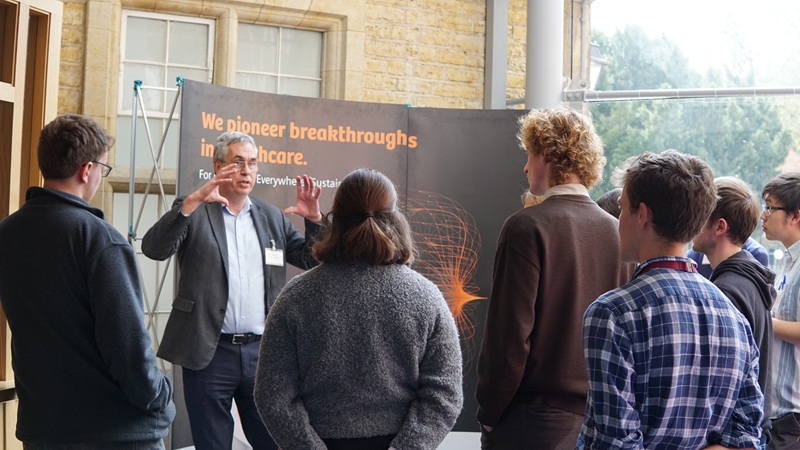
The morning session on superconducting technologies featured contributions from representatives of National Grid, Oxford Quantum Circuits, Quantum Design Oxford, UKAEA and ICE Oxford, followed by a panel discussion. The afternoon career and skills session heard from Tokamak Energy, ISIS Neutron and Muon Source, Siemens Healthineers, OpenStar Technologies as well as Quantum Design Oxford, again closing with a panel discussion.
Over recent months, Superconductivity CDT students have undertaken 6-week partner placements across leading research laboratories, national facilities, and industrial organisations in the UK and abroad. These placements have provided the students with hands-on experience in superconducting materials, high-field magnet technologies, cryogenic systems, and computational modelling, while strengthening collaborations across the CDT partnership network. During the Partners’ Day, CDT students had the opportunity to present their research during poster session, receive feedback, and explore career pathways across academia and industry.
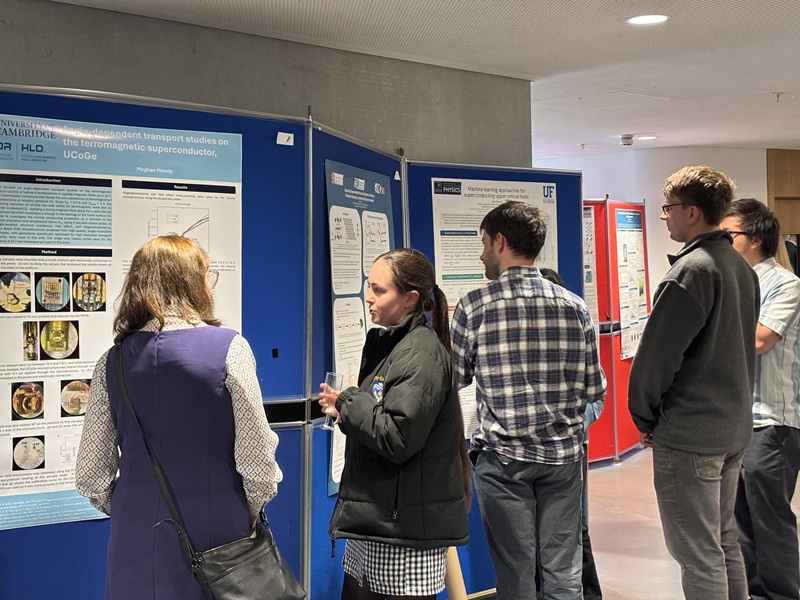
'It was great to have the opportunity to speak and hear from the partners of the Oxford Superconductivity CDT,' said Abi Graham of Quantum Design Oxford. 'I especially enjoyed learning about the students' industry placements through their poster presentations. Their depth of knowledge and quality of research was impressive, particularly given the short duration of the placements.'
Simon Chislett-McDonald of Tokamak Energy said the careers session gave partners a valuable opportunity to engage with students about their futures beyond their PhDs. 'It was especially valuable to highlight the breadth of opportunities in industry, as well as to discuss broader topics during the Q&A – such as technical versus management career paths, publishing in industry, and expectations around job roles and pay across different industries. The students were highly engaged and brought a great level of curiosity and interest throughout.'
Russell Ewings of ISIS Neutron and Muon Source added: 'The students are all of high calibre, evident by the quality of research they have already done in their short projects, and I enjoyed very much discussing these projects with them.'
For the CDT community, the day highlighted the value of direct exchange between doctoral researchers, academic supervisors and industry partners — and the importance of dialogue and shared perspective in doctoral training.