Latest news and comment Audience - Any Audience - Alumni Industry Schools, prospective students and community Research Undergraduates Graduates International Year of Quantum Department of Physics (requires login) Research theme - Any Research theme - Accelerator physics Astronomy and astrophysics Biological physics Climate physics Exoplanets and planetary physics Fields, strings, and quantum dynamics Fundamental particles and interactions Instrumentation Lasers and high energy density science Particle astrophysics & cosmology Photovoltaics and nanoscience Plasma physics Quantum information and computation Quantum materials Quantum optics & ultra-cold matter Sub-department - Any Sub-department - Astrophysics Atmospheric, Oceanic and Planetary Physics Atomic and Laser Physics Condensed Matter Physics Particle Physics Professional and support services Rudolf Peierls Centre for Theoretical Physics Could stuff be living on Saturn’s moon? The Oxford Sparks podcast chats with Dr Carly Howett, Associate Professor of Space Instrumentation, on why she thinks one of Saturn’s moons, Enceladus, could be a prime candidate for life. 19 January 2026 Mysterious iron ‘bar’ revealed inside iconic Ring Nebula Using the new WEAVE instrument developed by Oxford physicists, an international team has discovered bar-shaped cloud of ionised iron at the heart of the Ring Nebula. 16 January 2026 Professor Bunker awarded Herschel Medal Professor Andrew Bunker has been awarded the Herschel Medal by the Royal Astronomical Society. The medal is awarded for investigations of outstanding merit in observational astrophysics. 9 January 2026 Professor Aigrain awarded RAS lectureship Professor Suzanne Aigrain has been awarded the George Darwin Lectureship by the Royal Astronomical Society. 9 January 2026 Dr Bartlett recognised by RAS Dr Deaglan Bartlett has been awarded the Early Career Award (A) by the Royal Astronomical Society recognising early achievement in astronomy. 9 January 2026 ‘First light’ achieved from new SOXS spectrograph Researchers at the University of Oxford have joined forces with an international consortium in the delivery of a powerful new astronomical instrument, SOXS (Son of X-Shooter), which has now achieved “first light” at the La Silla Observatory in Chile. 5 January 2026 Astronomers spot one of the largest spinning structures ever found in the Universe An international team led by the University of Oxford has identified one of the largest rotating structures ever reported: a ‘razor-thin’ string of galaxies embedded in a giant spinning cosmic filament 140 million light years away. 4 December 2025 Into Change Award for groundbreaking collaboration An international collaboration, including Professor Stephen Smartt FRS MRIA, has been recognised with an Into Change Award by the Danish Ministry of Higher Education and Science. 3 December 2025 AI breakthrough helps astronomers spot cosmic events with just a handful of examples A new study co-led by the University of Oxford and Google Cloud has shown how general-purpose AI can accurately classify real changes in the night sky. 8 October 2025 First evidence of black hole and astrophysical jets alignment Scientists have found direct evidence that the fastest and most powerful astrophysical jets are locked to the spin of the black hole that launches them. The results have been published in Nature Astronomy. 23 September 2025 Distant galaxies reveal hidden effect from Big Bang Physicists at the University of Oxford have found the first compelling observational evidence that the Cosmic Microwave Background – the faint afterglow of the Big Bang – affects radio signals from distant galaxies. 15 September 2025 AI tool helps astronomers find supernovae in a sky full of noise A new AI-powered tool has reduced astronomers’ workload by 85% filtering through thousands of data alerts to identify the few genuine signals caused by supernovae – powerful explosions from dying stars. 11 September 2025 Load More
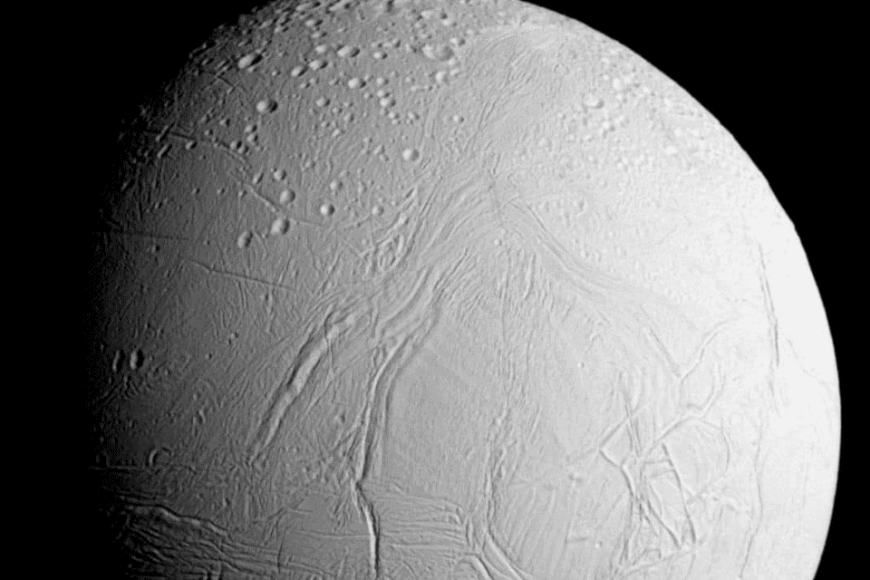
Could stuff be living on Saturn’s moon? The Oxford Sparks podcast chats with Dr Carly Howett, Associate Professor of Space Instrumentation, on why she thinks one of Saturn’s moons, Enceladus, could be a prime candidate for life. 19 January 2026
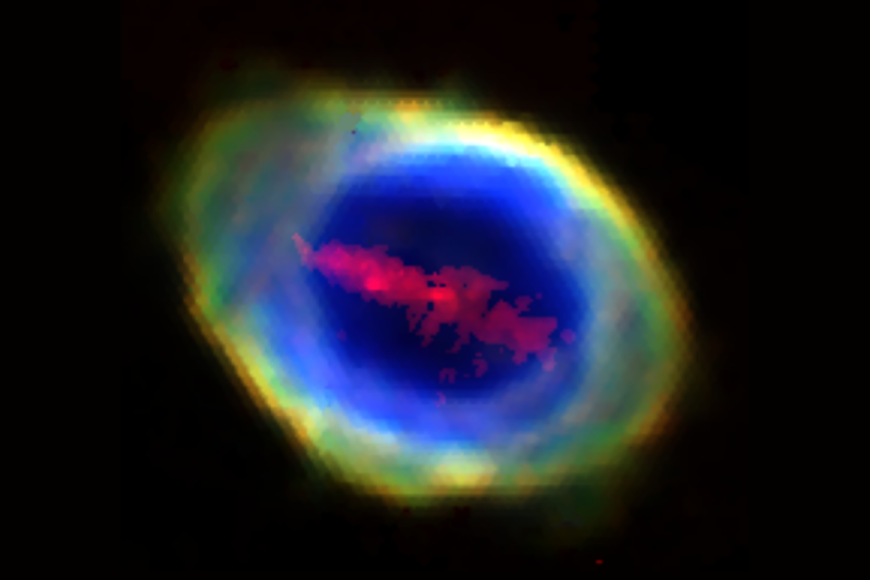
Mysterious iron ‘bar’ revealed inside iconic Ring Nebula Using the new WEAVE instrument developed by Oxford physicists, an international team has discovered bar-shaped cloud of ionised iron at the heart of the Ring Nebula. 16 January 2026
Professor Bunker awarded Herschel Medal Professor Andrew Bunker has been awarded the Herschel Medal by the Royal Astronomical Society. The medal is awarded for investigations of outstanding merit in observational astrophysics. 9 January 2026
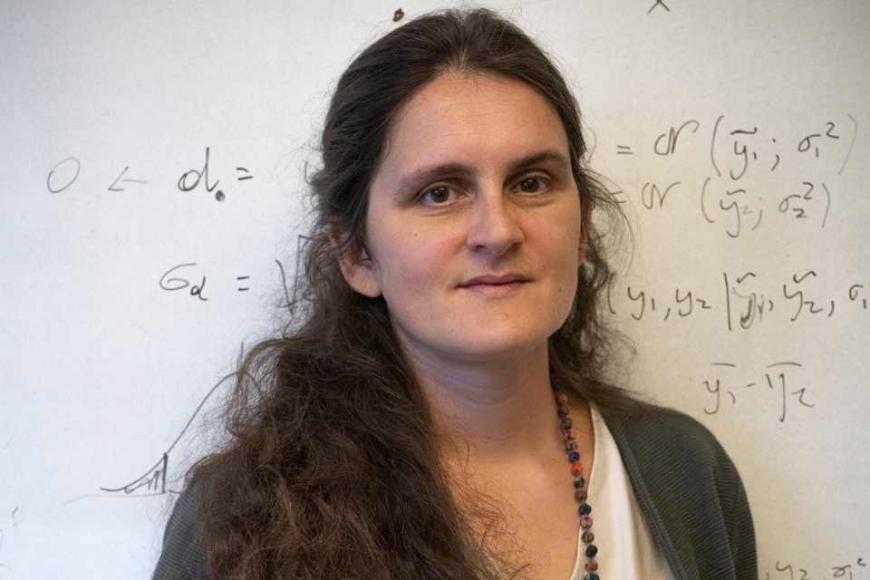
Professor Aigrain awarded RAS lectureship Professor Suzanne Aigrain has been awarded the George Darwin Lectureship by the Royal Astronomical Society. 9 January 2026
Dr Bartlett recognised by RAS Dr Deaglan Bartlett has been awarded the Early Career Award (A) by the Royal Astronomical Society recognising early achievement in astronomy. 9 January 2026
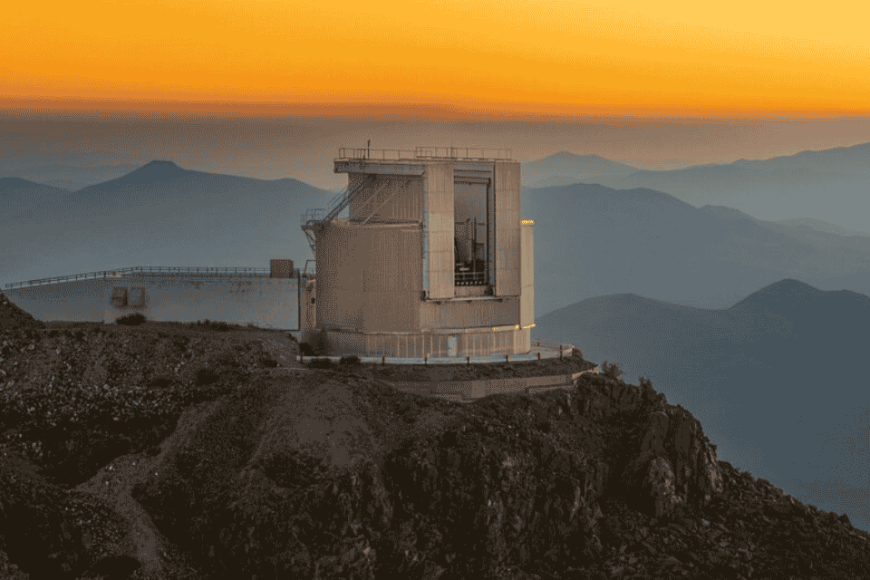
‘First light’ achieved from new SOXS spectrograph Researchers at the University of Oxford have joined forces with an international consortium in the delivery of a powerful new astronomical instrument, SOXS (Son of X-Shooter), which has now achieved “first light” at the La Silla Observatory in Chile. 5 January 2026
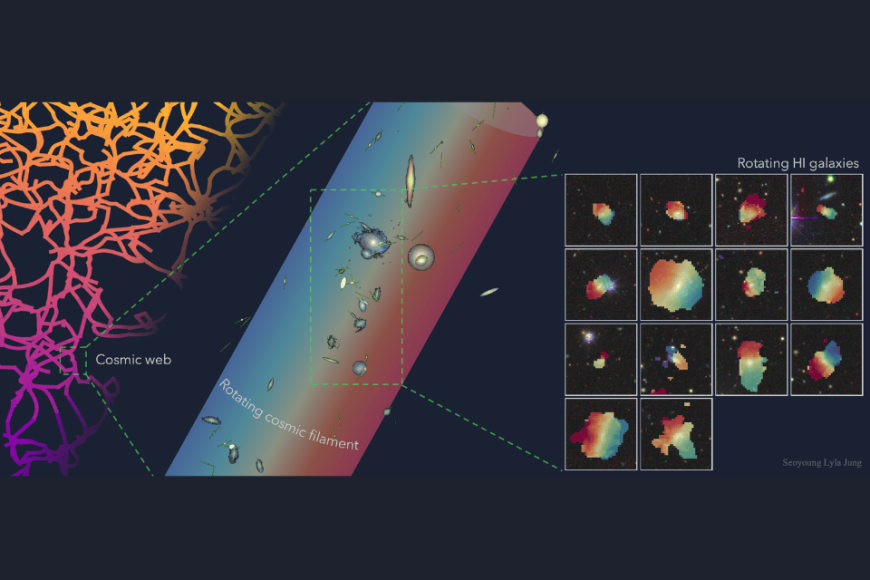
Astronomers spot one of the largest spinning structures ever found in the Universe An international team led by the University of Oxford has identified one of the largest rotating structures ever reported: a ‘razor-thin’ string of galaxies embedded in a giant spinning cosmic filament 140 million light years away. 4 December 2025
Into Change Award for groundbreaking collaboration An international collaboration, including Professor Stephen Smartt FRS MRIA, has been recognised with an Into Change Award by the Danish Ministry of Higher Education and Science. 3 December 2025
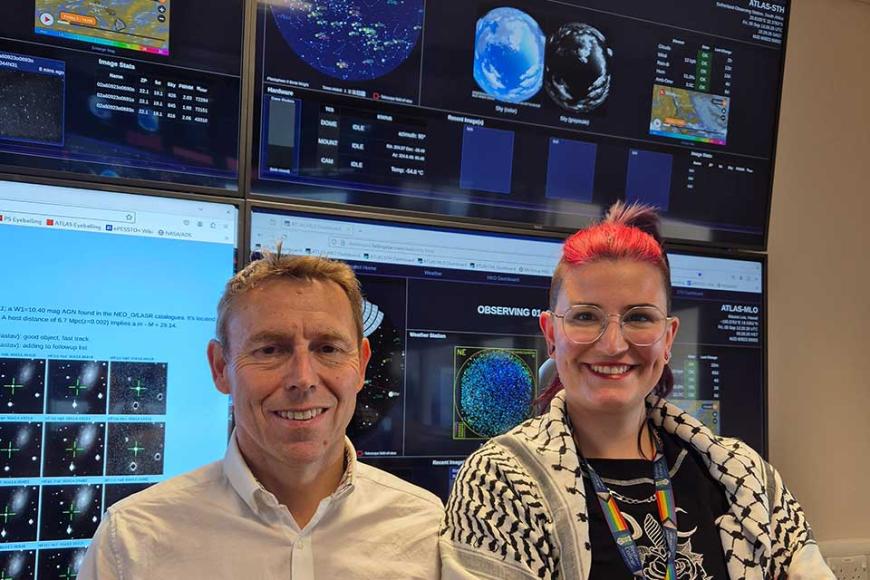
AI breakthrough helps astronomers spot cosmic events with just a handful of examples A new study co-led by the University of Oxford and Google Cloud has shown how general-purpose AI can accurately classify real changes in the night sky. 8 October 2025
First evidence of black hole and astrophysical jets alignment Scientists have found direct evidence that the fastest and most powerful astrophysical jets are locked to the spin of the black hole that launches them. The results have been published in Nature Astronomy. 23 September 2025
Distant galaxies reveal hidden effect from Big Bang Physicists at the University of Oxford have found the first compelling observational evidence that the Cosmic Microwave Background – the faint afterglow of the Big Bang – affects radio signals from distant galaxies. 15 September 2025
AI tool helps astronomers find supernovae in a sky full of noise A new AI-powered tool has reduced astronomers’ workload by 85% filtering through thousands of data alerts to identify the few genuine signals caused by supernovae – powerful explosions from dying stars. 11 September 2025