Home
Department Of Physics text logo
  • Research
    • Our research
    • Our research groups
    • Our research in action
    • Research funding support
    • Summer internships for undergraduates
  • Study
    • Undergraduates
    • Postgraduates
  • Engage
    • For alumni
    • For business
    • For schools
    • For the public
Menu

Latest news and comment

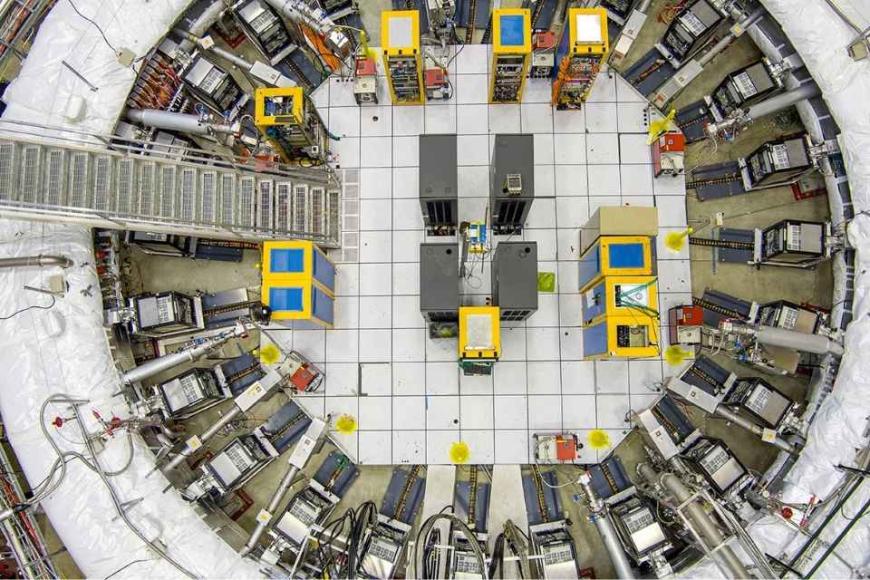
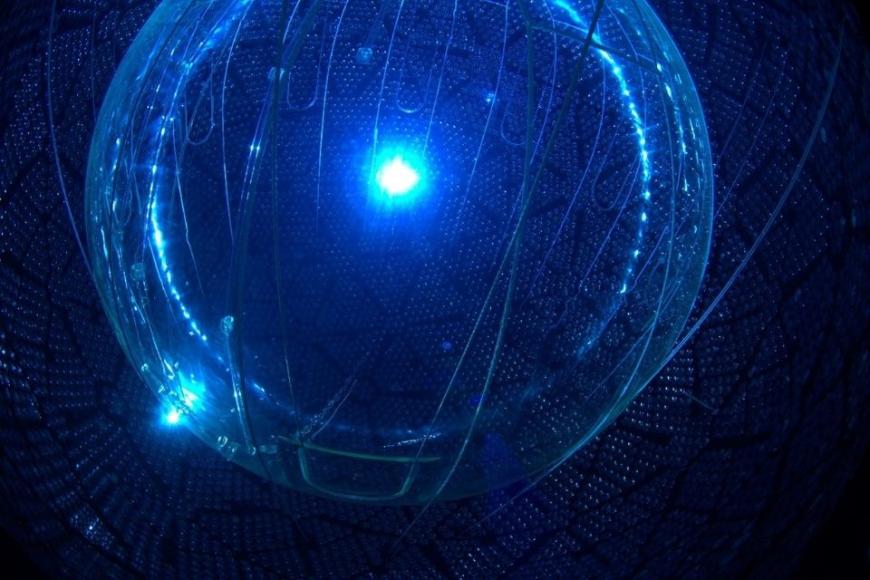
The 12-metre-diameter acrylic vessel surrounded by 9,000 photomultiplier tubes at the heart of the the Sudbury Neutrino Observatory and SNO+ experiments. The vessel currently holds about 800 tonnes of liquid scintillator for neutrino detection.

New breakthrough in detecting “ghost particles” from the Sun

Physicists at the University of Oxford have led a breakthrough study which has recorded the first observation of carbon-neutrino interactions; the findings open new frontiers in nuclear and particle physics.
15 December 2025
Event display of a candidate Higgs boson decaying to two muons (H→μμ), shown as red tracks in the detector. (Image: ATLAS/CERN)

ATLAS finds evidence for rare Higgs decay

Researchers from the University of Oxford have played a major role in one of the most precise studies yet of the Higgs boson — the mysterious particle that helps explain why everything in the universe has mass.
8 December 2025
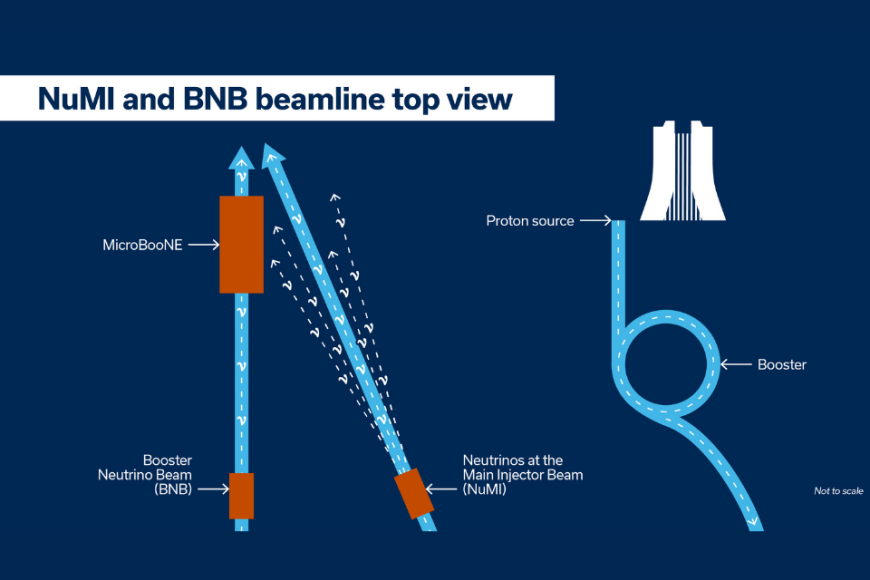
NuMI and BNB beamline top view

UK scientists rule out fourth neutrino particle in search for new physics

UK scientists, including from the University of Oxford, have played a key role in solving a neutrino mystery that has challenged researchers for decades.
3 December 2025
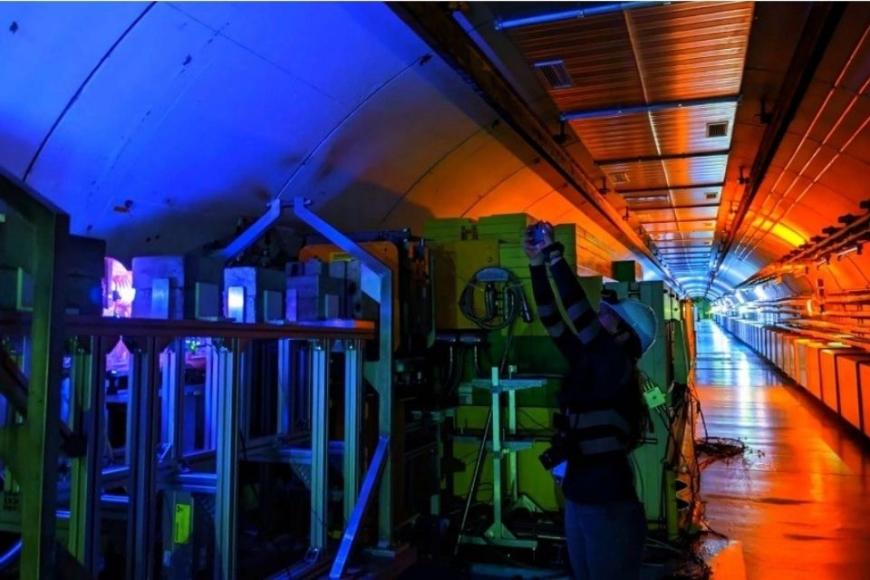
The fireball experiment installed in the HiRadMat irradiation area.

Scientists recreate cosmic “fireballs” to probe mystery of missing gamma rays

An international team of scientists, led by the University of Oxford, has achieved a world-first by creating plasma 'fireballs' using the Super Proton Synchrotron accelerator at CERN, Geneva, to study the stability of plasma jets emanating from blazars.
7 November 2025
Professor Peter Norreys

Professor Norreys awarded Holweck Prize

Professor Peter Norreys has been recognised for his outstanding contributions to fundamental studies of high energy density plasmas using high power petawatt-class lasers.
28 October 2025
Elizabeth Bloomfield

Meet...Lizzie Bloomfield

We work among extraordinary people doing extraordinary things; get to know some of them by reading these quick-fire interviews.
4 September 2025
Event display of a candidate electron neutrino charged current interaction with a charged pion in the MicroBooNE detector

First measurement of key neutrino interaction process

Researchers at the University of Oxford and the MicroBooNE collaboration have recently performed the first ever measurement of electron neutrino interactions on argon producing outgoing charged pions.
3 September 2025
A cluster of galaxies illuminated against the dark sky, showcasing their vibrant colours and intricate formations.

How do you find a theoretical particle?

Oxford Sparks looks to explore and discover the scientific research happening at the University of Oxford, and in this episode, they ask the question, how do you detect a particle that emits no light - in other words, something invisible?
19 August 2025
Dr Eimear Conroy

Meet...Eimear Conroy

We work among extraordinary people doing extraordinary things; get to know some of them by reading these quick-fire interviews.
1 August 2025
Illustration of photon-photon scattering in the laboratory. Two green petawatt lasers beams collide at the focus with a third red beam to polarise the quantum vacuum. This allows a fourth blue laser beam to be generated, with a unique direction and colour, which conserves momemtum and energy.

Oxford physicists recreate extreme quantum vacuum effects

Physicists have successfully simulated how light interacts with empty space – a phenomenon once thought to belong to science fiction; the findings pave the way for real-world laser facilities to experimentally confirm bizarre quantum phenomena.
5 June 2025
The Very Large Array sees fountains of hot gas erupting from a beastly black hole in the heart of a large galaxy known to radio astronomers as Hercules A. For millions of trillions of miles, these jets shoot through space, finally slowing when they reach ancient gaseous hiccups left behind by this galaxy’s earliest days of star-forming fury.

Black holes: nature’s own supercolliders

Scientists could turn to black holes to complement facilities searching for dark matter and similarly elusive particles that hold clues to the universe’s deepest secrets, a new study by Oxford researchers suggests.
3 June 2025
Professor Daniela Bortoletto

Professor Bortoletto recognised by European Physical Society

Professor Daniela Bortoletto has been awarded the European Physical Society’s Emmy Noether Distinction 2024 recognising her work in revolutionising silicon detector technology and in supporting women in physics.
23 May 2025
  • Load More

Footer Menu

  • Contact us
  • Giving to the Dept of Physics
  • Work with us
  • Media

User account menu

  • Log in

Follow us

FIND US

Clarendon Laboratory,

Parks Road,

Oxford,

OX1 3PU

CONTACT US

Tel: +44(0)1865272200

University of Oxfrod logo Department Of Physics text logo
IOP Juno Champion logo Athena Swan Silver Award logo

© University of Oxford - Department of Physics

Cookies | Privacy policy | Accessibility statement

Built by: Versantus

  • Home
  • Research
  • Study
  • Engage
  • Our people
  • News & Comment
  • Events
  • Our facilities & services
  • About us
  • Giving to Physics
  • Current students
  • Staff intranet